
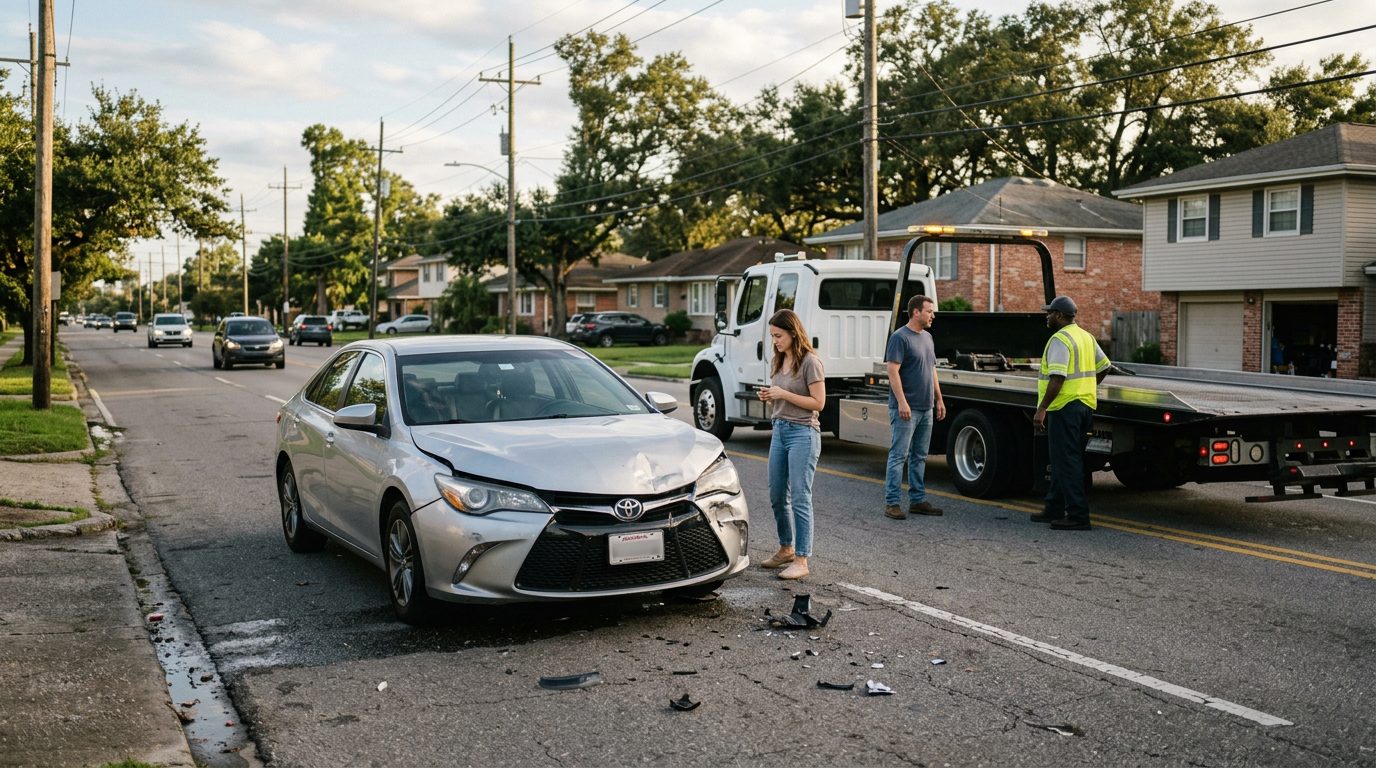
Car Accidents · New Orleans, Louisiana
Crashed With No Police at the Scene? Start Here.
Confusing moments after a collision are common. Here is a calm, practical way to protect your health and your options.
By Przemek Lubecki · Published November 15, 2026
If police did not come to my car accident in New Orleans, you may be wondering what happens next. A missing police report does not end a claim. Louisiana law looks at who was at fault and what the evidence shows, and you can start building that evidence in the first hours and days.
This guide covers the scene steps that protect proof, how to report a crash without an officer, how fault can be shown without an eyewitness, the insurance steps, and the filing deadline.
Why a Missing Police Report Does Not End Your Claim
A police report is one piece of evidence, not a requirement for bringing a claim. Under Louisiana law, every person is responsible for the damage they cause through negligence, imprudence, or want of skill (La. Civ. Code art. 2316). An officer’s report is one way to show what happened. It is not the only way.
Without an officer on scene, the facts must be recorded another way. The first hours matter because memories fade, cars get moved or repaired, and business cameras can overwrite their footage. Notes, photos, and a dated account made soon after the crash can carry real weight later.
Injuries do not always appear at the scene. Pain, stiffness, headaches, and dizziness can show up days later. Write down each symptom when it starts, and get medical care even if the crash seemed minor. Medical records are part of how an injury is tied to a crash, so keep every visit and bill.
If no officer came to your crash, you may still have a claim, and you don't have to sort out the evidence and deadlines on your own. Talk it through with our team — the first consultation is free, confidential, and carries no obligation.
What to Do at the Scene When No Officer Arrives
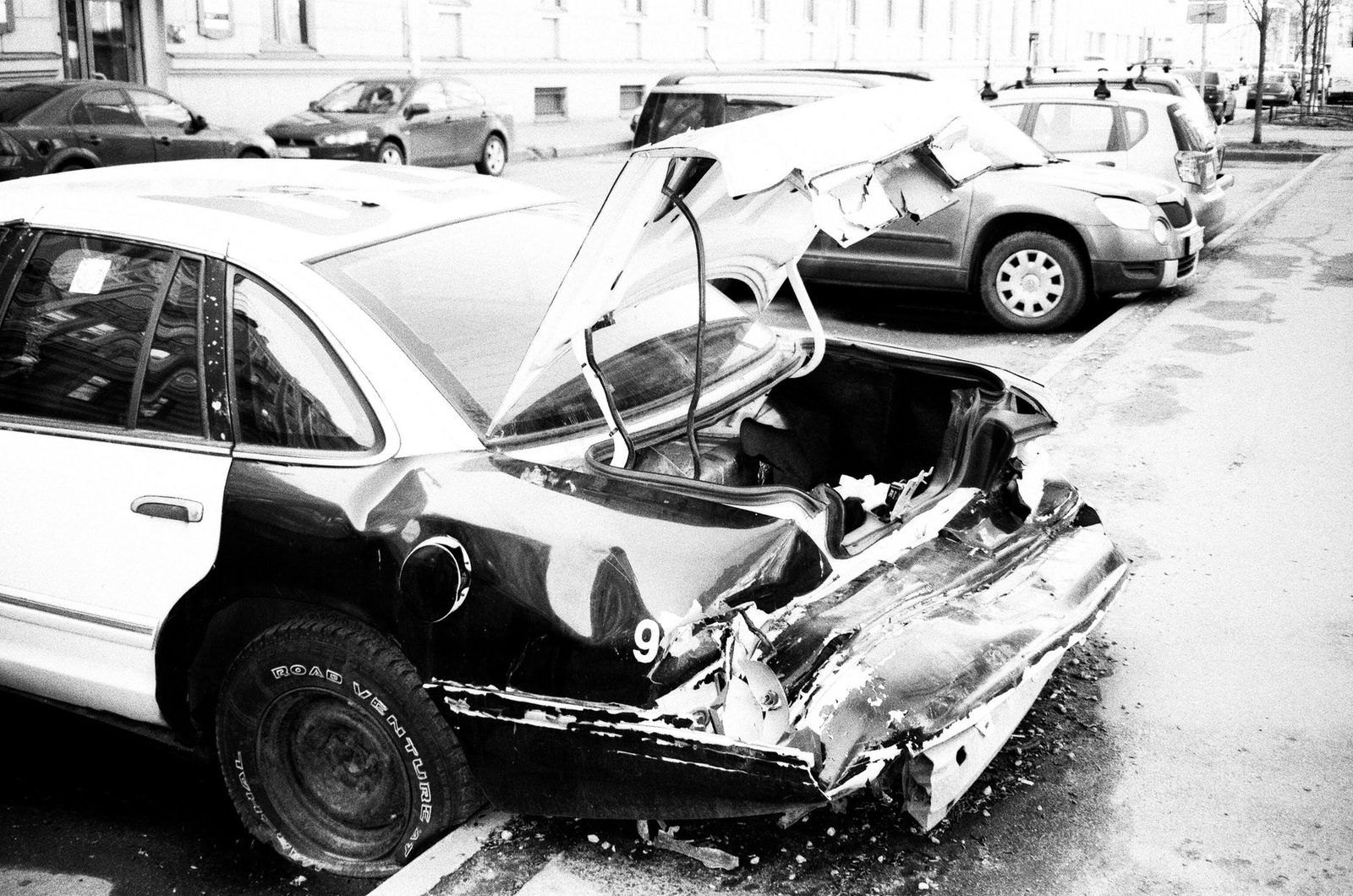
Your first job is to stay safe, and your second is to protect the proof. Move your vehicle out of traffic if it can be moved safely, and turn on your hazard lights.
Check everyone in both cars for injuries. Call 911 if anyone is hurt, even if the injuries seem minor and no officer has arrived.
Exchange information with the other driver. On request, and if available, the driver must also show a driver’s license or permit to any person injured in the crash or to the driver or occupant of or person attending any vehicle or other property damaged in the crash (La. R.S. 32:398). Also write down insurance company names and policy numbers.
Take photos before anything is moved, if you can. Capture vehicle damage from several angles, the positions of both cars, skid marks, traffic signals, road conditions, and any hazard such as a pothole or debris. Get names and phone numbers of any witnesses. Note nearby businesses, since their cameras may have recorded the intersection.
Reporting the Crash When Police Did Not Respond
You can still create a written record of the crash yourself. You can also ask the agency that covers the crash location for its report.
Louisiana law assigns crash investigations by location. The police department of a city or town investigates all crashes required to be reported by this Section inside its corporate limits. State police or the sheriff’s office handles crashes outside those limits (La. R.S. 32:398). For a crash inside New Orleans, that is the New Orleans Police Department. Ask the agency whether a report exists and how to request it.
Crash reports are confidential. They are made available only to the parties to the crash, parents or guardians of a minor who is a party to the crash, their insurers or an insurance support organization under contract to provide claims and underwriting, any healthcare provider or their agent that rendered services to a party, the succession representatives or attorneys of the parties, and a news-gathering organization that requests documents related to a specific crash. On request, they must be made available within seven working days after the investigation is complete (La. R.S. 32:398). Police crash reports can be requested from the agency that investigated the crash (NOPD police report requests).
You can also make a written report yourself. Louisiana law allows an operator to report a claim for property damage and physical injury in writing to the commissioner. That report must also declare in writing that the vehicle is covered by security as required by law, including the insurer’s name, policy number, policy effective dates, and amount of security (La. R.S. 32:871). Write a dated account while memory is fresh. Include the route, time, weather, lighting, and what each driver said.
Proving Fault Without an Officer’s Report or an Eyewitness
Fault can be shown without an officer’s report or an eyewitness when the other evidence fits together. A missing witness does not mean a claim cannot be pursued. The strength of the proof depends on how well it was saved.
Useful evidence includes:
- Photos and video, including dashcam footage
- Vehicle damage patterns, which can show how the cars met
- Phone location or app data from the trip
- Medical records that show injuries and when they were first noted
- Statements from passengers
For accidents and injuries occurring on or after January 1, 2026, Louisiana applies modified comparative fault (La. Civ. Code art. 2323, as amended by 2025 La. Acts No. 15). For accidents and injuries occurring on or after January 1, 2026, a person whose share of fault is 51% or more may not recover damages. For accidents and injuries occurring on or after January 1, 2026, if a person’s share of fault is below 51%, the damages recoverable are reduced in proportion to that share (La. Civ. Code art. 2323). Fault is determined for everyone who contributed to the injury. That applies even when the other person’s identity is not known or reasonably ascertainable.
A road hazard follows a different test. The owner or custodian of a thing is answerable for damage from its ruin, vice, or defect only upon a showing that they knew or should have known of the defect, the damage could have been prevented by the exercise of reasonable care, and they failed to exercise such reasonable care, though a court may still apply res ipsa loquitur in an appropriate case (La. Civ. Code art. 2317.1).
Insurance Steps: Notifying Your Insurer and Uninsured Motorist Coverage
Notify your own insurer promptly. Describe the crash accurately, including where, when, and what you saw. Avoid guessing about who was at fault.
If the other driver has no insurance or cannot be identified, your own uninsured motorist coverage may matter, and the details of your policy and your crash will determine how it applies. Under La. R.S. 22:1295, when the injured person is occupying an automobile not owned by that person, a resident spouse, or a resident relative, in no instance may more than one coverage from more than one uninsured motorist policy be available as excess over and above the primary coverage.
Coverage has limits, too.
Keep copies of every insurance letter, repair estimate, and medical bill. Organized records make it easier to track what has been paid and what is still open.
Louisiana’s Filing Deadline for Car Accident Claims
Louisiana generally gives two years to file a lawsuit for delictual (tort) injury claims. The two years run from the day the injury or damage is sustained (La. Civ. Code art. 3493.1).
The clock starts on the day of the injury, not when insurance talks end. A missed deadline can bar a claim, so put the date on your calendar early. Delictual actions carry a two-year liberative prescription under La. Civ. Code art. 3493.1, so check the date of injury against your own facts.
Not sure what your next step is?
Talk it through with our team — the first consultation is free, confidential, and carries no obligation.
Frequently Asked Questions
How do I get a police report amended?
Contact the agency that wrote the report and ask how to submit a supplement or correction. Ask for a copy of the current report at the same time.
How long after an accident must it be reported?
Report it as soon as you can, because memories and scene evidence fade quickly. This is a deadline for filing a lawsuit, not for reporting a crash. La. Civ. Code art. 3493.1 sets a two-year liberative prescription period for delictual actions, which begins to run on the date the injury or damage happens. The prescription does not run against minors or interdicts in actions involving permanent disability and brought pursuant to the Louisiana Products Liability Act or state law governing product liability actions in effect at the time of the injury or damage.
Is it worth suing an uninsured driver?
That depends on the facts, including the other driver’s assets, any insurance they have, and your own uninsured motorist coverage. A free consultation can review these points with you.
Will a missing police report hurt my claim?
It can make other evidence more important. It does not by itself end a claim.
Talk With a New Orleans Car Accident Lawyer Before the Deadlines Pass
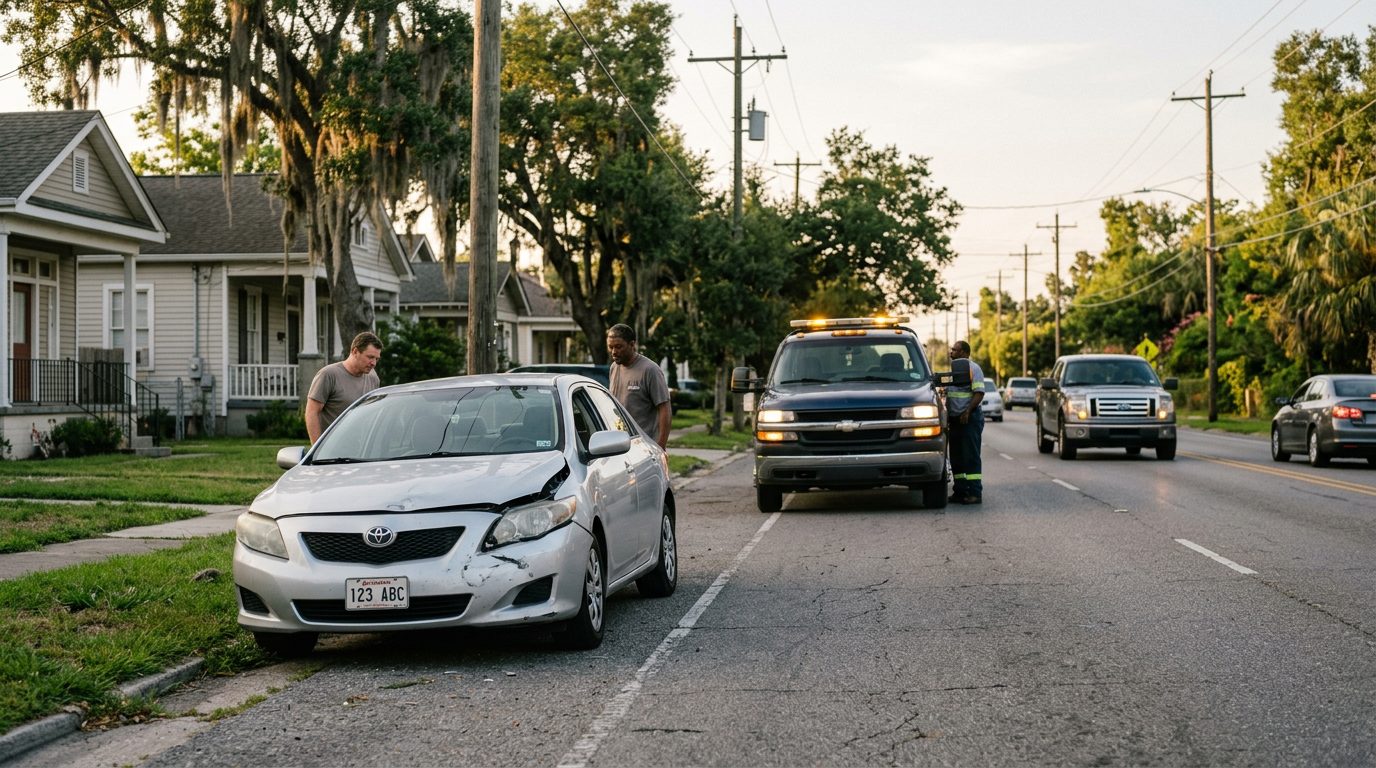
If no officer came to your crash, the facts may be pieced together from memory, photos, and insurance letters. You may be weighing whether to get help now, while the evidence is still fresh.
Przemek Lubecki is the responsible lawyer for this page, and the firm’s office is in New Orleans. The initial consultation is free, confidential, and comes with no obligation to continue. Request a free case evaluation or call 855-LUBECKI (Office in New Orleans).
The firm may associate or refer a case to other law firms.
Four steps to take right away
Check for injuries and get care
Your health comes first. Get medical attention even if you feel fine, because some injuries appear hours or days later.
Document the scene
Take photos of the vehicles, the road, traffic signs, skid marks, weather and any visible damage from several angles.
Collect names and contact details
Get the other driver's name, insurance information and license plate, and ask any witnesses for their names and phone numbers.
Write it down while you remember
Record the time, location, direction of travel and what each driver said. Notes made the same day are easier to rely on later.
A missing police report is not the end of the conversation
If no officer came to the scene, you can still take steps to protect your claim. Keep every photo, medical record and bill, and talk with a lawyer about what comes next.
How our firm can help
A trial lawyer leads your case
Przemek Lubecki is the responsible lawyer for this page and works from our New Orleans office on crash cases across Louisiana.
Free, confidential first consultation
The initial consultation is free, confidential and without obligation to continue. Call or request an evaluation when you are ready.
Help gathering evidence
We can help you organize photos, medical records, repair estimates and witness information so the facts are clear.
Referrals when they make sense
Our firm may associate or refer a case to other law firms. If that is likely for your matter, we will tell you.