
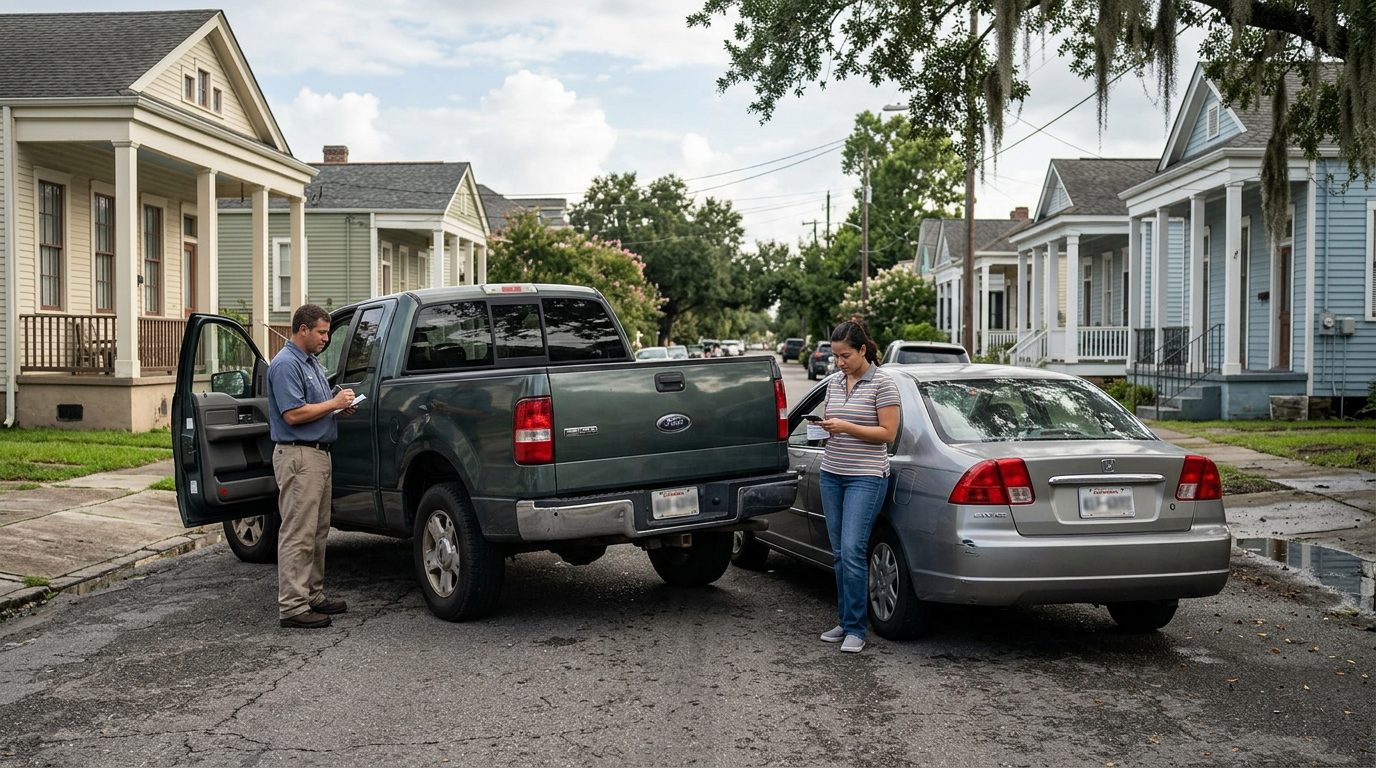
Car, Truck & Commercial Vehicle Accidents | New Orleans, Louisiana
Hurt in a Crash? Learn How Insurance Notice Fits Into Your Claim
Przemek Lubecki and our team in New Orleans help people injured in serious crashes understand the steps that come first, so they can focus on recovering.
By Przemek Lubecki · Published November 17, 2026
After a crash, you may be hurt, shaken, and getting calls from insurers. You want to know when you have to tell your own insurer about it.
Report the accident to your insurer promptly, as soon as you reasonably can under your policy’s timing terms. Don’t wait for a bill or a denial to do it.
The short answer: notify your insurer promptly
Notify your own insurer promptly after any accident. Your policy’s notice clause sets the timing and the method, so find that clause and follow it.
Many people wait because they feel fine. Some injuries take time to show up, so report the crash even if you feel okay.
Waiting until an insurer denies a claim, or until a lawyer gets involved, is not the same as giving timely notice. You can start the notice yourself. Give the basic facts: the date, the place, the other driver, and whether you were hurt or your vehicle was damaged.
If you're juggling injuries, a car you can't drive, and calls from insurers, you don't have to sort out the notice questions alone. Talk with us in a free, confidential consultation. Talk it through with our team — the first consultation is free, confidential, and carries no obligation.
Why early notice matters after a crash
Early notice lets your insurer open a claim file and start on the coverages your policy includes. Those can include medical payments and collision coverage, where your policy provides them, but insurers may exclude any or all coverage under a personal vehicle policy while a driver is logged on to a transportation network company’s digital network during the pre-trip acceptance period or engaged in a prearranged ride.
Early notice also keeps facts fresh. Witness names, the position of the cars, and what each driver said at the scene are easier to recall in the first days.
The police report matters too. Under La. R.S. 32:398, a driver involved in a crash resulting in injury to or death of any person, or property damage in excess of five hundred dollars, must give information, and show a license on request, to any officer at the scene or investigating the crash. Upon request, crash reports are made available only to the parties to the crash, parents or guardians of a minor party, insurers or an insurance support organization under contract to provide claims and underwriting, healthcare providers who treated a party, succession representatives, attorneys, and news-gathering organizations requesting documents for a specific crash, within seven working days after the investigation is complete.
Prompt notice is a routine step. You don’t need every answer first. Tell your insurer what you know, and say what you’re still learning.
What happens if you don’t tell your insurance company
Delayed or missing notice can give an insurer a reason to dispute coverage under the policy’s conditions. In general, the possibilities include a coverage dispute, a claim denial, or a delay in benefits.
A general guide can’t predict how your insurer will respond. The policy’s wording and the facts of your crash shape the outcome.
Keep a copy of anything you send to your insurer. Write down the date you sent it and how you sent it.
If you were driving for a rideshare app, the rules get more complicated. Under La. R.S. 45:201.7, a personal auto insurer may exclude coverage while a driver is logged on to a rideshare company’s digital network during the pre-trip acceptance period or is on a prearranged ride. Under La. R.S. 45:201.6, a rideshare company’s policy does not depend on a personal insurer first denying a claim.
How long is too late: insurance notice versus the legal filing deadline
Your notice to the insurer and the deadline to file a lawsuit run on separate clocks. Keep them apart in your mind.
Louisiana’s general deadline for fault-based injury claims is two years. Under La. Civ. Code art. 3493.1, delictual actions are subject to a liberative prescription (filing deadline) of two years, which starts when the injury or damage is sustained. The current text took effect July 1, 2024.
Some exceptions exist, so don’t assume the general date fits your case. Claims under the uninsured motorist provisions of a car policy have their own rule. Those are prescribed by two years from the accident, under La. R.S. 9:5629.
The lawsuit deadline is not the time to start. Insurer notice should come long before it.
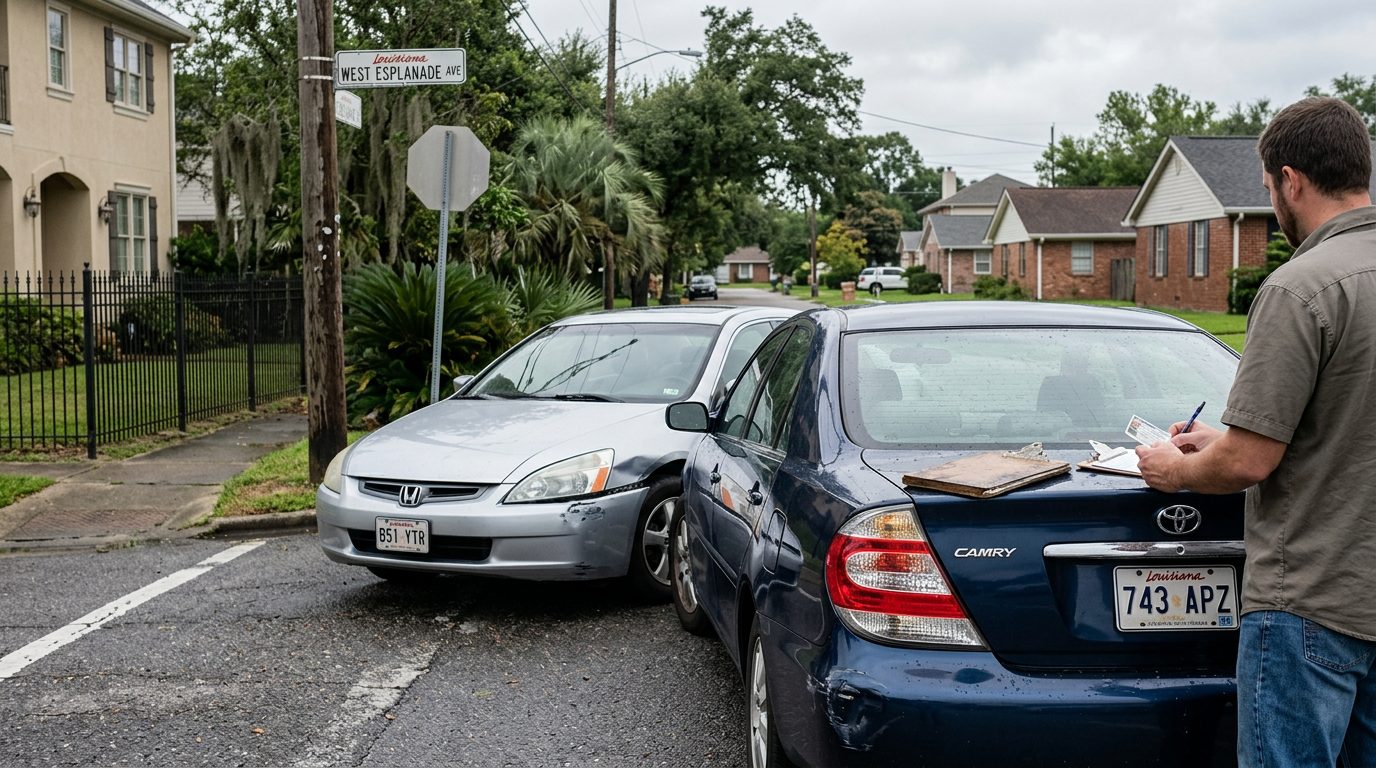
When the insurance company is slow or not responding
If your insurer is slow, ask for a claim number and request updates in writing. Keep a log of every call, with the date, the name of the person you spoke with, and a short summary.
Before you give a recorded statement, understand what it covers. Under La. R.S. 13:3732, a person who takes a written, recorded, or transcribed statement from an injured person must furnish a true and complete copy. That copy is due within twenty days after written demand.
Lost wages can be part of the picture too. Injuries from a car accident can also keep a person away from work for a time, and our team is glad to talk through your situation during a free consultation.
If you have Medicare, the CMS Secondary Payer overview explains that no-fault or liability insurance pays first for accident-related care. When insurance doesn’t pay promptly, Medicare.gov notes that Medicare may make a conditional payment, usually after 120 days, and later recover it.
What to keep track of right after the accident
Start a file on the day of the crash. Write down the date, time, and location. Record the other driver’s name, insurer, and contact details.
Take photos of the vehicles, the road, and any visible injuries. Write down names of any witnesses. Note the police report number if an officer gives you one.
Under La. R.S. 32:398, state police or the sheriff’s office investigate crashes outside city limits. The local police department investigates crashes inside city limits.
Crash reports are confidential. The statute limits access to the parties, their insurers, and their attorneys, along with a few others it lists.
Write a short summary of what happened while it’s fresh. It helps you keep details straight when you speak with an insurer.
Not sure what your next step is?
Talk it through with our team — the first consultation is free, confidential, and carries no obligation.
Talk with Przemek Lubecki about your situation
If you’re dealing with injuries, a car you can’t drive, and calls from insurers, you’re carrying a lot at once. You may be reading this for a parent or spouse who was hurt.
The responsible lawyer for this page is Przemek Lubecki, with the office in New Orleans. The firm may associate or refer a case to other law firms.
If you want to talk about when and how to notify your insurer, or about a claim that has stalled, reach out. The first consultation is free, confidential, and without obligation to continue. Call 855-LUBECKI or request a free case evaluation.
How soon do you need to report an accident to your insurance?
Report it promptly, under the timing terms of your policy’s notice clause.
How long do I have to file a car accident lawsuit in Louisiana?
For most fault-based injury claims, the general deadline is two years, under La. Civ. Code art. 3493.1.
Do I have to give a recorded statement?
Understand what it covers before you agree, and ask for a copy by written demand under La. R.S. 13:3732, which requires a copy within twenty days after the demand.
Four Things to Keep in Mind
Check Your Policy's Notice Clause
Many auto policies include a notice clause that describes how and when a claim must be reported. Reading that clause early helps you avoid surprises.
Keep Your Records Together
Police reports, photos, medical bills, repair estimates and correspondence with insurers are easier to use when they are gathered in one place.
Be Careful With Recorded Statements
An adjuster may ask for a recorded statement soon after a crash. Speaking with a lawyer before giving one can help you understand what you are agreeing to say.
Case Referrals
American Trial Lawyer may associate with or refer a case to other law firms. We will tell you if that happens.
Before You Speak With an Adjuster
Insurance adjusters work for the insurance company, not for you. Before you give a recorded statement, sign a release or accept a settlement offer, consider speaking with a lawyer about your situation.
Getting Organized After a Crash
Write Down the Facts
Record the date, time, location and weather while your memory is fresh, along with what each driver said at the scene.
Gather Your Documents
Keep the police report number, insurance information, photos and any paperwork from your vehicle or employer.
Track Your Treatment
Save every medical visit, prescription and bill, and keep a simple journal of symptoms and how they affect daily life.
Limit Public Posts
Anything you post online about the crash or your activities can be used by the other side. Talking it through with a lawyer first can help.