
Car Accidents | New Orleans, Louisiana
Hit by a Car Door in New Orleans? Understand Who May Be Responsible
Dooring crashes can leave riders and drivers with serious injuries and unclear questions about who should pay. Here is how these cases are commonly examined, and how a trial lawyer can help you sort them out.
By Przemek Lubecki · Published November 16, 2026
A car door swings open, a car or bike hits it, and now there are injuries, a damaged vehicle and a lot of questions. The person who opened the door is often the first person whose conduct gets examined.
In short, a driver or passenger who opens a door without checking for traffic may be responsible for the crash. Other people whose conduct contributed may share responsibility too, and Louisiana’s fault rules decide how any recovery is reduced.
A Dooring Crash Is Usually Decided by What Each Person Could See
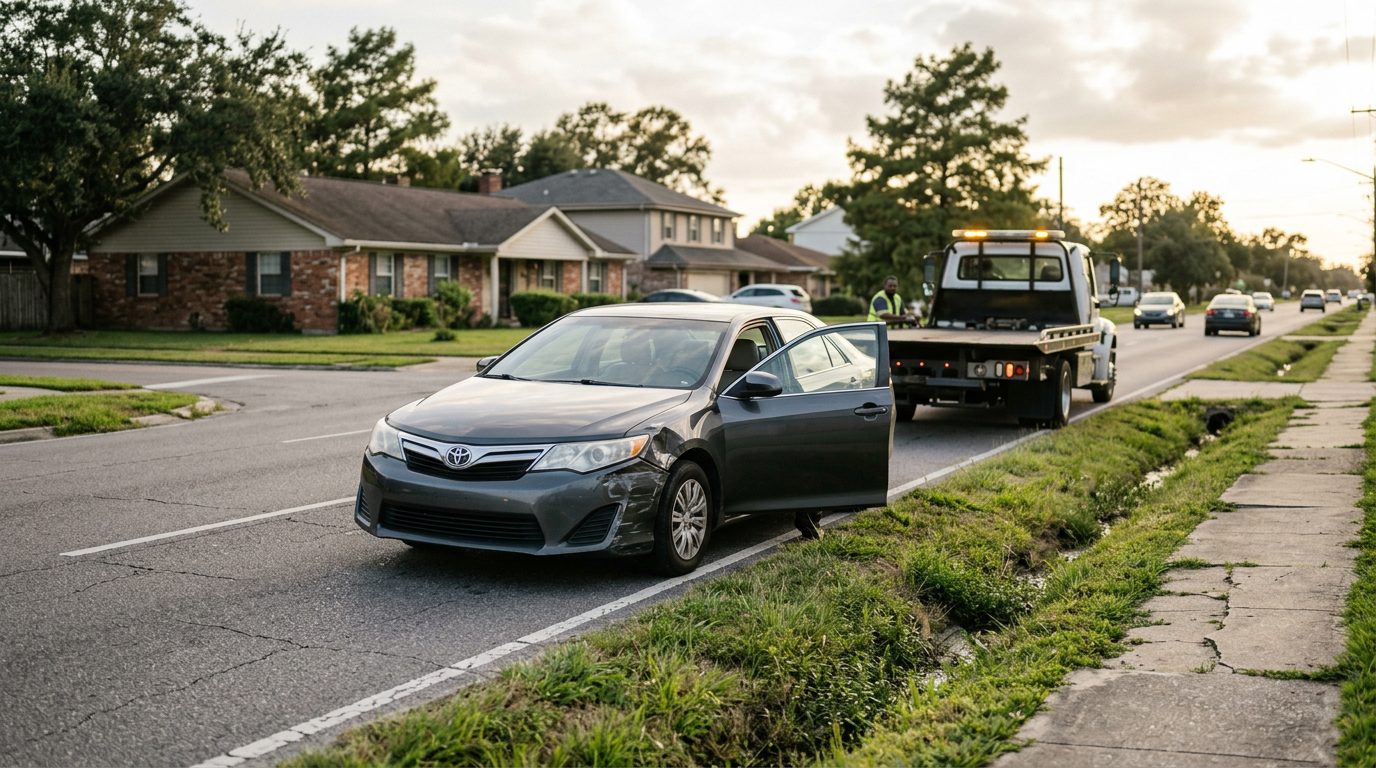
A dooring crash happens when a vehicle door opens into the path of a moving car, motorcycle, bicycle or pedestrian, and a collision follows.
People often come to this question shaken. They may be dealing with a damaged car, medical bills or calls from an insurance adjuster. Some are asking for a family member, friend or coworker who was hurt.
This page answers four questions. What does Louisiana law say about fault? Who can be responsible? How can fault be split? What evidence should be kept? This is general information, not advice about any particular crash.
If a car door opened into your path and you're now dealing with injuries, insurance calls and hard questions, we're glad to talk with you, and you don't have to sort it out alone. Talk it through with our team — the first consultation is free, confidential, and carries no obligation.
Louisiana Expects People to Check for Traffic Before Opening a Door
A person who opens a door without checking for traffic may be responsible for the harm that follows.
Louisiana’s general fault rules apply here. Under La. Civ. Code art. 2315, every act of man that causes damage to another obliges the person by whose fault it happened to repair it. Under La. Civ. Code art. 2316, a person is responsible for damage caused by negligence, imprudence or want of skill, not only by a deliberate act. Opening a door without looking can fit that description.
Traffic rules also bear on opening doors. How they apply depends on the facts. Where was the car parked? What traffic was moving? What could the person see? A traffic violation is one piece of evidence, not the whole answer.
Who Can Be Liable When a Door Opens Into Another Car
The person who opened the door is usually the most direct source of responsibility. That can be the driver or a passenger.
Other people may also contribute. A driver who was speeding, following too closely or drifting toward the door’s path may share some fault. Who is responsible depends on each person’s conduct before the crash.
Louisiana assigns fault to everyone who caused or contributed to an injury. That includes people who are not parties to the lawsuit. Under La. Civ. Code art. 2324, a joint tortfeasor is not liable for more than his own degree of fault, so a claim may need to address each person’s share.
In general terms, the at-fault person’s liability insurance usually responds to a claim against them, subject to the policy limits. Most of these questions come down to the same thing: what each person could see, did and could have done. Photos and witness accounts help show that.
How Comparative Fault Can Reduce What the Driver Who Was Hit Recovers
For crashes on or after January 1, 2026, Louisiana bars recovery when the injured person is 51% or more at fault. When the injured person is less than 51% at fault, the recovery is reduced in proportion to that person’s share, but if the injury is partly the result of an intentional tortfeasor’s fault, the claim is not reduced. The rule is set out in La. Civ. Code art. 2323.
The date of the crash matters because the rule changed on January 1, 2026. Check the date before reading the rule as applying to your situation.
Insurers and courts look at several points for the driver who was hit. These include speed, lookout, following distance, lane position and whether the driver could have avoided the door. Each point can affect how fault is split.
An insurer’s first fault assignment is not the final word. Do not assume the outcome from that first answer, and do not treat it as settled.
Rideshare, Commercial and Motorcycle Crashes Can Look Different
A dooring crash involving a rideshare or commercial vehicle can involve different insurance policies and different parties than a crash between two private cars. A business that owns, leases or controls the vehicle may raise separate questions. An employer can answer for damage caused by an employee in the exercise of the functions in which they are employed, but only when the employer might have prevented the act which caused the damage and did not do it, as described in this Louisiana Fourth Circuit opinion on article 2320.
Motorcycle riders and bicyclists have less protection than people inside a car. Their injuries are often serious, and they may need careful medical follow-up.
A parked car’s driver, a passenger who opened the door, or a business that controls the vehicle can each raise a separate question. American Trial Lawyer, LLC may associate or refer a case to other law firms when the facts call for it.
Evidence That Shows Who Opened the Door and Why
The most useful evidence usually includes the crash report, photos, witness names and medical records.
Crash reports are confidential under La. R.S. 32:398. They are available only to the parties to the crash, parents or guardians of a minor party, insurers of a party or an insurance support organization under contract to provide claims and underwriting, healthcare providers or their agents who rendered services to a party, the succession representatives or attorneys of the parties, and a news-gathering organization (a newspaper or news publication, a radio or television broadcast station, a cable television operator, or a wire service, meeting the statute’s requirements) that requests documents related to a specific crash. La. R.S. 32:398 Upon request, they are made available within seven working days after the crash investigation is completed.
Photos should show both vehicles, the door, the road and where each vehicle came to rest. Keep the damaged vehicle or good copies of its photos. Write down witness names and phone numbers, and note any dashcam or nearby video.
Under La. R.S. 13:3732, a person who takes a written or recorded statement from an injured person must give that person a true copy. The copy is due within twenty days after a written demand. Use that right, and be careful when an insurer asks for a recorded statement.
Medical evidence matters too. The Brain Injury Association of America states that symptoms of traumatic brain injury may be masked or delayed after a car accident. New or lasting symptoms should be reported promptly to a health care professional. Feeling fine right after a crash does not rule out an injury.
Not sure what your next step is?
Talk it through with our team — the first consultation is free, confidential, and carries no obligation.
Deadlines and Insurance Coverage to Know About
For most delictual (tort) injury claims, Louisiana generally allows two years to file suit. That period starts from the day the injury or damage is sustained, under La. Civ. Code art. 3493.1. The statute has exceptions, so timing depends on the facts.
For claims under uninsured motorist provisions, La. R.S. 9:5629 sets a two-year period from the date of the accident.
Your own auto policy may include uninsured or underinsured motorist coverage. Whether it applies depends on the policy and the crash.
Quick Answers to Common Questions
Who is at fault if a car hits your open door?
The person who opened the door is often examined first. Others whose conduct contributed may share fault.
Does comparative fault reduce a recovery?
Yes. For crashes on or after January 1, 2026, 51% or more fault bars recovery, and a smaller share reduces it.
How long do I have to file?
Louisiana generally allows two years from the date of injury for most tort claims, with exceptions (La. Civ. Code art. 3493.1).
Talk With American Trial Lawyer About Your Dooring Crash
You may be reading this after a crash you did not choose, for yourself or for someone you care about. You may still be working out what happened and what comes next.
If you want to talk through your own facts, call 855-LUBECKI to reach our New Orleans office, or request a free case evaluation. The first consultation is free, confidential and without obligation to continue.
Attorney Advertising Information
This page is attorney advertising. It provides general information, not legal advice about any specific situation.
Przemek Lubecki is the responsible lawyer for this page’s content.
American Trial Lawyer, LLC has its office in New Orleans, Louisiana. The firm serves people in Orleans Parish, the New Orleans metro and across Louisiana, including Metairie, Jefferson Parish, Kenner, St. Bernard Parish and Slidell.
Przemek Lubecki is licensed to practice law in Louisiana.
How We Approach a Dooring Case
Careful Review of the Facts
We look at the crash scene, photos, police reports, vehicle damage and witness accounts to understand how the door opened and who had a chance to avoid the collision.
Every Possible Responsible Party
Depending on the facts, the driver who opened the door, a passenger, an employer or another driver may be involved. We look at each one.
Attention to Your Recovery
Your health comes first. We work to understand your medical needs and the way the injury affects your daily life, work and family.
Clear, Plain Communication
We explain each step in plain language so you know what is happening and what decisions are yours to make.
Before You Speak With an Insurance Adjuster
Insurance companies may ask for a recorded statement soon after a crash. Speaking before you understand your injuries or your options can affect your claim. You can talk with a lawyer first.
Steps That Can Help After a Dooring Crash
Get Medical Care
Even if injuries seem minor, a medical evaluation creates a record of what happened and what treatment you need.
Record the Scene
If you are able, take photos of the vehicles, the door, the roadway, traffic signs and any visible injuries.
Gather Witness Information
Names and phone numbers of people who saw the crash can be valuable later, especially when accounts differ.
Keep Your Records
Save medical bills, repair estimates, pay stubs and notes about missed work or daily limits caused by your injuries.