
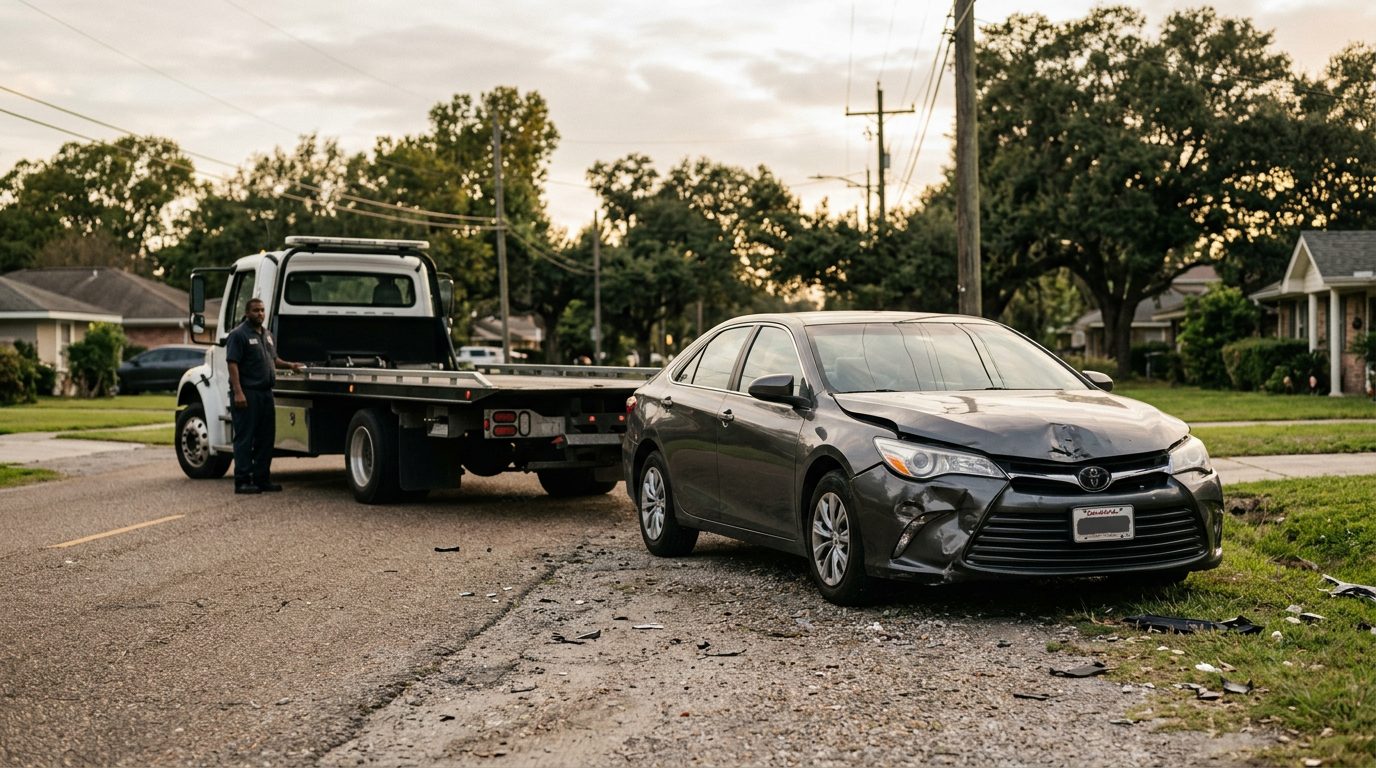
Car Accidents | New Orleans, Louisiana
Hurt in a Company Car Crash? Find Out Whether the Employer Can Be Held Accountable
Przemek Lubecki, trial lawyer at our New Orleans office, represents people injured when a worker was driving for an employer. Free, confidential initial consultation with no obligation to continue. You may be responsible for case costs and expenses in addition to the fee.
How We Approach a Company Car Case
Based in New Orleans
Our office is in New Orleans, and we represent people across Orleans Parish, the New Orleans metro area and Louisiana.
Careful Review of the Facts
We look at who was driving, why they were on the road, what vehicle was involved and how the crash happened.
Clear Communication
We explain each step in plain language so you know what to expect while you focus on recovering.
Pursuing Full Accountability
We work to identify every party that may share responsibility for your injuries, including the employer.
By Przemek Lubecki · Published October 20, 2026
Sometimes you can. An employer may be held responsible when its driver causes a crash while doing the employer’s work, but that turns on the facts. This page explains how Louisiana law looks at that question, which evidence matters most, and which deadlines apply to people in New Orleans and Orleans Parish.
Not sure what your next step is?
Talk it through with our team — the first consultation is free, confidential, and carries no obligation.
Short answer: can I sue the employer after a car accident with a company car?
An employer can be answerable when a worker causes a crash while doing the job. Louisiana Civil Code article 2320 makes employers answerable for damage their workers cause while performing the functions they were hired to perform. The same article adds a limit. Responsibility applies only when the employer might have prevented the act and did not.
The driver is still responsible for his or her own fault. Under Louisiana Civil Code article 2324, a joint tortfeasor is not liable for more than its own degree of fault. So a claim may name more than one party. If liability is not solidary, each answers for its own share; but a person who conspires with another to commit an intentional or willful act is answerable in solido with that person.
A claim can also look at the company’s own conduct. For example, a company that gave a vehicle to a driver it should not have trusted with it may face questions about its own choices. These claims focus on what the company knew or should have known.
A company car alone doesn’t answer the question. The reason for the trip usually matters most.
Who this applies to and what a claim can cover
This applies to three groups of people, and the facts decide which path fits.
- Under Louisiana Civil Code article 2320, masters and employers are answerable for the damage occasioned by their servants and overseers in the exercise of the functions in which they are employed, but responsibility attaches only when the employer might have prevented the act that caused the damage and did not do it. Details such as whether the driver was an employee or a contractor, and what the driver was doing at the time, matter in each situation.
- Drivers hurt while on the job, where another party may be responsible.
- Families who lost a loved one in a work-related crash.
Louisiana Civil Code article 2315 says a person by whose fault an act causes damage must repair it. Claims often include medical bills, lost wages, property damage, and pain and suffering. The value of a claim can’t be known at the start, because it rests on the injuries and the proof.
In a wrongful death case, Louisiana Civil Code article 2315.2 lists who may sue. The list starts with a surviving spouse and children. Parents, siblings, and grandparents can sue only when no closer relative survived. A father or mother who abandoned the deceased during his minority is deemed not to have survived him.
The facts and evidence that decide employer responsibility
Three facts usually matter most: who owned the vehicle, what the driver was doing for the employer, and who controlled the trip.
- Ownership: who owned, leased, or insured the vehicle, and whether the company maintained it.
- Work task: a delivery, service call, dispatch assignment, or errand for the company is different from a personal trip.
- Schedule and control: whether the driver was on the clock, and whether the company set the route, deadlines, or mileage.
- Records: GPS or telematics data, dispatch and phone logs, fuel and toll receipts, and expense reports.
- Scene proof: the police report, photos, witness names, and what the driver said at the scene.
Louisiana’s crash report law keeps crash reports confidential. The parties, their insurers, and their attorneys can request them.
Trucks add federal rules. Federal driver rules say a motor carrier must require its drivers to follow driver rules. The federal drug and alcohol testing rules state that post-accident testing may be required after a truck crash.
Protecting evidence in the first days
Start with medical care and written notes. Some records and data may be overwritten or lost over time.
- Get medical care and keep every bill, appointment note, and work restriction.
- Photograph the vehicles, the scene, your injuries, and any company logos or markings.
- Save texts, emails, and messages about the trip, the schedule, and the reason for driving.
- Be careful with recorded statements to any insurer. If you gave one, you can ask for a copy.
A lawyer can also send written requests asking the company and insurers to keep logs and data.
Louisiana uses comparative fault, which means each person’s share of fault matters. Under La. Civ. Code art. 2323, if the degree or percentage of negligence attributable to the person suffering injury, death, or loss is equal to or greater than fifty-one percent, that person shall not be entitled to recover damages. A smaller share reduces damages in proportion to that share. See Louisiana Civil Code article 2323.
Workers’ compensation versus a claim against the employer
Workers’ compensation and a claim against a driver or company are different routes. The facts decide which may apply.
- Workers’ compensation is a separate system for people hurt while working. It works differently from a lawsuit.
- A claim against a driver or company is based on fault. It is a different type of case.
- If you were working when you were hurt, workers’ compensation may be one route. A claim against another party may also be possible.
- Both can be reviewed together, including which benefits apply, what deadlines apply to each, and how each is filed.
Keep records of lost work time and work restrictions. They’re useful no matter which route applies. For the broader claim process, see car accident claims in Orleans Parish.
Have questions about what happened?
Ask our team directly. The first conversation is free, confidential, and there is no obligation to continue.
How the process works and when the filing deadline matters
Most cases start with a conversation, then move to records, claims, and, if needed, a lawsuit.
- First consultation. We review the crash, the vehicle, and the work connection. The first consultation is free, confidential, and carries no obligation to continue. You may be responsible for case costs and expenses in addition to any fee.
- Investigation. We gather the police report, crash records, and preservation requests.
- Claim. The claim goes to the insurers involved, with settlement talks where appropriate.
- Lawsuit, if needed. If a fair resolution isn’t reached, a suit may be filed in the proper court.
Many claims take months to resolve. Some take longer, based on the injuries and the insurers involved.
Louisiana generally gives two years to file a delictual action, the legal term for an injury lawsuit. The rule is in Louisiana Civil Code article 3493.1. Exceptions can apply. For wrongful death, the rule is one year from death or two years from the injury, whichever is longer, under article 2315.2; for medical malpractice actions, the right of action prescribes one year from the death of the deceased. Early review helps protect the deadline.
We may associate or refer a case to other law firms.
Why work with American Trial Lawyer in New Orleans
Przemek Lubecki is the responsible lawyer for this page. He is a trial lawyer who represents people seriously hurt in truck, commercial vehicle, and car crashes, and families in wrongful death cases.
- Office: New Orleans. The firm serves people in Orleans Parish, the New Orleans metro area, including Metairie, Jefferson Parish, Kenner, St. Bernard Parish, and Slidell, and across Louisiana.
- Support: Our team includes assistants and office staff who help with records, insurer contact, and deadlines.
- Practice areas: truck, car, commercial vehicle, rideshare, motorcycle, wrongful death, brain injury, and negligent security cases.
Common questions about suing a coworker’s employer
Can I sue the employer after a car accident with a company car?
Sometimes. Louisiana law can make an employer answerable when its worker causes harm while doing the employer’s work.
Is it better to settle or sue?
The right path turns on your injuries, the insurance involved, and the proof. A lawyer can review those details with you.
How long after a crash can I sue?
Louisiana generally gives two years for injury claims. For wrongful death, the rule is one year from death or two years from the injury, whichever is longer; for medical malpractice actions, the right of action prescribes one year from the death of the deceased. Exceptions can apply, so review the dates early.
How workers’ compensation can limit lawsuits
Not necessarily. Workers’ compensation and a claim against another party can be reviewed together.
If a coworker was driving for work when your crash happened, or someone you love died in a work-related crash, call 855-LUBECKI to talk through your options.
Be Careful With Early Statements
Insurance representatives for the employer or another driver may contact you soon after a crash. Before you give a recorded statement or sign any paperwork, consider talking with a lawyer about your situation.
Details That Often Matter in These Cases
Who Was Driving and Why
Records showing the driver's job duties, assigned routes and work schedule can shed light on the trip at the time of the crash.
Vehicle and Insurance Information
Ownership of the vehicle, the company's insurance policies and any maintenance records can all be part of the review.
Photos, Reports and Witnesses
Police reports, photographs, dash camera footage and witness names should be preserved as early as possible.
Medical Records From the Start
Prompt medical care and consistent treatment notes help document injuries, including brain injuries that may not show up right away.