
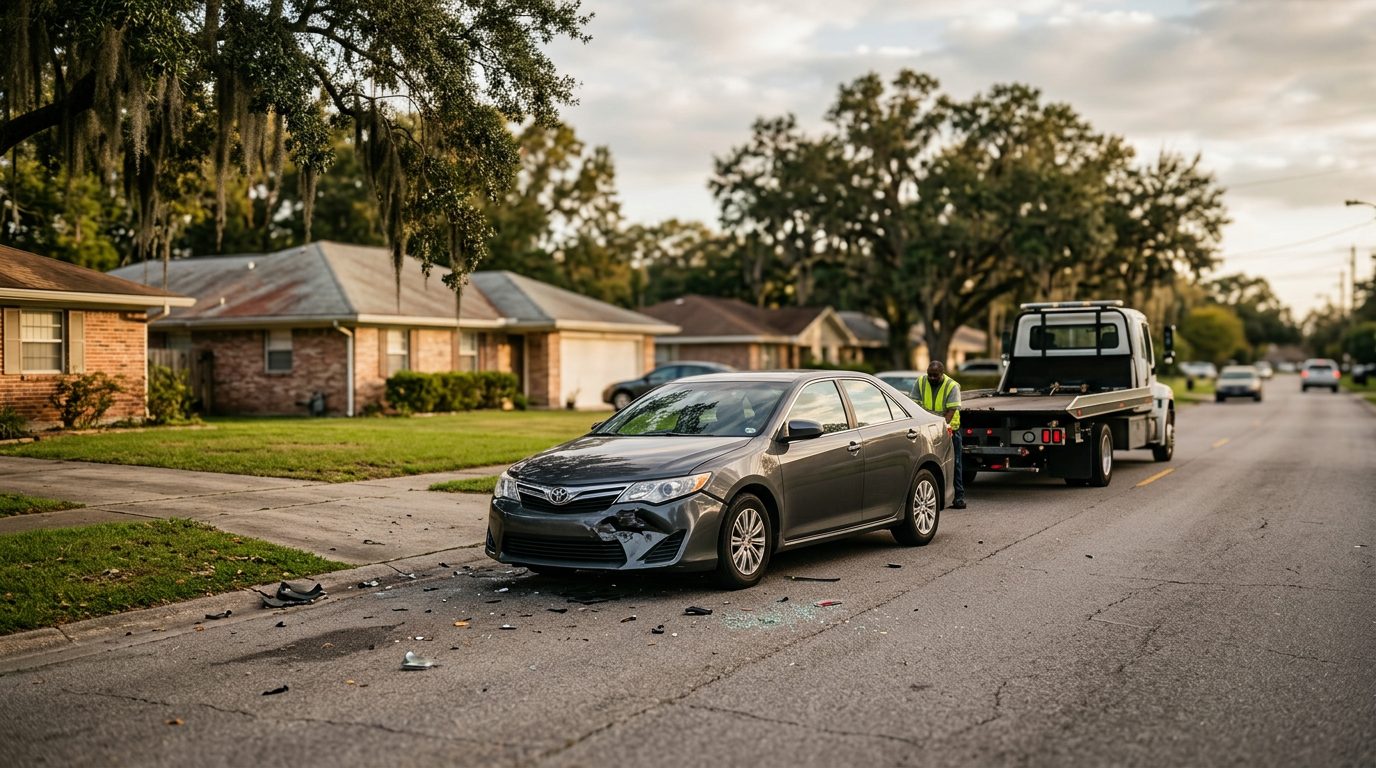
Car Accidents | New Orleans, Louisiana
Worried About Your Premium After a Louisiana Crash?
Your insurance questions and your injury questions often overlap. Here is a clear way to think through both.
By Przemek Lubecki · Published November 12, 2026
Being in a crash is stressful, and a higher insurance bill is one more thing to worry about. After a crash, many drivers worry about how it could affect their car insurance rates in Louisiana.
Your rate may go up, stay the same, or change for reasons unrelated to the crash. This page explains the factors that usually matter, so you know what to ask your insurer.
The Short Answer: Rates May Change, and Fault Often Matters
Your car insurance may or may not go up after an accident. Your insurer’s own rating rules decide how it treats a claim, and those rules differ from company to company. Who was at fault often matters, because it shapes how the insurer reviews the claim. Your policy, your driving history and the type of claim can also play a part. No one can give you a dollar amount from the crash alone. The sections below explain the legal and practical pieces, starting with fault, because Louisiana’s fault rules also decide whether a claim can be made at all.
If a crash left you hurt or worried about bills and insurance, you don't have to sort it out alone, and we're glad to talk through your situation. Talk it through with our team — the first consultation is free, confidential, and carries no obligation.
How Louisiana Fault Rules Affect Your Policy
Louisiana uses comparative fault, which means each driver’s share of fault is weighed. For accidents and injuries on or after January 1, 2026, a person whose share of fault is 51% or more recovers no damages. A person below 51% has damages reduced by their own percentage of fault (La. Civ. Code art. 2323).
Insurers often sort a crash into fully at fault, partly at fault, or not at fault. That label may not match how a court would describe the fault. Ask your insurer how it classified the accident, and why. For a full overview of car accident claims in Orleans Parish, see our Orleans Parish car accident claim guide.
Louisiana Minimum Coverage and Why Claim Size Matters
Louisiana requires most registered self-propelled vehicles to carry an automobile liability policy, a bond, a cash deposit or a self-insurance certificate (La. R.S. 32:861). The liability limits are tied to the definitions in La. R.S. 32:900.
Under La. R.S. 32:861, an automobile liability policy must have the liability limits defined in R.S. 32:900(B)(2) or 900(M). A motor vehicle liability bond must cover not less than fifteen thousand dollars for injury to or death of any one person, not less than thirty thousand dollars for injury to or death of more than one person in any one accident (subject to the one-person limit), and not less than twenty-five thousand dollars for damages to the property of others. Many drivers buy more coverage.
When injuries or vehicle damage go past a policy’s limits, the gap can leave an injured person paying costs the policy doesn’t cover. Check your own declarations page to see your limits. A claim against the at-fault driver is a separate question from how your own premium changes.
Claims on Your Policy Versus Claims Against Another Driver
A claim under your own policy, such as collision or medical payments coverage, is handled by your insurer. A claim against the other driver is a liability claim against that driver’s insurer. Insurers may review these two paths differently, so the same accident can look different on each file.
Under La. R.S. 22:1269, a direct action is allowed only in the circumstances the statute lists. In general, the claim is against the at-fault driver.
Settlements can also carry legal meaning. Under La. R.S. 22:1290, a settlement of a property damage claim under a vehicle liability policy is not an admission of liability on any other claim from the same accident.
Ask your insurer, in writing, how the accident is recorded and whether a rate review or surcharge applies. The written answer can help you understand your own file.
Protecting Your Position While You Deal With the Insurance Process
Anything you say to an adjuster can become part of the file. Recorded statements are especially important to understand. Under La. R.S. 13:3732, anyone who takes a written or recorded statement from an injured person must give that person a true copy. That copy must be provided within twenty days after a written demand.
Keep copies of everything. That includes the police report, photos, repair estimates, rental receipts and every letter or email from the insurer. Crash reports are confidential and are available only to listed persons: the parties, parents or guardians of a minor who is a party to the crash, insurers or insurance support organizations under contract to provide claims and underwriting of any party which is the subject of the report, healthcare providers that rendered services to a party, succession representatives of the parties, attorneys of the parties or succession representatives, and news-gathering organizations that request documents related to a specific crash. Upon request, they must be made available within seven working days after the investigation is complete (La. R.S. 32:398).
You don’t have to accept the first offer or the first fault decision without understanding it. Ask questions and request written explanations. For how vehicle damage claims are handled after a crash, see our vehicle damage claim guide.
How Long an Accident Stays on Your Driving and Insurance Record
How long an accident appears on your record, and how it affects your rating, depends on your insurer and your facts. Ask your insurer, in writing, how the accident is listed in your file. A single accident is one factor among several that insurers can review at renewal.
Under La. R.S. 32:871, the Department of Public Safety and Corrections keeps a record of insurance declared after an accident. It provides that information on written request and payment of a fifteen dollar fee.
Deadlines matter too. For injuries sustained after July 1, 2024, Louisiana’s general deadline for delictual (tort) actions is two years (La. Civ. Code art. 3493.1). For background on state insurance requirements, the Office of Motor Vehicles publishes official information on compulsory insurance.
Injury claims are a separate question from premium questions. For how injury claims are considered, see our pain and suffering guide.
Not sure what your next step is?
Talk it through with our team — the first consultation is free, confidential, and carries no obligation.
Talking Through Your Situation With American Trial Lawyer
If a crash has left you hurt, worried about bills, or dealing with a damaged vehicle, insurance questions can pile on top of everything else. You may also be researching for a family member who is still recovering or has lost someone.
American Trial Lawyer has its office in New Orleans. Przemek Lubecki is the responsible lawyer for this page’s content. To talk through your accident and your questions, call 855-LUBECKI for a free, confidential consultation with no obligation to continue. The first consultation is free, confidential and without obligation.
The firm may associate or refer a case to other law firms.
Frequently Asked Questions
Will my car insurance go up after an accident in Louisiana?
It can, especially if the accident was found to be your fault or you filed a claim under your own policy. Insurers set rates using many factors, so an increase is not certain and the amount varies by company.
Does my insurance rate stay the same if the accident was not my fault?
Rate increases are generally less likely when another driver caused the crash, but insurers have different policies, and no outcome can be promised. Your premium can still change for other reasons.
How long can an accident affect my car insurance premium?
The period during which a claim may affect your rates depends on the insurer and the policy you have. Check with your own insurance company to learn how long its rating rules apply.
What if I was seriously hurt in an accident that was not my fault?
Serious injuries can bring medical bills, lost income, and questions about who is responsible, so it may help to talk with a lawyer early. The firm offers a free, confidential first consultation with no obligation to continue, and you can call 855-LUBECKI to start that conversation.
Practical steps after a crash
Document the scene
Photos of vehicles, roadway conditions, and any visible injuries can help preserve what happened while it is still fresh.
Get medical care
Some injuries do not show symptoms right away. A prompt medical evaluation protects your health and creates a record of your condition.
Keep every record
Save your police report, repair estimates, medical bills, and all letters from insurers in one place.
Think before you give statements
Speaking with an insurer can affect your claim. Ask questions and take your time before you give a recorded statement or sign anything.
The first consultation is free
The first consultation is free, confidential, and without obligation to continue. Przemek Lubecki, the responsible lawyer for this page, is based in our New Orleans office. The firm may associate or refer a case to other law firms.
How our team can help
Focused on injured people
Our team represents people seriously hurt in car, truck, and commercial vehicle crashes, along with families in wrongful death cases.
Plain-language answers
We explain your options, including how an accident may affect your insurance, in terms you can follow.
Serving the New Orleans area
We represent clients in Orleans Parish, the New Orleans metro, and across Louisiana.
Care for the whole picture
Your health, your finances, and your family come first as we work through your claim.
Have questions about your insurance after a crash?
Talk with Przemek Lubecki at our New Orleans office.