
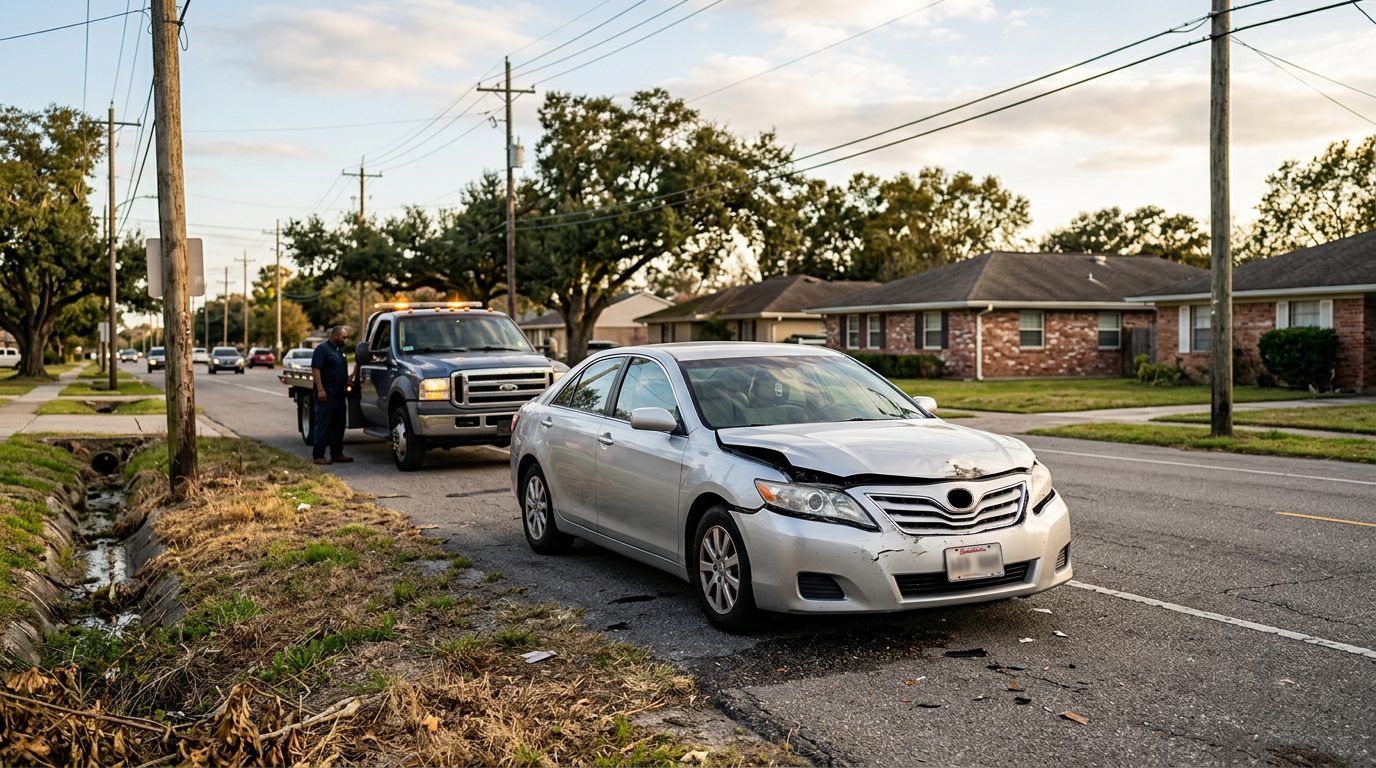
Car Accidents | New Orleans, Louisiana
Repairs Stalled by a Fault Dispute? Understand Your Options
When an insurer questions who caused a crash, repairs can stop and bills can pile up. Here is how to keep your claim organized while the question is sorted out.
By Przemek Lubecki · Published November 13, 2026
Your car is damaged, the shop is waiting on approval, and the other driver’s insurer says the crash was partly your fault. A disputed-fault claim is not automatically lost. A property-damage claim can still be pursued against the other driver’s insurer while fault is argued, and your own collision coverage may pay for repairs in some situations.
Who Pays for Car Repairs When Fault Is Disputed
Louisiana law says a person whose fault causes damage must repair it (La. Civ. Code art. 2315). When the other insurer says you share the blame, the real question becomes how that fault is divided.
Your own policy can be a second source. If you carry collision coverage, it may pay for repairs, subject to your deductible and policy terms. If your insurer pays first, it may later seek recovery from the other side. That is called subrogation. When a recovery is reduced by fault, the subrogated insurer’s recovery is reduced in the same proportion (La. Civ. Code art. 2324.2).
This page answers one question within our car accident claims guide. The same Louisiana rules apply to crashes across Orleans Parish, the New Orleans metro and the rest of the state, including Metairie, Jefferson Parish, Kenner, St. Bernard Parish and Slidell.
If your car is waiting on repairs and the other insurer says the crash was partly your fault, our team is ready to talk through your options with you. Talk it through with our team — the first consultation is free, confidential, and carries no obligation.
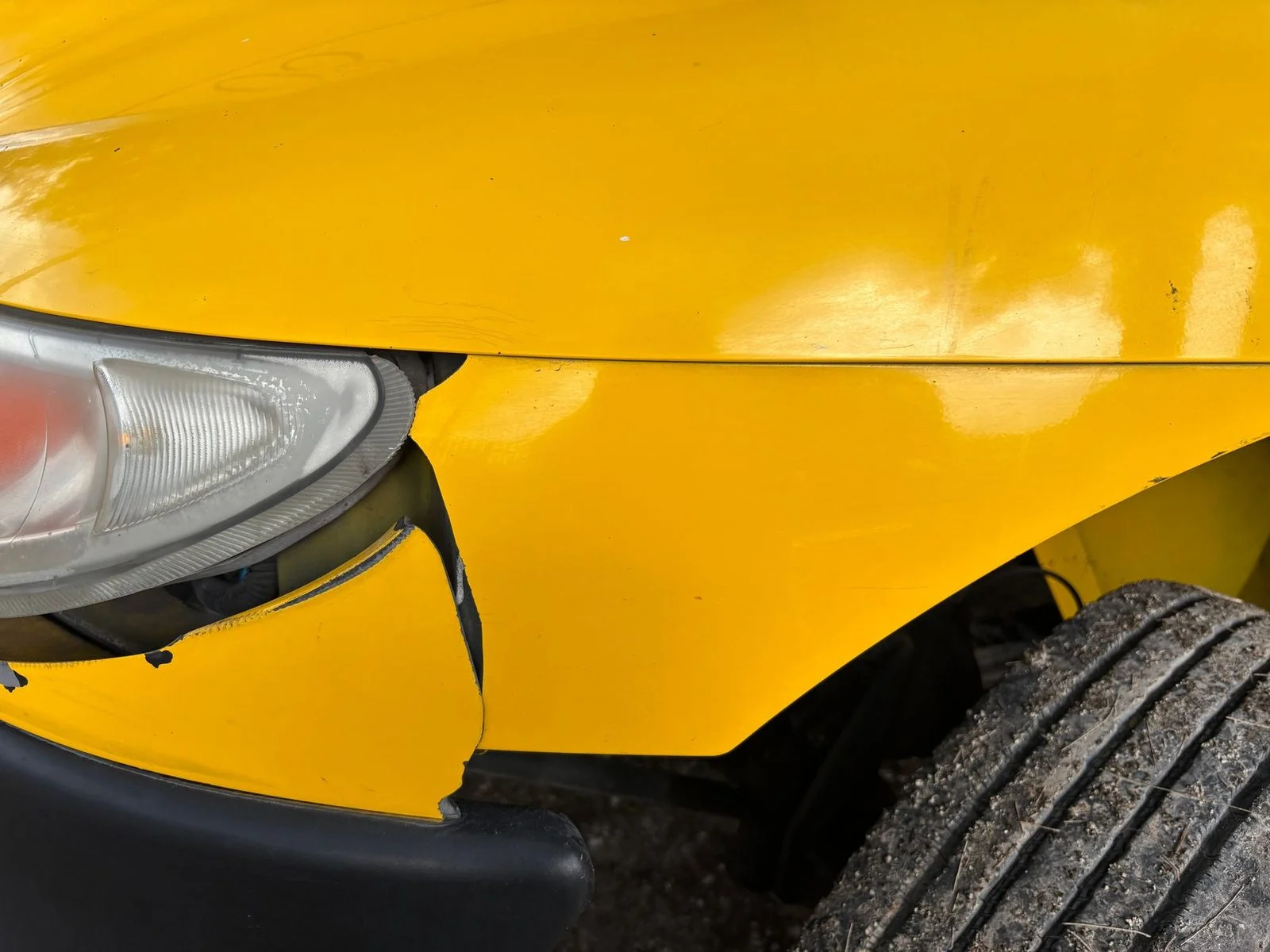
How Louisiana’s Comparative Fault Rule Affects a Repair Claim
Louisiana reduces your recovery by your share of fault (La. Civ. Code art. 2323). For crashes on or after January 1, 2026, a share of 51% or more bars recovery entirely. That rule applies to repair claims as much as injury claims.
Under La. Civ. Code art. 2323, fault is assigned to everyone who caused or contributed to the loss. That includes drivers who are not parties to the claim and drivers whose identity is not known. A person under 51% at fault has damages reduced in proportion to their share of fault.
Here is a simple example. If you were 20% at fault, the amount you can recover drops by 20%. At 51%, the statute bars recovery. These are the rules, not a forecast for any claim.
Writing down what you remember about a crash soon after it happens can help you keep track of the details.
Fault can be split among several drivers, and the way that split is argued affects your repair claim. The mistake many drivers make is accepting the first fault number without asking how it was reached. An insurer’s fault number is its position, not the final word. You can challenge it with photos, the crash report, witness names and the damage to both vehicles.
Property-Damage Claim Versus Injury Claim: Handled Separately
Repair bills and rental costs are a property-damage matter. Injury and medical bills are a separate track, with their own timing. A fault ruling on one track does not automatically decide the other.
Keep separate folders. Put repair estimates, tow receipts and rental records in one. Put medical bills and doctor notes in another. Mixed paperwork makes both claims harder to prove.
Louisiana gives two years for delictual (tort) actions. The clock starts on the day the injury or damage is sustained (La. Civ. Code art. 3493.1). The statute has limited exceptions, so review your dates early.
Early offers need care too. Under R.S. 22:1290, a property-damage settlement under a vehicle liability policy is not treated as an admission of liability on other claims from the same accident. Still, read every release before you sign it.
Your Own Coverage: Collision, Rental and Other Policy Terms
Your own policy may pay for repairs, a rental or losses caused by an uninsured driver, based on the coverages you bought. Look at your declarations page to see what you carry.
Collision coverage pays for damage to your own car, after your deductible. Some policies pay while fault is still being argued. Shops and rental desks often ask for coverage details early, so keep your declarations page and claim number handy.
Rental coverage follows your policy. Under R.S. 22:1296, an insurer extends to rental vehicles the coverage in effect in the original policy, and that insurance is primary, unless other automobile insurance coverage or financial responsibility protection is purchased by the insured for the rental vehicle, in which case that coverage becomes primary. How long a rental lasts is set by the policy and how the claim is handled.
Uninsured motorist coverage matters if the other driver has no insurance. Auto liability policies covering vehicles designed for public highways and required to be registered in Louisiana must include it unless the named insured rejects it, selects lower limits or selects economic-only coverage (R.S. 22:1295). Under La. R.S. 22:1295, if a named insured who has not rejected uninsured motorist coverage makes a written request for uninsured motorist property-damage coverage on a vehicle that the policy does not cover for collision, that coverage is subject to a deductible of two hundred fifty dollars for any one accident.
R.S. 22:1269 allows a direct action only when a listed condition applies, such as the insured being insolvent.
Practical Steps That Protect Your Repair Claim
Records made close to the crash show what happened and what it cost. Start them the same day.
- Photograph everything. Take wide shots and close-ups of the car, the scene, the license plates and visible damage. Keep the original files.
- Get a written estimate. Keep every repair invoice, tow receipt and rental record.
- Collect the other driver’s details. Writing down the other driver’s name, address and vehicle registration number can help you keep accurate records of the crash.
- Request the crash report. The parties to a crash, their insurers and their attorneys can obtain it.
- Ask for the fault basis in writing. Ask the insurer to explain its fault percentage in writing. Keep copies of every letter and email.
- Pause before you sign. Don’t sign a release until the full damage and any injuries are clear.
Frequently Asked Questions About Disputed Fault and Car Repairs
Can I still file a repair claim if the other insurer says I was partly at fault?
Yes. Partial fault reduces recovery under article 2323. For crashes on or after January 1, 2026, only 51% or more fault bars it.
Will my own insurer pay if I was partly at fault?
It can, if you carry collision coverage. Your own policy’s terms control that payment, and they may differ from the other driver’s liability coverage.
What if the other driver has no insurance?
Your uninsured motorist coverage may apply if you carry it. Louisiana law requires that this coverage be included unless you reject it or choose lower limits or economic-only coverage.
Can I get a diminished value claim after repairs?
Lost value after repairs is a separate question. It is assessed case by case.
Does a fault dispute affect an injury claim?
Not automatically. The two tracks have separate paperwork and separate timing.
Not sure what your next step is?
Talk it through with our team — the first consultation is free, confidential, and carries no obligation.
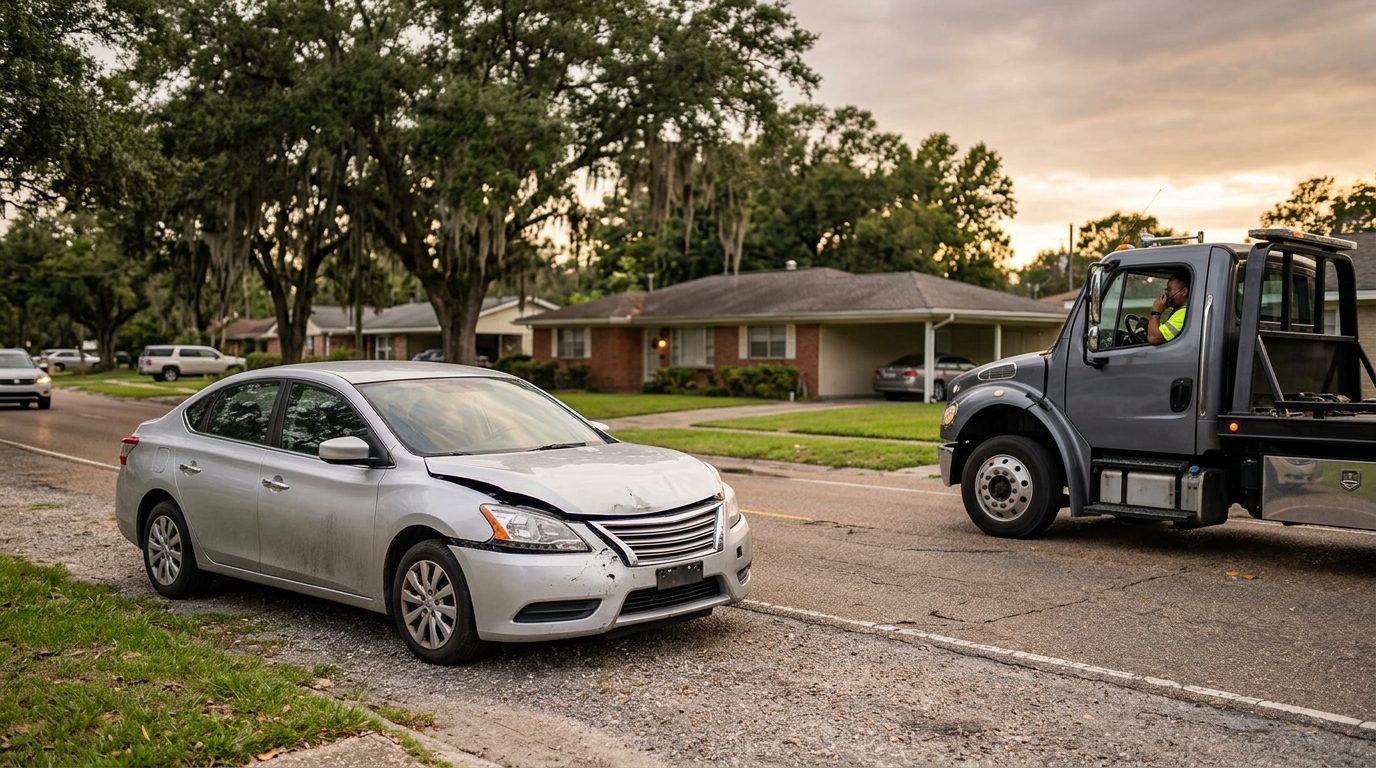
Talk With American Trial Lawyer About Your Disputed-Fault Claim
If your car is waiting on repairs and the other insurer says the crash was partly your fault, you don’t have to sort out that question alone. Przemek Lubecki is the responsible lawyer for this page, and the firm’s office is in New Orleans, Louisiana. American Trial Lawyer represents people hurt in car, truck and commercial vehicle crashes across Orleans Parish, the New Orleans metro and Louisiana.
The first consultation is free, confidential and without obligation to continue. Call 855-LUBECKI or request a free case evaluation.
American Trial Lawyer may associate or refer a case to other law firms.
This page is general information, not legal advice. Every claim turns on its own facts, and no result can be promised.
Practical steps while fault is disputed
Keep every repair record
Save estimates, invoices, supplemental repair notes, photos and any letters or claim numbers from each insurer.
Track what each insurer tells you
Write down dates, names and what was said on every call, and keep copies of anything you sign.
Ask before you accept a settlement
Repair payment offers and release forms can affect what you can still pursue. Review them before you agree to anything.
Get questions answered early
A conversation about your specific crash can clarify which steps matter most for your vehicle and your situation.
Read before you sign
Do not sign a repair release or accept a final payment until you understand what it covers. Once signed, it may limit further claims.
Common questions about repair claims
Can my repair claim still move forward?
Disputes over fault do not always end a claim. The next step depends on the facts of your crash and the insurance paperwork involved.
Should I stop my own repairs?
Ask before pausing or rushing repairs. Your vehicle's condition, rental needs and documentation all matter, and a short conversation can help you plan.
What if my own insurer and the other insurer disagree?
Each policy has its own terms. Sorting out which coverage applies, and how, is one of the areas where a lawyer's review can help.
About referrals
American Trial Lawyer, LLC may associate or refer a case to other law firms. Any such arrangement will be explained to you. Your first consultation is free, confidential and without obligation to continue.