
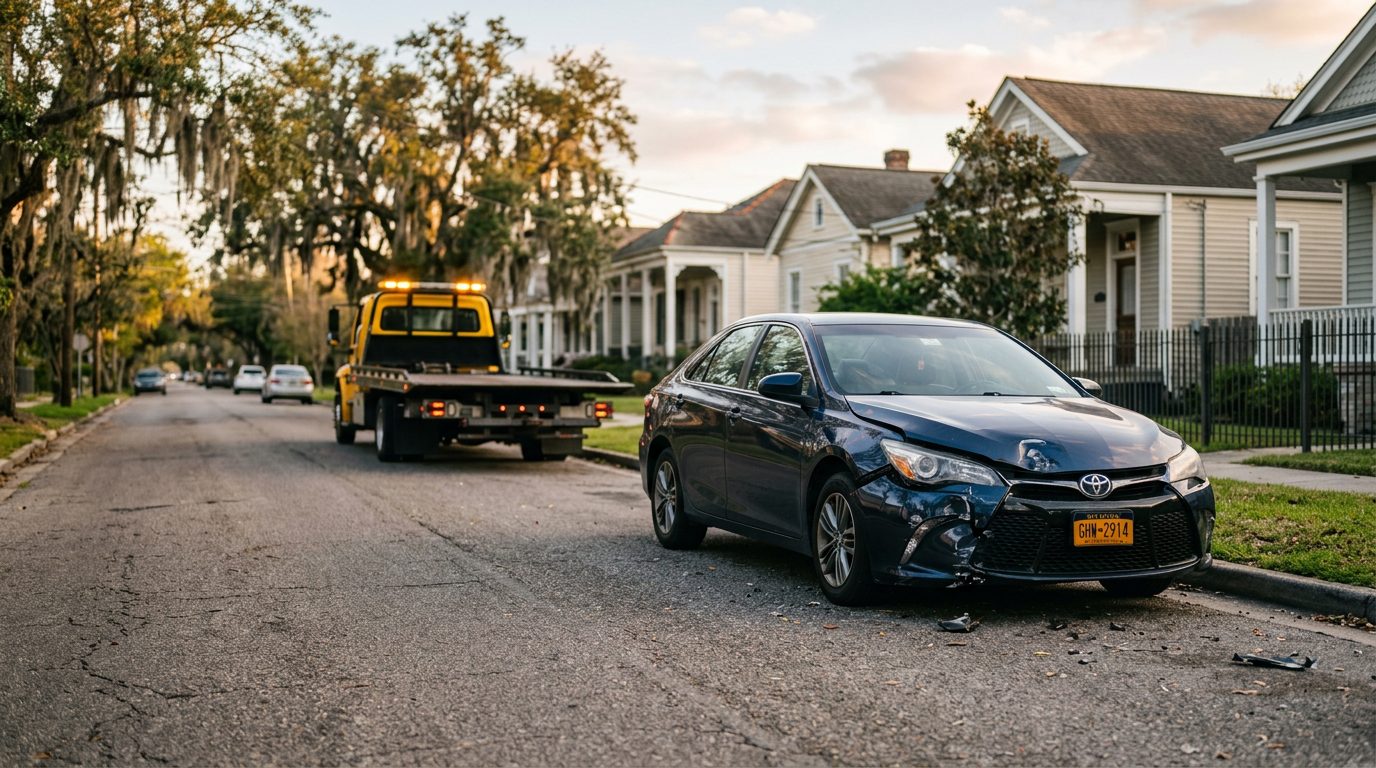
Car Accidents | Esplanade Ridge, New Orleans
Hurt in a Car Accident Near Esplanade Ridge?
Przemek Lubecki and the team at American Trial Lawyer represent people injured in car crashes in Esplanade Ridge, New Orleans and across Louisiana. Our office is in New Orleans. Your first consultation is free, confidential and without obligation.
By Przemek Lubecki · Published October 29, 2026
Looking for a car accident lawyer in Esplanade Ridge? American Trial Lawyer’s New Orleans office represents people hurt in car crashes and families in wrongful death cases. This page explains what a car accident claim involves, how a free case evaluation works, and the Louisiana rules that affect timing. Przemek Lubecki is the responsible lawyer for this page.
Who This Page Is For and What a Car Accident Claim Involves
A car accident claim asks the person responsible for a crash to pay for the harm it caused. Louisiana law makes a person responsible for damage caused by negligence, imprudence, or want of skill (La. Civ. Code art. 2316).
This page is written for:
- Drivers and passengers hurt in a crash on Esplanade Avenue or elsewhere in Esplanade Ridge.
- Pedestrians and cyclists struck by a vehicle in Orleans Parish or the New Orleans area.
- Families who lost a loved one in a crash. These claims follow different rules, covered in the questions below.
In most car accident cases, the claim is made against the at-fault driver and that driver’s liability insurer. Your own policy may also matter, especially if the other driver has little or no coverage.
The firm also handles truck, commercial vehicle, rideshare, motorcycle, wrongful death, brain injury, and negligent security cases. If your crash involved one of those issues, the New Orleans office can review it with you.
Not sure what your next step is?
Talk it through with our team — the first consultation is free, confidential, and carries no obligation.
What Is Included in a Car Accident Case
A car accident case covers the at-fault driver’s liability, your medical care, lost income, and property damage. It may be resolved through negotiation or, when needed, a lawsuit.
- Claim against the at-fault driver. The claim usually goes to the driver’s liability insurer, with fault and damages both at issue.
- Medical expenses. Under La. R.S. 9:2800.27, if a health insurer or Medicare paid a contracted provider, recovery is limited to the amount actually paid plus your cost-sharing amounts, not the amount billed.
- Family losses. Under La. Civ. Code art. 2315(B), damages may include loss of consortium, service, and society for certain family members.
- Your own coverage. La. R.S. 22:1295 covers uninsured motorist protection. Bring your policy to the evaluation so its terms can be reviewed.
- Lawsuit and trial preparation. When a claim cannot be resolved fairly without a suit, it may be filed in court.
A case may be associated with or referred to other law firms. Any such arrangement would be explained to you before you decide.
Every case depends on its own facts. An evaluation cannot predict a settlement amount or outcome.
How the Free Case Evaluation Works, Step by Step
A free case evaluation is a confidential first conversation about your crash, your injuries, and the insurance contacts you have so far. The first consultation is free, confidential, and carries no obligation to continue.
- Contact the office. You reach the New Orleans office by phone or the online form.
- Intake. You describe the crash date and location, the vehicles involved, your injuries, your treatment so far, and any insurer contacts.
- Document review. You share what you have, such as the crash report, photos, medical records, and insurer letters. The firm notes what is still missing.
- Options explained. You get a plain-language explanation of the possible paths and the timing of each, including the filing deadline that applies to your date of injury.
- Your decision. You decide whether to move forward. If you don’t, you leave with your questions answered.
After you engage the firm, the usual sequence is gathering records, communicating with insurers, presenting the claim, and then either resolving it or filing suit. The timing of each step depends on the facts.
Evidence and Early Steps That Protect Your Claim
The most useful early steps are getting medical care, keeping records, and getting the crash report.
- See a doctor promptly. The Brain Injury Association of America notes that brain injury symptoms may be masked or delayed after a car accident. Report new or lasting symptoms right away, and keep every appointment.
- Exchange information. In a crash with injury or property damage over five hundred dollars, La. R.S. 32:398 requires each driver to give the other parties his name, address, and vehicle registration number.
- Get the crash report. Crash reports are confidential. They are available only to the parties to the crash, parents or guardians of a minor who is a party to the crash, insurers or insurance support organizations under contract to provide claims and underwriting, healthcare providers that rendered services to a party, succession representatives, attorneys of the parties or succession representatives, and news-gathering organizations that request a specific crash, upon request within seven working days following completion of the crash investigation.
- Document the scene. Photograph the vehicles, the road, and any visible injuries. Write down witness names and contact details.
- Be careful with statements. If someone takes a recorded or written statement from you, La. R.S. 13:3732 entitles you to a true and complete copy, furnished within twenty days after written demand.
- Keep a simple log. Note missed work, pain, and daily tasks you can’t do. These details support your claim.
Louisiana Fault and Deadline Rules to Know
Under La. Civ. Code art. 2323, if the degree or percentage of negligence attributable to a person who suffers injury, death, or loss is equal to or greater than fifty-one percent, that person is not entitled to recover damages; if it is less than fifty-one percent, the amount recoverable is reduced in proportion to that degree of negligence. However, if the other person at fault was an intentional tortfeasor, the injured person’s claim for damages is not reduced.
- Under La. Civ. Code art. 2323, if the degree or percentage of negligence attributable to the person suffering injury, death, or loss is equal to or greater than fifty-one percent, then that person shall not be entitled to recover damages. Under La. Civ. Code art. 2323, if the degree or percentage of negligence attributable to the person suffering injury, death, or loss is less than fifty-one percent, the amount of damages recoverable shall be reduced in proportion to that degree or percentage.
- Filing deadline for injury claims. Delictual actions are subject to a two-year deadline that starts on the day the injury is sustained (La. Civ. Code art. 3493.1). Some exceptions apply, so ask the office about your date.
- Wrongful death. The right of action generally prescribes one year from the death or two years from the injury, whichever is longer (La. Civ. Code art. 2315.2(B)).
- More than one at-fault party. Under La. Civ. Code art. 2324(B), if liability is not solidary under Paragraph A, a joint tortfeasor is not liable for more than his own degree of fault.
Deadlines keep running while talks continue. Evidence can also fade over time.
Why Contact American Trial Lawyer for a New Orleans Car Accident
Przemek Lubecki is the responsible lawyer for this page, and the firm’s office is in New Orleans.
- A trial lawyer leads the work. Przemek Lubecki is a trial lawyer who handles personal injury matters for people seriously hurt in car, truck, and commercial vehicle crashes, and for families in wrongful death cases.
- The office. The New Orleans office serves people in Esplanade Ridge, Orleans Parish, the New Orleans metro area, and across Louisiana.
- Support staff. Our team helps with records, scheduling, and client communication.
- Clear communication. The firm explains each step in plain language, so you know what is happening and why.
- Readiness for trial. When a claim needs a lawsuit, the firm prepares it for trial.
The firm’s approach centers on careful documentation and steady communication. It is your decision whether to move forward.
Not sure what your next step is?
Talk it through with our team — the first consultation is free, confidential, and carries no obligation.
Common Questions Before You Call
Most people ask about recorded statements, partial fault, uninsured drivers, and fatal crashes. Short answers are below.
Do I have to give a recorded statement to the other driver’s insurer?
Be careful with recorded statements. Louisiana law gives an injured person the right to a true copy of any statement taken from them.
Can I still have a claim if I was partly at fault?
Possibly. Louisiana’s comparative fault article, Article 2323, bars recovery of damages by a person suffering injury, death, or loss whose own degree or percentage of negligence is fifty-one percent or more. If that negligence is less than fifty-one percent, the recoverable damages are reduced in proportion to it. A smaller share reduces your recovery.
What if the at-fault driver has no insurance?
Your own uninsured or underinsured motorist coverage may apply. Bring your policy so it can be reviewed.
Do truck or commercial vehicle crashes work differently?
They often involve more parties, records, and insurers. The Louisiana fault and deadline rules above still apply.
Who can sue after a fatal crash?
A surviving spouse and children may sue first. Parents, siblings, and grandparents may sue only when the closer relatives are not surviving, under La. Civ. Code art. 2315.2(A).
If a crash on Esplanade Avenue left you hurt, or you lost someone in a crash, don’t wait to get your questions answered. Request a free case evaluation with the New Orleans office, or call 855-LUBECKI.
After a Car Accident, Consider These Steps
Get medical care
Seeing a doctor promptly protects your health and creates a record of your injuries, even if you feel you can wait.
Document the scene
Photos of the vehicles, the road, traffic signals and visible injuries can help preserve important details while they are fresh.
Keep your records
Save the police report, insurance correspondence, medical bills and notes about missed work in one place.
Talk with a lawyer
Call 855-LUBECKI to speak with Przemek Lubecki about your situation. Your first consultation is free, confidential and without obligation.
Why Reach Out to Our Office
Trial lawyers who focus on injury cases
Przemek Lubecki leads a trial practice that represents people seriously hurt in car, truck and commercial vehicle crashes, and families in wrongful death cases.
Local to New Orleans
Our office is in New Orleans, and we serve people in Esplanade Ridge, Orleans Parish, the New Orleans metro area and throughout Louisiana.
Plain-language answers
We explain your options clearly, so you can decide what makes sense for you without pressure.
Referrals when needed
Our firm may associate or refer a case to other law firms. We will tell you if that is the case for your matter.
Be Careful With Recorded Statements
An insurance adjuster may ask you for a recorded statement soon after a crash. Speaking with a lawyer before giving one can help you understand what you are agreeing to.