
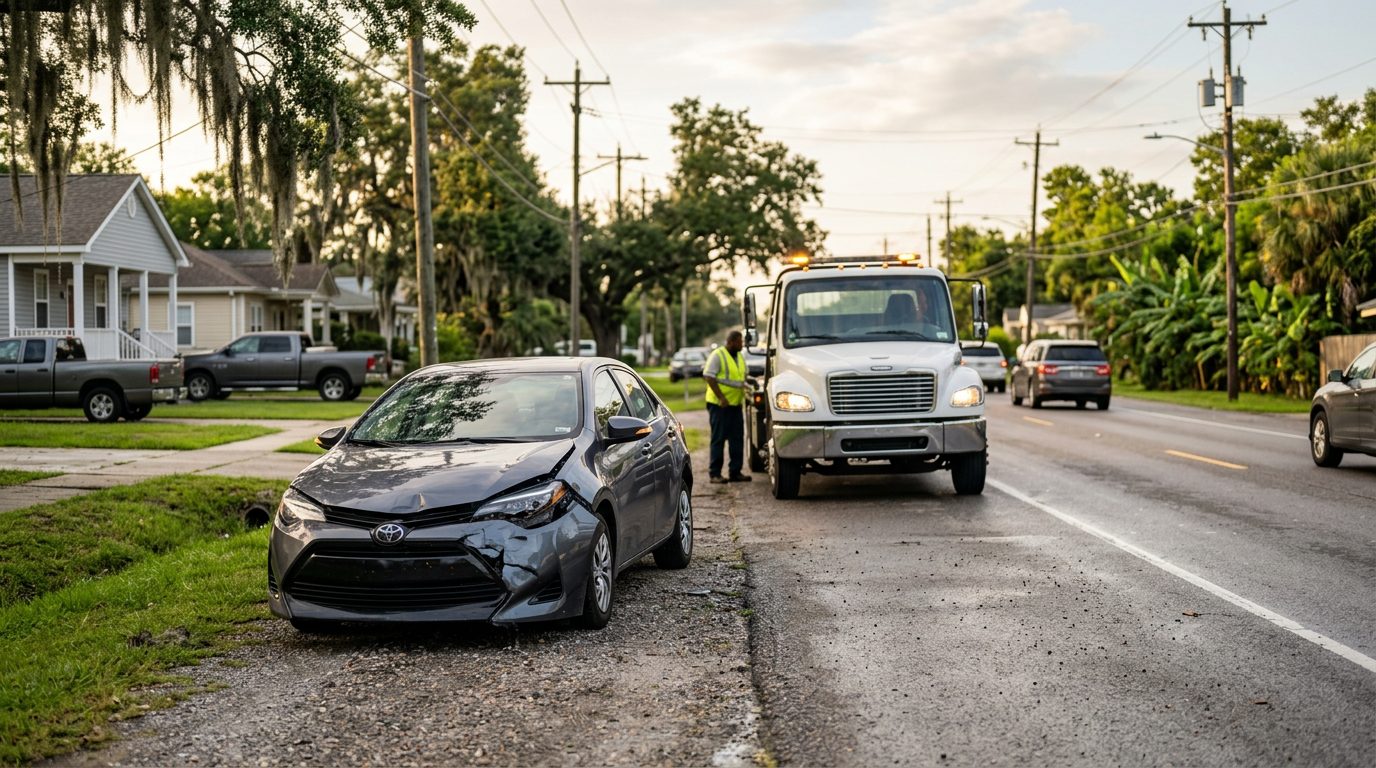
Car Accidents | New Orleans, Louisiana
Hurt in a Car Crash in Louisiana? Learn What a Claim Involves
Przemek Lubecki and the American Trial Lawyer team focus on people seriously injured in crashes across New Orleans and the surrounding parishes, and on the families who follow the process with them.
By Przemek Lubecki · Published November 18, 2026
You were hurt in a car accident, and now you want to know whether you can claim compensation. In many cases, the answer is yes when another driver’s carelessness caused the crash. The rules are specific, though, and the details shape what a claim can include. This page walks through the basics in plain language.
Short answer: you may be able to claim compensation after a car accident
Louisiana law makes a person responsible for the damage their fault causes. Under La. Civ. Code art. 2315, every act that causes damage to another obliges the person whose fault it was to repair it. Article 2316 says a person is responsible for harm caused by negligence, imprudence or want of skill, not only by a deliberate act. A driver who runs a red light, looks away from the road or drives too fast may fall under those rules. In most car crash claims, the claim is made against the at-fault driver and that driver’s insurance. Fault can also be shared, as the next section explains. Each claim is different, and no one can promise what a claim will pay or what outcome it will reach. For a broader overview, read our car accident claims guide for Orleans Parish.
If a crash has left you hurt and juggling medical bills and insurance calls, we're glad to talk through whether you may have a claim. Talk it through with our team — the first consultation is free, confidential, and carries no obligation.
What kinds of compensation a car accident claim may include
A car accident claim may seek money for economic losses, like medical bills and lost pay, and for general damages, like pain and suffering.
Economic losses are the costs you can count. They can include past medical care, lost wages, lost ability to earn in the future, and damage to your vehicle or belongings. Louisiana law says damages shall include any sales taxes paid by the owner on the repair or replacement of the property damaged, under La. Civ. Code art. 2315.
Medical bills need careful review. Generally, when a health insurer or Medicare has paid, in whole or in part, a contracted provider, La. R.S. 9:2800.27 limits medical recovery to the amount actually paid plus any cost sharing you paid or owe, not the amount billed, although the statute does not apply to certain medical malpractice claims or to benefits received under automobile medical payments coverage. Under La. Civ. Code art. 2315(B), damages generally do not include future medical costs unless they are directly related to a manifest physical or mental injury or disease.
General damages cover harm you can’t put on a receipt, such as pain, emotional distress and loss of enjoyment of life. Louisiana law leaves much discretion to the judge or jury in assessing them, under La. Civ. Code art. 2324.1. Injuries from a crash can include broken bones, spinal injuries and traumatic brain injury. Some symptoms appear later, so keep a simple daily note of how you feel and what you can’t do.
How fault affects a car accident claim in Louisiana
For crashes on or after January 1, 2026, Louisiana bars recovery at 51 percent or more of fault and reduces it for a smaller share.
Under La. Civ. Code art. 2323, a person found 51 percent or more at fault cannot recover damages. If your share is less than 51 percent, your damages are reduced by your own percentage of fault. For accidents and injuries occurring on or after January 1, 2026, Louisiana uses modified comparative fault under La. Civ. Code art. 2323: a person found 51% or more at fault recovers nothing, and a person less than 51% at fault recovers damages reduced by their percentage of fault. The fault of everyone who contributed to the crash is counted, even people who are not parties to the case.
Fault is usually shown with evidence. A police crash report, photos of vehicle damage, camera or dash-cam footage, witness names and the drivers’ own accounts can all help. Under La. R.S. 32:398, the driver of a vehicle involved in a crash resulting in injury to or death of any person, or property damage in excess of five hundred dollars, shall give their name, address and the registration number of the vehicle to any person injured in the crash or to the driver or occupant of or person attending any vehicle or other property damaged in the crash. The statute also contains conditions and exceptions, including for crashes in a geographical area under an order of evacuation by a competent authority or under a declared state of emergency. Crash reports are confidential, but parties and their attorneys can request them. Upon request, they are generally made available within seven working days after the investigation is complete. The other side may argue you contributed to the crash.
Time limits: why acting early matters
For most injury claims from a car crash, Louisiana generally allows two years from the day the injury happened to file suit (La. Civ. Code art. 3493.1).
That two-year rule comes from La. Civ. Code art. 3493.1, as amended by Acts 2024, No. 423, effective July 1, 2024. Missing the deadline can end a claim, so the date matters. Wrongful death follows a separate timeline. Under La. Civ. Code art. 2315.2, a wrongful death right of action prescribes one year from the death of the deceased or two years from the day that injury or damage is sustained, whichever is longer.
Starting early also helps the proof. Skid marks fade, camera footage can be overwritten, and memories blur. Write down the date, time and location of the crash, and the names and contact details of anyone who saw it. Save medical records, bills, repair estimates and pay stubs as they arrive. Waiting can also make it harder to link early symptoms to the crash.
Handling calls and offers from the insurance company
You can take your time before agreeing to anything an insurance company offers.
Insurers may call soon after a crash. Keep calls short until you understand your injuries and losses. Before giving a recorded statement, think about what you’ll say, since that account can be used later.
The law also gives you a right to a copy. Under La. R.S. 13:3732, anyone who takes a written, recorded or transcribed statement from an injured person must give a true and complete copy. They must provide it within twenty days after a written request.
Be careful with signed releases and early settlement offers, because accepting one can close the claim. If Medicare has paid for accident care, CMS on Medicare conditional payments explains that Medicare may make a conditional payment, which must be repaid from a later settlement. Medicare.gov coordination of benefits notes that a provider may bill Medicare when an insurer does not pay promptly, usually within 120 days.
Talk with Przemek Lubecki about your car accident
If a crash has left you hurt, or you’re worried about someone you love, you can talk with the firm about your situation. Przemek Lubecki is the responsible lawyer for this page. The firm’s office is in New Orleans, and it represents people hurt in car crashes in Orleans Parish, the New Orleans metro area and across Louisiana. The firm may associate or refer a case to other law firms.
Common questions about car accident claims
Does Louisiana still use comparative fault?
Yes. For crashes on or after January 1, 2026, a person found 51 percent or more at fault cannot recover damages.
How long do I have to file a claim?
For most injury claims, the general rule is two years from the injury (La. Civ. Code art. 3493.1). Wrongful death claims follow a separate timeline.
Can I get pain and suffering damages?
General damages such as pain and suffering may be part of a claim. The judge or jury has much discretion in assessing them.
Pain, missed work, repair bills and insurance calls can pile up fast, and you don’t have to sort them out alone. If you want to talk through your crash, call 855-LUBECKI or request a free case evaluation. The initial consultation is free, confidential and without obligation to continue.
How We Approach a Car Accident Case
Your health comes first
Medical care and recovery matter most. We work to understand how the injury affects your daily life, work and family.
Careful record gathering
Police reports, medical records, photos and repair estimates can all shape how a claim is understood, so we help organize them early.
Protection from insurance pressure
Insurance adjusters may call quickly. We can handle communication with insurers so you can focus on healing.
Clear, plain-language guidance
We explain each step in terms you can follow, so you can make informed decisions about your case.
Before You Talk to an Insurer
Recorded statements and quick settlement offers can affect a claim. American Trial Lawyer may associate or refer a case to other law firms. Speaking with a lawyer first can help you understand your options.
Steps That Help After a Crash
Seek medical care
Even when injuries seem minor, a medical evaluation creates an important record of how you feel.
Document the scene
If you are able, note the location, vehicles involved, and any witnesses, and keep photos of damage and injuries.
Keep track of expenses
Save receipts, bills, and notes about missed work or activities you can no longer do.
Speak with a trial lawyer
Our team can review what happened and explain how Louisiana law may apply to your situation.