
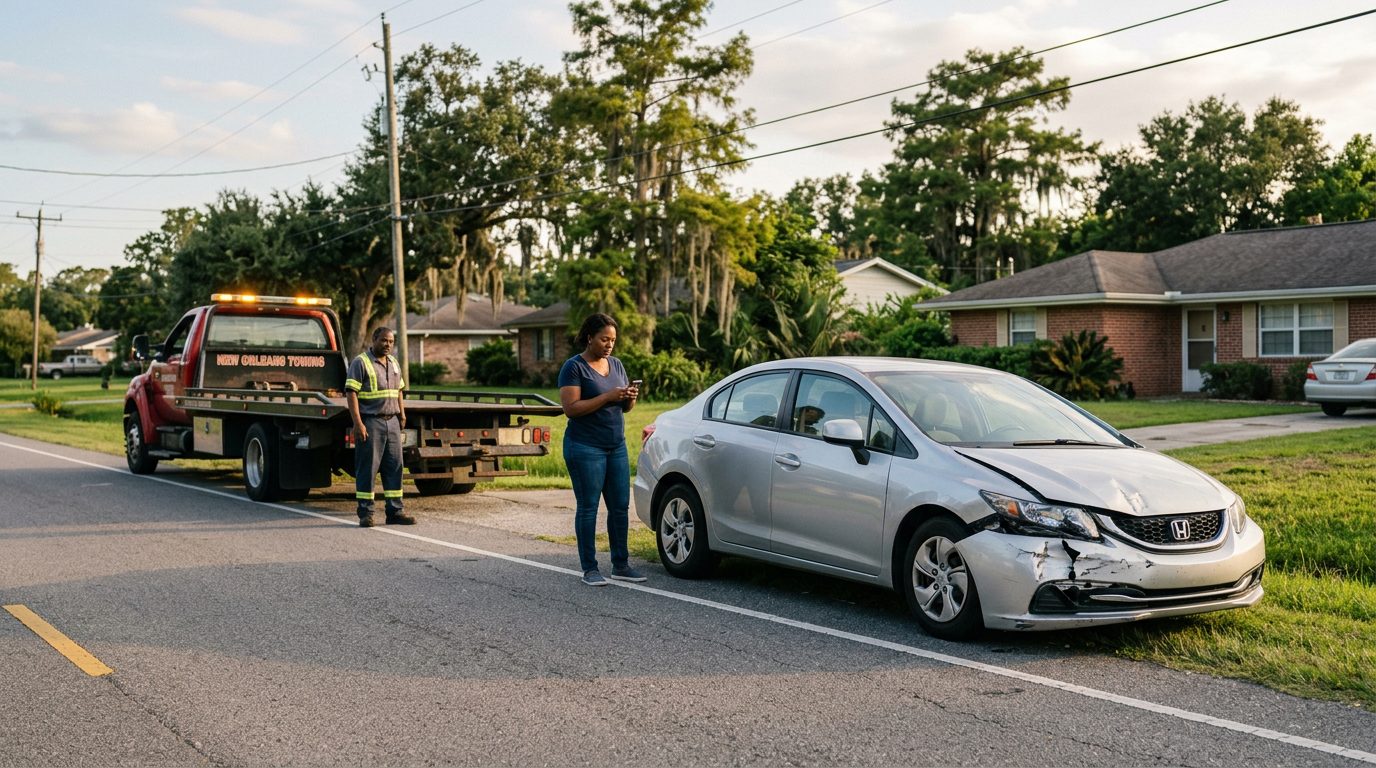
Car Accidents | New Orleans, Louisiana
Hurt in a New Orleans Crash With No Police Report?
Police may never have arrived, or the report may be missing or incomplete. That doesn't mean you have no options. Here is how to think through what comes next.
By Przemek Lubecki · Published November 20, 2026
If no officer came to the scene after your crash, you may wonder whether you still have a claim. Yes, a car accident claim can still be possible in Louisiana without a police report. A missing report does not automatically end the claim. Fault and proof decide it, and the facts of your crash and your injuries matter most. You may also be asking on behalf of a family member who was hurt and can’t easily describe what happened.
Short Answer: Yes, a Claim Can Still Be Possible Without a Police Report
The claim turns on fault, not on whether an officer came to the scene. Under La. Civ. Code art. 2316, a person is responsible for damage caused by negligence, imprudence, or want of skill. The central question is whether the other driver’s carelessness caused the crash and your harm.
Louisiana also divides fault by percentage. Under La. Civ. Code art. 2323, a person found 51 percent or more at fault cannot recover damages. A person found less than 51 percent at fault recovers an amount reduced by their own share of fault. That modified comparative fault rule applies to accidents on or after January 1, 2026.
Because fault comes in percentages, proof of how the crash happened carries real weight. Without an officer’s account, you’ll want evidence that shows what the other driver did wrong. Your own actions count too, so be honest about what happened. This page gives general information, not a prediction of how an insurer or court would decide any crash.
If police never came to your crash, our team can talk through your specific facts with you, whether the accident happened to you or to a family member. Talk it through with our team — the first consultation is free, confidential, and carries no obligation.
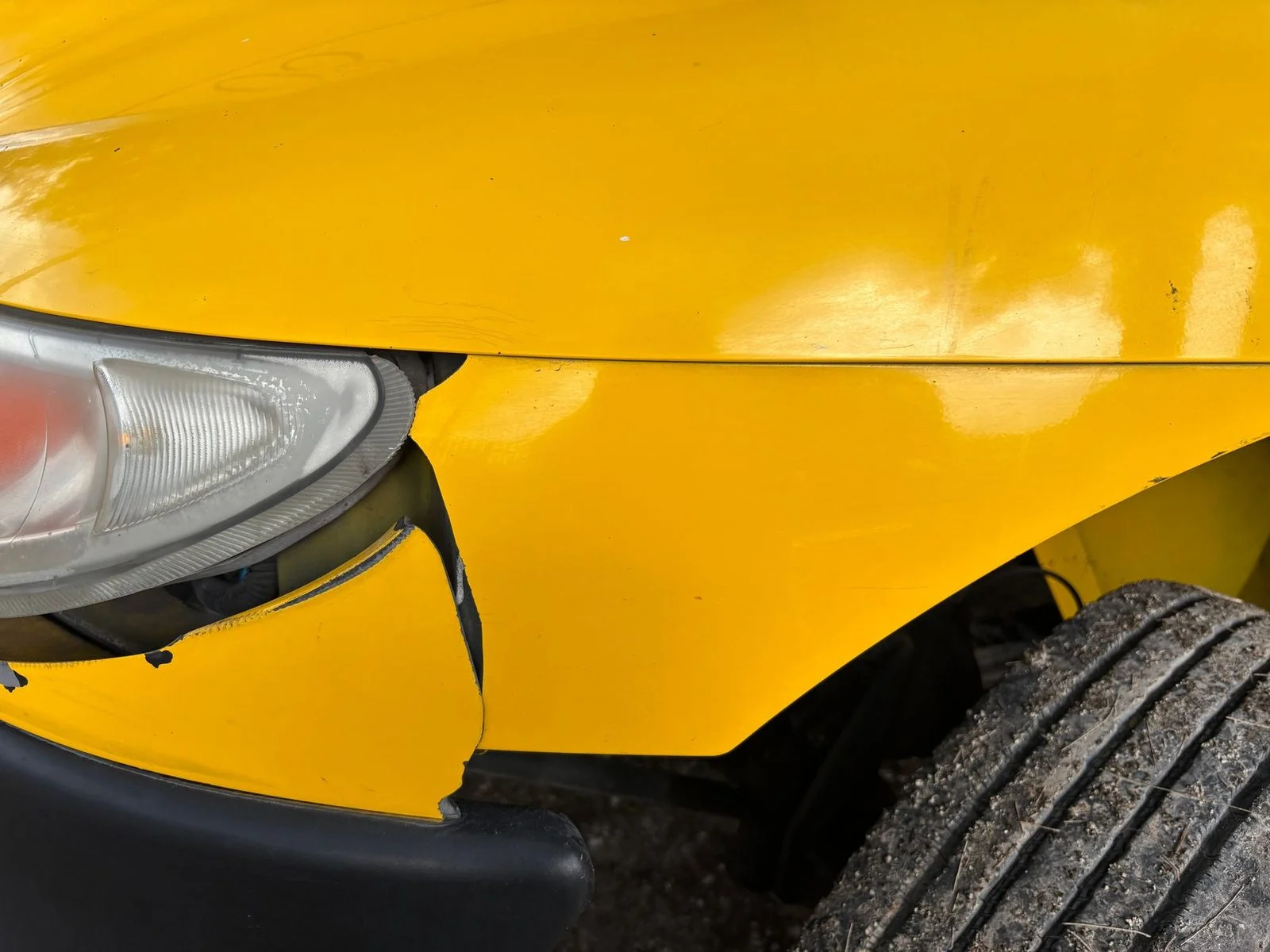
Why a Police Report Helps but Does Not Decide Fault on Its Own
A police report is useful evidence, but it is not the final word on fault. A crash report records what an officer saw and what drivers and witnesses told them at the scene. It can show where vehicles ended up and what people said right after the crash. Insurers and courts look at that report alongside photos, witness accounts, and medical records.
Crash reports are confidential in Louisiana. Under La. R.S. 32:398, they go only to listed people, including the parties, their insurers, and their attorneys. Upon request, they are made available within seven working days after the investigation is completed.
Even without an officer, the law expects drivers to share basic facts. Under the same statute, a driver in a crash causing injury or property damage over five hundred dollars must give their name, address, and vehicle registration number to any person injured in the crash or to the driver or occupant of, or person attending, any vehicle or other property damaged in the crash. Getting that information at the scene matters.
Without a report, your claim leans more on other proof. That’s a different path, not a dead end. Here’s what that means in practice: missing a report usually makes early evidence more important, not less. An insurer may also review the accident using its own file and the information the parties provide.
Evidence That Can Support a Claim When No Officer Came
Photos, witness details, video, medical records, and your own notes can help fill the gap a report would have filled. Each one is proof you can gather yourself, and each one is easier to collect early.
- Photos. Take pictures of vehicle damage, the roadway, any signs or signals, and where the cars came to rest, as soon as it’s safe.
- Witnesses. Write down names and phone numbers for passengers, nearby drivers, and anyone who saw the crash. Collect contact details before people leave the area.
- Video. Dashcam, phone, and nearby camera footage can be overwritten quickly, so ask about it early.
- Medical records. Records of diagnosis and treatment link your injuries to the crash. Getting checked promptly creates that record.
- Notes. Write down the time, weather, lighting, and what each driver said, while you still remember it clearly.
Under La. R.S. 32:398(E), the state police, a local police department, or a sheriff’s office must provide copies of photographs of crashes, video recordings, and audio recordings to any interested person upon request, and may charge a reasonable fee for those copies. See La. R.S. 32:398.
What to Do Now If the Police Never Came
Start with your health, then protect your claim. See a medical provider promptly, even if your injuries seem minor, and keep every record and bill. Some symptoms show up later, so don’t wait to be checked.
Next, notify your own insurance company of the accident and keep copies of what you report. Ask whether an agency handled the scene and whether a report was filed. NOPD police reports
Be careful with recorded statements. Under La. R.S. 13:3732, a person who takes a written or recorded statement from an injured person must furnish that person a true and complete copy, and must also furnish a true and complete copy within twenty days after written demand. Avoid posting detailed statements about fault or injuries on social media.
Finally, keep a simple file with photos, repair estimates, rental receipts, lost-work records, and letters from insurers.
When the Other Driver Is Uninsured or Underinsured
Your own uninsured motorist (UM) coverage may help when the other driver has no insurance or not enough. Under La. R.S. 22:1295, UM coverage protects insured people who are legally entitled to recover nonpunitive damages from uninsured or underinsured drivers. Underinsured motorist (UIM) coverage applies when the at-fault driver’s insurance falls short of the harm.
If the crash involved no physical contact with the other vehicle, the rules are stricter. La. R.S. 22:1295(1)(d)(i) concerns property damage to the insured’s own vehicle, not bodily injury. It excludes that coverage for damage with no actual physical contact with an uninsured motor vehicle, unless the injured party can show, by an independent and disinterested witness, that the injury was the result of the actions of the driver of another vehicle whose identity is unknown or who is uninsured or underinsured. The bodily-injury rule for a vehicle with no physical contact is in subsection (f), which places the burden on the injured party to prove the claim with an independent and disinterested witness. A witness with no stake in the case matters here.
Louisiana law also lets an interested person request insurance coverage information. Under La. R.S. 32:871, a written request and a fifteen dollar fee get that record. If there is no record, the Department of Public Safety and Corrections sends a written inquiry. After fifteen days, it can provide an affidavit on the response or lack of response.
Louisiana also limits recovery in some uninsured cases. La. R.S. 32:866 provides that, for a motor vehicle accident involving an owner or operator of a motor vehicle who fails to own or maintain compulsory motor vehicle liability security, there is no recovery for the first one hundred thousand dollars of bodily injury and no recovery for the first one hundred thousand dollars of property damage, subject to the exceptions and conditions set out in the statute. Louisiana’s no pay, no play rule also limits recovery by drivers who lack liability coverage. See the Louisiana Supreme Court opinion.
The firm may associate or refer a case to other law firms.
Deadlines, Insurer Disputes, and Prior Injuries
Louisiana generally gives injury claims two years from the date of the injury, so check timing early. Under La. Civ. Code art. 3493.1, delictual (tort) actions are subject to a two-year liberative prescription, which is a time limit to file suit. The clock starts on the day the injury or damage is sustained. That statute also has exceptions, so don’t assume the same timing fits every case.
For uninsured motorist claims, La. R.S. 9:5629 sets two years from the accident date. Keep that date in mind if you’re pursuing UM benefits.
If an insurer delays or denies a claim, our page on insurer bad-faith issues in Louisiana explains that topic. If an earlier injury got worse in the crash, our page on recovering for an aggravated prior injury covers it.
Quick Answers
Can I file a car accident claim in New Orleans if police never came?
Yes, a missing report does not automatically end a claim. Fault can be shown through other evidence.
What if the other driver was uninsured?
Your own uninsured motorist coverage may apply, depending on your policy and the crash.
Not sure what your next step is?
Talk it through with our team — the first consultation is free, confidential, and carries no obligation.
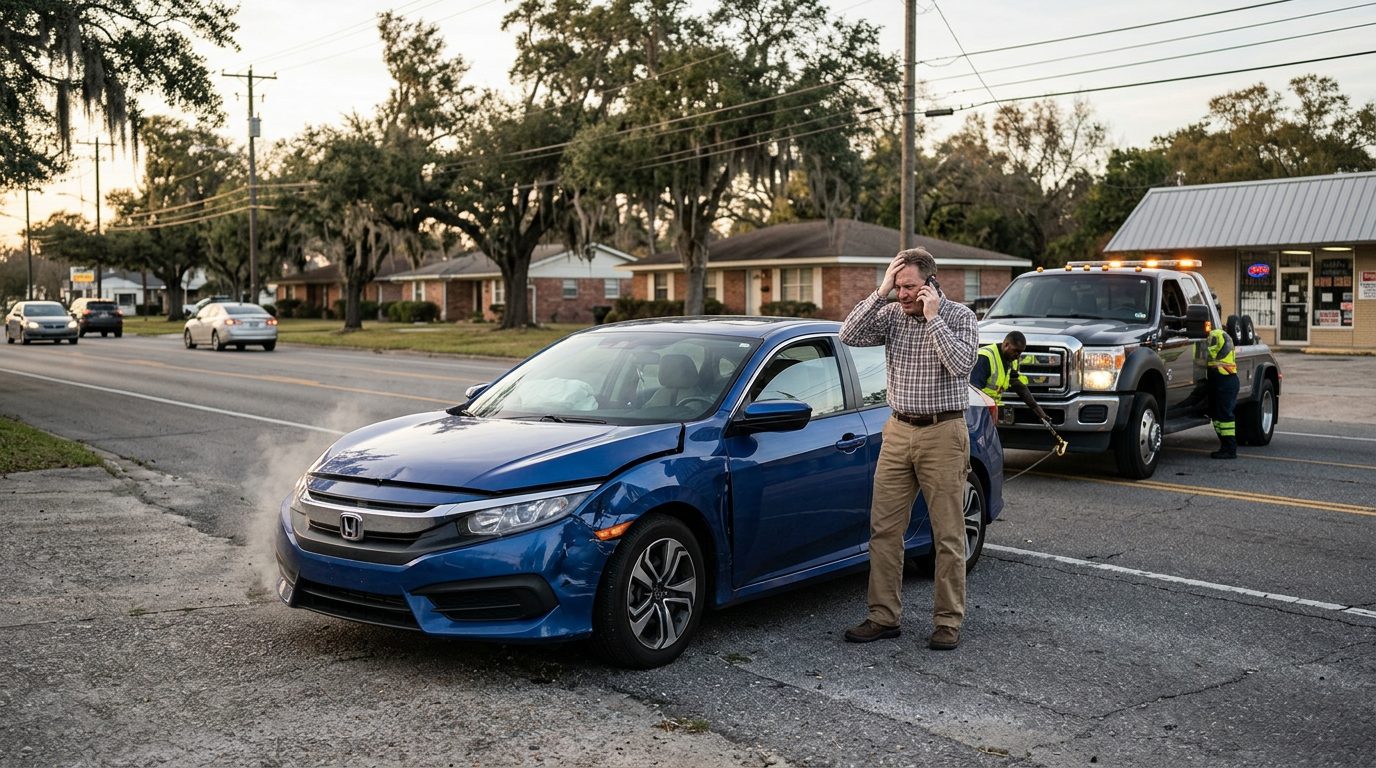
Talk Through Your Accident With Our Team
Our team can talk through your specific facts, including the evidence you have and the evidence you don’t. You may be dealing with pain, missing answers, or worry about someone you love, and this was not a situation you chose. Przemek Lubecki is the responsible lawyer for this page, and the New Orleans office of American Trial Lawyer, LLC handles these matters. The first consultation is free, confidential, and without obligation to continue.
If the police never came and you’re still weighing your options, request a free case evaluation or call 855-LUBECKI.
Evidence That Can Help Tell the Story
Photos and video
Pictures of vehicle damage, the roadway, traffic signs, weather and visible injuries can capture details that fade quickly.
Witness contact information
Names and phone numbers of people who saw the crash or arrived soon after can be valuable later.
Medical records
Records of emergency care, follow-up visits and treatment connect your injuries to the crash.
Insurance and vehicle information
Insurance details, license plate numbers and the other driver's contact information help keep the facts organized.
Uninsured Driver?
Your own uninsured motorist coverage may apply, depending on your policy and the crash. Keep your policy information handy when you contact us so we can review it with you.
Steps to Take After a Crash Without Police
Get medical attention
Your health comes first. Seek care promptly, even if your injuries seem minor at first, and follow your provider's recommendations.
Document the scene
Take photos and notes while details are still fresh, including where the vehicles came to rest and what was happening around you.
Keep records of expenses
Save receipts, bills, pay stubs and notes about missed work or daily limitations caused by your injuries.
Talk with a lawyer
Our team at American Trial Lawyer, LLC can review your situation and explain the options that may be available to you.