

Brain Injury | New Orleans, Louisiana
When Changes After a Head Injury Don't Fade
Some changes after a brain injury can linger for months or longer. Here is how to recognize them, keep track, and decide on a next step with a New Orleans trial lawyer by your side.
By Przemek Lubecki · Published November 9, 2026
If someone you love has changed since a head injury, you may be trying to tell what is normal and what is not. The short answer is this: symptoms of permanent brain damage can include ongoing memory and thinking problems, mood or behavior changes, persistent headaches or dizziness, sleep changes, and vision problems.
No single symptom proves the damage is permanent. Doctors judge that by watching symptoms over time. The sections below explain each group of symptoms, when to get urgent care, and how doctors evaluate lasting injuries.
What permanent brain damage means and why symptoms are easy to miss
Permanent brain damage means changes that do not get better after the expected recovery period. A traumatic brain injury (TBI) is an injury from an outside force. It may change consciousness and affect thinking or physical function, according to the Louisiana Department of Health.
The American Association of Neurological Surgeons explains that concussion is a subset of TBI. A concussion is one kind of brain injury, not a minor event on its own.
Symptoms do not always appear right away. A TBI lasting effects review notes that symptoms may not appear immediately. It also notes that mild or repeated TBI can be hard to diagnose.
That timing creates a problem. The injured person may not realize how much has changed. Family members, coworkers, and friends often notice first. A parent may forget a schedule. A partner may seem quieter or more irritable. These small shifts matter, and they are worth writing down and sharing with a doctor.
If a family member seems different since a crash, you don't have to sort out the next steps alone. Our team can talk through your questions in a free, confidential consultation, with no obligation to continue. Talk it through with our team — the first consultation is free, confidential, and carries no obligation.

Thinking and memory symptoms that may persist
Memory and thinking changes are among the symptoms people report after a brain injury. Short-term memory may fade. A person may forget a conversation minutes after it happened, or lose track of a multistep task.
Processing speed can slow down. Someone may need more time to follow a story, answer a question, or read a page. Finding the right word can become frustrating.
Attention is another common area. A person may get distracted easily or struggle to focus through a meeting or a shift at work. Tasks that were once routine can start to take much longer.
Executive function covers planning, decisions, and switching between tasks. After a brain injury, someone may struggle to plan a week, weigh options, or move from one job to the next without getting stuck. Coworkers and family often see these changes before the person does.
Emotional, behavioral, and sleep changes
Mood changes can last after a brain injury. A person may become irritable, anxious, or sad. Emotional swings may show up that were not part of their usual personality.
Impulsivity is another common sign. A person may speak or act before thinking, or make choices that seem out of character. Judgment can seem reduced. These changes can strain marriages, friendships, and work relationships.
Sleep problems are also common. Some people sleep far more than before. Others struggle to fall asleep or stay asleep. Fatigue can persist even after a full night’s rest, and it can make every other symptom harder to manage.
If these changes continue for weeks, bring them to a doctor’s attention. Keep notes on what you see, when it happens, and how it affects daily life.
Physical, vision, and sensory symptoms that can last
Headaches and dizziness are among the most common lasting physical symptoms. Balance problems and unsteady walking can also continue. These symptoms can affect driving, stairs, and job safety.
Headaches do not always start on the day of the crash. A study of post-traumatic headache found that headaches after a motor vehicle collision can appear or worsen weeks later. That timing is easy to miss, so keep tracking symptoms for weeks after a crash, not just the first few days.
Vision changes need a medical check. These can include blurred vision, double vision, or sensitivity to light and noise. New or ongoing visual problems should be evaluated promptly.
Other symptoms can also appear. People may notice changes in taste or smell, ringing in the ears, or weakness or numbness on one side. Seizures can develop after a brain injury too. Any of these signs deserve medical attention.
Warning signs that need emergency care right away
Some symptoms mean you should get help immediately. Call 911 if a person has a seizure, loss of consciousness, slurred speech, weakness or numbness, or confusion that gets worse. Repeated vomiting and a headache that keeps getting worse are also urgent.
Unequal pupil size is another emergency sign. So is a person who becomes harder to wake or who acts very differently in a short time.
The post-traumatic headache study notes that these symptoms may include neurological deficits and may need urgent medical evaluation. Do not wait to see whether they pass.
Any head impact deserves a doctor’s visit, even when the person feels fine. Symptoms can change over time. A person who seems to recover from a crash should still be checked.
How doctors evaluate brain injuries and whether damage is lasting
A doctor usually starts with a neurological exam. The doctor checks thinking, balance, reflexes, vision, and strength. The doctor also asks how symptoms have changed since the injury.
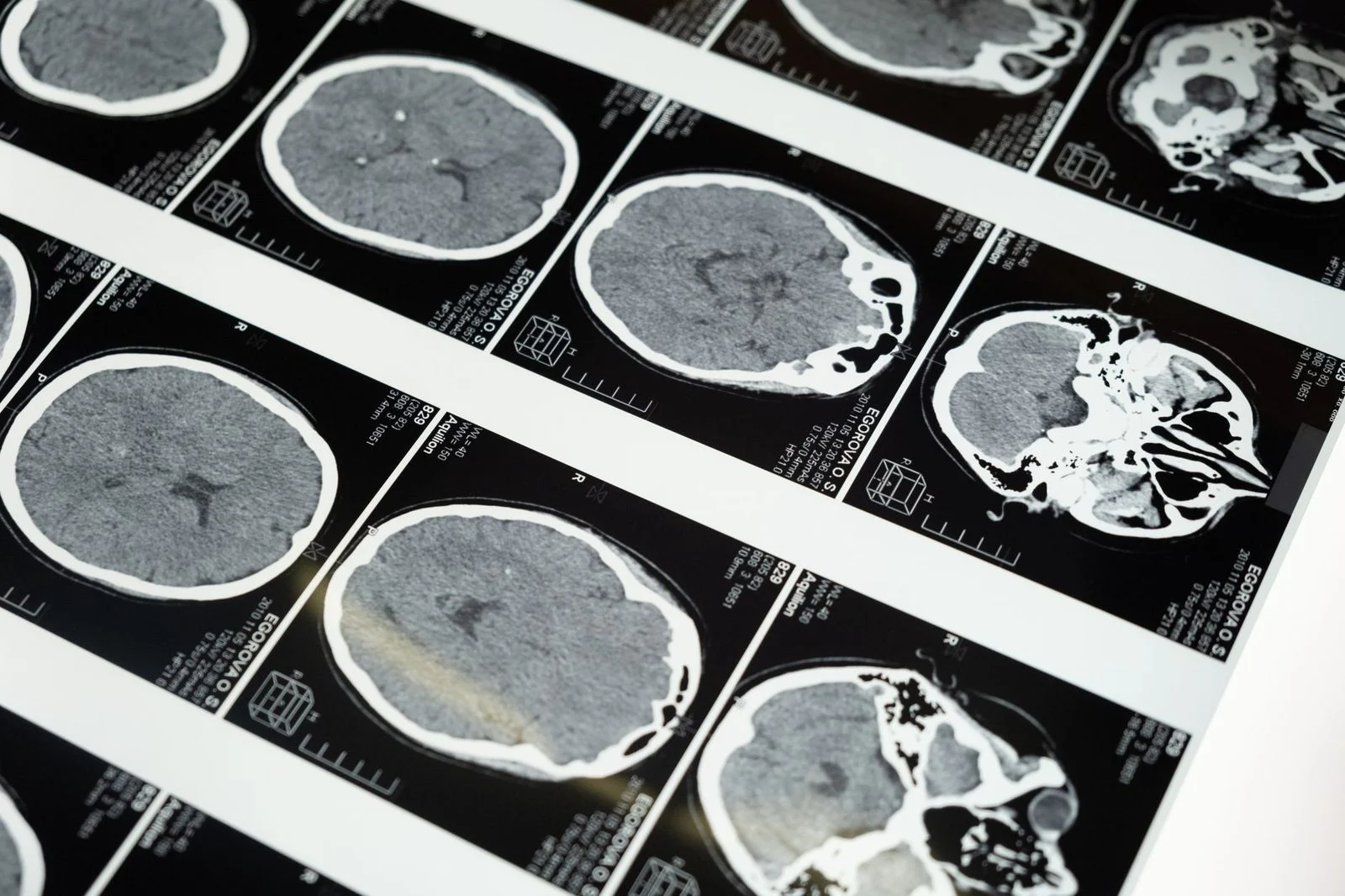
Imaging such as a CT scan or MRI may be ordered when needed. Imaging helps rule out some serious problems. It does not show every kind of injury. Mild or repeated injuries can be hard to diagnose, as noted in the TBI lasting effects review.
Neuropsychological testing is another tool. These tests measure memory, attention, language, and processing speed. They can document changes in thinking that a standard scan may not show.
Lasting effects are usually judged over time. A clinician tracks symptoms over weeks and months. Follow-up visits, therapy notes, and rehabilitation records help show the course of recovery. Keeping these records is useful for the person’s own care.
Not sure what your next step is?
Talk it through with our team — the first consultation is free, confidential, and carries no obligation.
Can permanent brain damage be cured, and what are common causes?
Lost brain tissue generally does not grow back. Many people still improve over time, and treatment often focuses on rehabilitation and managing symptoms. The Louisiana Department of Health notes that rehabilitation and related services may support improved functioning and independent living after a TBI.
Recovery varies widely. Injury severity, age, and overall health all play a role. No general article can predict how one person will recover.
Head injuries have many causes. Falls, assaults, sports, and motor vehicle crashes are common ones. Crashes involving trucks, cars, commercial vehicles, rideshare vehicles, and motorcycles can cause serious head injuries.
Motorcycle riders face a specific rule. Under Louisiana law, La. R.S. 32:190, a rider of a motorcycle, motor-driven cycle, or motorized bicycle may not operate or ride on it unless wearing a safety helmet secured with a chin strap while the vehicle is moving. The section does not apply to a person operating or riding in an autocycle equipped with supports that meet or exceed the standards for a safety helmet or a rollbar or roll cage, and police authorities of a village, town, city, or parish may issue a permit exempting members of organizations sponsoring, conducting, or participating in parades or other public exhibitions while they are actually participating.
Louisiana also has deadlines and fault rules that matter after a crash. Under La. Civ. Code art. 3493.1, delictual actions are generally subject to a two-year deadline that starts on the day the injury occurs. Under La. Civ. Code art. 2323, for injuries on or after January 1, 2026, a person whose own negligence is equal to or greater than 51 percent recovers no damages, except that if the person’s injury is partly from their own negligence and partly from the fault of an intentional tortfeasor, the claim is not reduced. Below 51 percent, damages are reduced in proportion to that person’s share of fault, except that if the person’s injury is partly from their own negligence and partly from the fault of an intentional tortfeasor, the claim is not reduced.
Getting help after a crash-related brain injury in New Orleans
Watching a family member’s personality or memory change is hard. Questions about recovery, work, and money can arrive all at once, and it can be hard to know where to start.
American Trial Lawyer handles brain injury matters, along with truck, car, commercial vehicle, rideshare, motorcycle, and wrongful death cases. Przemek Lubecki is the responsible lawyer for this page. The office is in New Orleans. The firm may associate or refer a case to other law firms.
Frequently asked questions
Can brain damage be reversed?
Lost brain tissue generally does not regrow. Many people improve over time with rehabilitation and symptom care.
Does a normal CT scan rule out brain damage?
No. Some injuries are hard to see on a standard scan, and mild or repeated injuries can be hard to diagnose.
When should someone go to the emergency room after a head injury?
Call 911 for a seizure, loss of consciousness, slurred speech, weakness or numbness, or confusion that gets worse.
If you have questions about a crash-related brain injury, you can reach out through our contact page to request a free case evaluation, or call 855-LUBECKI for a free, confidential first consultation. There is no obligation to continue.
Changes worth tracking over time
Memory and thinking
Trouble remembering new information, losing track of conversations, or slower processing that was not present before the injury.
Mood and behavior
Persistent irritability, anxiety, depression, or personality changes that friends and family notice.
Balance and coordination
Dizziness, unsteady walking, tremors, or clumsiness that continues well after the initial injury.
Sleep, fatigue and senses
Ongoing exhaustion, sleep disruption, headaches, or changes in vision, hearing, smell or taste.
How we can help you take the next step
Focus on your recovery
We listen to how the injury has changed your daily life, work and family, and we keep those details in view.
Keep a symptom journal
Writing down symptoms, appointments and missed work helps show how the injury affects you day to day.
Plain-language guidance
We explain your options in clear terms so you can make decisions with confidence.
Free, confidential first consultation
Your first consultation is free, confidential and without obligation to continue. Office in New Orleans, Przemek Lubecki, responsible lawyer.
Possible referral to other firms
Our firm may associate or refer a case to other law firms. We will tell you if that happens.
Do not wait to get checked
Symptoms after a head injury can be delayed or easy to miss. Get medical evaluation promptly after any blow to the head, even if you feel fine, and tell your doctor about every change you notice.