
Truck Accidents | New Orleans, Louisiana
Received a Quick Settlement Offer From a Trucking Company? Read It Before You Sign.
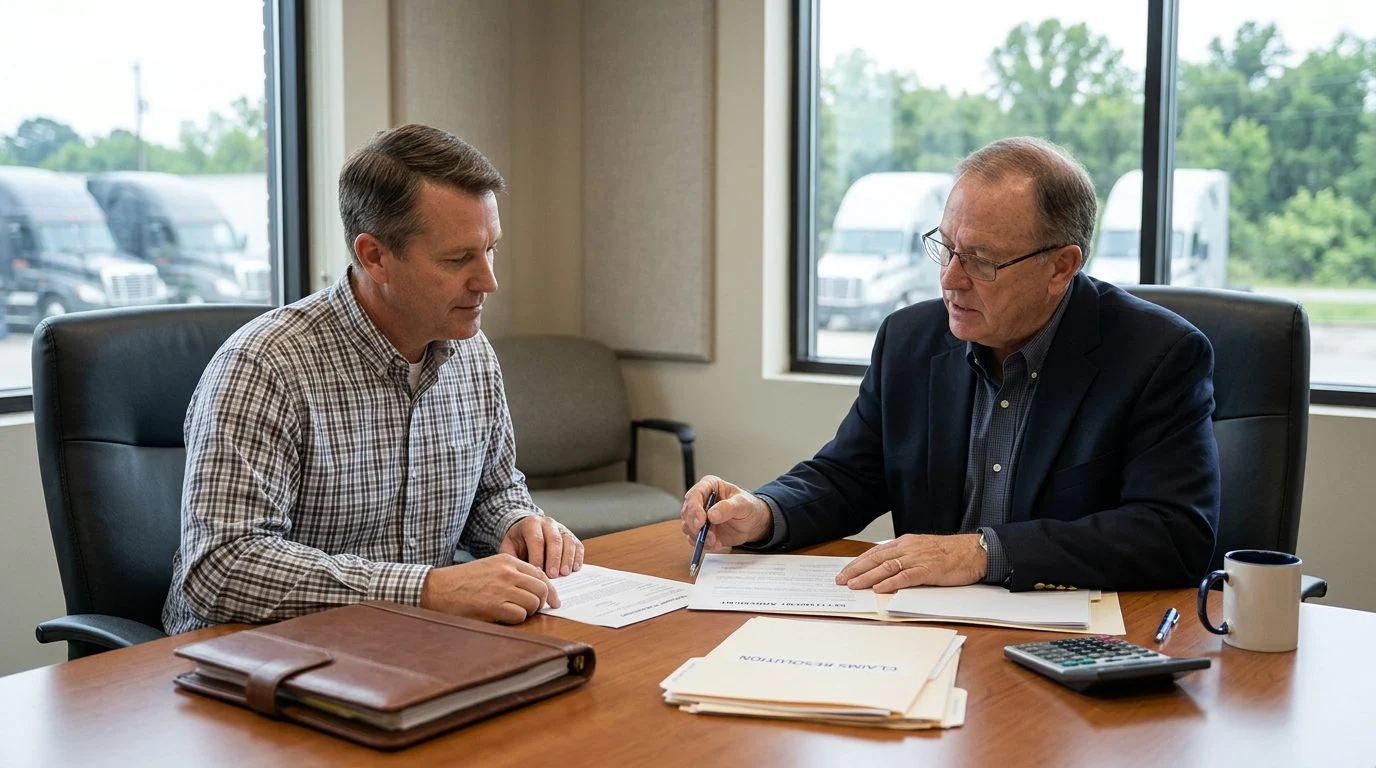
A fast offer from a trucking company's insurer can feel like a relief after a serious crash. Przemek Lubecki, a New Orleans trial lawyer, can review the offer with you before you accept, respond or sign anything.
By Przemek Lubecki · Published November 7, 2026
A trucking company insurance quick settlement offer is an early request to close your claim for a set amount. Before you accept, respond or sign anything, check what the offer covers and what signing would end. This guide explains what these offers usually mean, what to check first, and when to talk with a lawyer. It is written for people in Louisiana, including New Orleans and Orleans Parish, who were hurt in a truck, 18-wheeler or commercial vehicle crash, and for families facing a wrongful death claim.
What a Quick Settlement Offer From a Trucking Company Usually Means
A quick settlement offer is an early payment offer, often made within days or weeks of a crash. It comes from a trucking company or its insurance carrier, and it asks you to close your claim.
The offer is a proposal, not a final answer to what your claim is worth. It usually reflects only what the insurer knows at that moment. Your injuries, treatment and bills may still be changing.
You have three basic choices: accept, respond with questions, or wait until you know more. Ask for the offer in writing so you can read it slowly. Which choice fits depends on the facts of your crash and your injuries. Many people feel pressure to decide fast because a check looks like relief. A short pause costs far less than a signed release you cannot easily take back.
If an early offer arrived after a truck crash and you are unsure whether to sign, our team can talk it through with you; call 855-LUBECKI. Talk it through with our team — the first consultation is free, confidential, and carries no obligation.

Why Trucking Insurers Often Move Quickly
Trucking insurers often move quickly because they handle claims as business matters. Resolving a claim early can close the file before medical bills, lost pay and repair costs are fully known.
Louisiana law builds insurance details into the crash record. Under La. R.S. 32:398, every officer who investigates a crash must tell each driver involved to give anyone who appears to have been hurt, or to have had property damaged, in that crash the owner’s and driver’s names and addresses, the vehicle’s license number, the company that carries the vehicle’s liability insurance, and the name, address and phone number of the agent who obtained the policy covering that vehicle. La. R.S. 32:398 Those details tell you who insures the truck, but they do not tell you how much the claim is worth.
An early offer can arrive before your treatment plan is settled. It can also arrive before a final bill total exists or before you know how long you will be off work. The number is often set on partial information.
Since August 1, 2024, Louisiana’s Direct Action Statute (La. R.S. 22:1269) generally bars an injured person from suing the at-fault party’s liability insurer directly, except in specific listed situations such as the insured’s bankruptcy or insolvency, the insured’s death, or a claim against an uninsured-motorist carrier. La. R.S. 22:1269 That is one reason the offer deserves a careful review before you respond.
Questions to Answer Before You Respond to the Offer
Before you respond, ask whether your injuries have been fully diagnosed. Ask whether treatment is still going on and whether a doctor has discussed future care or follow-up visits. An offer made before those answers are known may not reflect them.
Next, list what your claim may include. Common categories are medical bills, lost wages, property damage and pain and suffering. If someone died, Louisiana law sets out who may sue for the family’s losses. La. Civ. Code art. 2315.2
Medical bills need a close look. Under La. R.S. 9:2800.27, when a health insurance issuer or Medicare has paid a contracted medical provider, when Medicaid has paid a medical provider, or when the claimant’s attorney has a pre-negotiated agreement under which a medical provider has agreed to accept as full compensation an amount less than the amount billed, recovery of medical expenses for that care is limited to the amount actually paid plus any applicable cost sharing (copayments, coinsurance, deductibles and other amounts the claimant paid or still owes), not the amount billed. These limits do not apply in cases brought under R.S. 40:1231.1 et seq. or 1237.1 et seq., or to benefits received through the medical payments coverage of an automobile liability insurance policy. When medical expenses are paid under the Louisiana Workers’ Compensation Law, recovery is capped at the amount paid under that law’s medical payment fee schedule. La. R.S. 9:2800.27
Gather your records now. Collect the crash report, medical records, bills, pay records and photos. These papers help anyone reviewing the offer see the full picture.
What Signing a Release Means
A release is a document you sign to settle a claim. Once you sign it, you may not be able to ask for more money later from the parties it names. Read every line before you sign.
Look for language about future claims, liens and other parties. A release may name the driver, the carrier, the company or the vehicle owner. Check whether it covers injuries you have not yet been diagnosed with.
Some health plans and other payers may seek repayment from a settlement. Ask what liens exist before you agree to anything. Don’t sign a release, or cash a check tied to one, until you understand its terms.
If you have a question about what a release covers, bring it to a lawyer before you sign. That review is part of the decision, not an extra step.
Recorded Statements and Adjuster Contact
An adjuster may ask you for a recorded statement early in the claim. Stay calm and treat each answer as important. Your words can later be compared with medical and crash records.
Louisiana has a rule that applies to these statements. A person who takes a written, recorded or transcribed statement from an injured person must give that person a true and complete copy. The copy must be provided within twenty days after written demand. La. R.S. 13:3732
The same statute says a statement by an injured person cannot be used in a civil action relating to its subject if the person holding it refused, after request, to provide a true and complete copy.
Keep your answers factual and brief. Don’t guess about speed, fault or how hurt you are. If you don’t know, say so. Ask for a copy of any recording, and ask for any follow-up request in writing. You can also choose to speak with a lawyer before giving a recorded statement.
How Louisiana Fault Rules Can Affect an Offer
Under La. Civ. Code art. 2323, if the degree or percentage of negligence attributable to the person suffering injury, death, or loss is equal to or greater than fifty-one percent, that person shall not be entitled to recover damages. Under La. Civ. Code art. 2323, if the degree or percentage of negligence attributable to the person suffering injury, death, or loss is less than fifty-one percent, the amount of damages recoverable shall be reduced in proportion to that percentage of negligence.
Fault is divided among everyone who contributed to the harm. That includes people who are not parties to the lawsuit and people who cannot be identified.
A trucking company or insurer may argue that you share some blame. An early offer can already reflect that argument. Look closely at how the offer treats fault before you respond.
Fault is decided case by case. The facts of the crash, the witnesses and the records all matter.
Not sure what your next step is?
Talk it through with our team — the first consultation is free, confidential, and carries no obligation.
When to Talk With a Lawyer Before You Answer the Offer
Talk with a lawyer before you respond if your injuries are serious or still developing. Also talk with one if a loved one died, if fault is disputed, if medical bills are large, or if the release asks for a quick signature.
Bring the offer letter, the crash report, medical records, bills and all adjuster correspondence. Write down the dates of calls and what was said on each one.
Przemek Lubecki is the responsible lawyer for this page. He is part of our team at the New Orleans office, and our support staff can answer questions about scheduling. The first consultation is free, confidential and without obligation to continue.
American Trial Lawyer, LLC may associate or refer a case to other law firms. If that happens, the arrangement would be explained to you before you decide.

Talk With Our Team Before You Sign
If an early offer arrived after a truck or commercial vehicle crash, a signature can close the claim for good. Our team can help you think through that choice before you respond.
Quick answers to common questions
Should I accept a trucking company insurance quick settlement right away?
You do not have to decide right away. Review your injuries, bills and any release, and talk with a lawyer before you sign.
Can I still recover if I was partly at fault?
For injuries on or after January 1, 2026, Louisiana reduces recovery by your share of fault (La. Civ. Code art. 2323). Under La. Civ. Code art. 2323, a finding that the injured person bears fifty-one percent or more of the negligence means that person shall not be entitled to recover damages.
Do I have to give a recorded statement?
A lawyer can help you decide whether and when to give one. If you give one, Louisiana law gives you a right to a true copy.
Next step
If an early offer has reached you after a crash that left you hurt, or after a loved one’s death, call 855-LUBECKI or request a case evaluation before you respond to the insurer.
Before you respond to the offer
Look at your injuries
Some injuries from a truck crash take months to show their full effects. Consider whether your medical picture is complete before you decide.
Gather your bills and records
Keep medical bills, repair estimates, lost-wage records and crash reports together so the offer can be measured against your actual losses.
Read any release carefully
A settlement offer often comes with a release. Ask a lawyer what the release covers before you sign it.
Key warning
A quick offer is often made early, before the full extent of your injuries and costs is known. Do not sign a release or accept a payment until you have had a chance to talk with a lawyer about what it covers.
How we can help
Review the offer
We look at the amount, the terms and any release language so you understand what the offer would resolve.
Talk through your options
We explain your choices in plain language, including accepting, negotiating or pursuing a full claim.
Handle the insurer
You can direct questions and requests to your lawyer rather than to the trucking company's insurance representatives.
Working with other firms
American Trial Lawyer may associate or refer a case to other law firms. We will tell you if that is likely in your matter.