
Truck Accidents | New Orleans, Louisiana
Truck Crash Evidence Can Disappear Quickly. Start Protecting It Now.
Przemek Lubecki and the team at American Trial Lawyer help people seriously hurt in commercial truck crashes and families in wrongful death cases across Louisiana. Office in New Orleans.
By Przemek Lubecki · Published October 23, 2026
A commercial truck crash can leave you facing paperwork you never expected to see. Much of the key commercial truck crash evidence in Louisiana sits with the trucking company, not with you. This page explains what to keep, why timing matters, and what you can do now. It is general information, not legal advice about your crash.
What evidence should be preserved after a commercial truck crash in Louisiana, such as electronic logging device data, driver logs, maintenance records, and dashcam footage, and how quickly must it be requested?
Key evidence falls into five groups: electronic logging device (ELD) data, driver logs, maintenance and inspection records, dashcam or onboard video, and scene evidence. The trucking company holds most of the first four. Those records are kept for set periods, so ask for them in writing as early as you can.
Federal rules require a carrier to keep records of duty status and supporting documents for not less than six months from the date of receipt (49 CFR 395.8). Maintenance and inspection records follow their own schedules. Some of those periods are shorter than a typical claim takes to resolve.
There is no single deadline for every record. The safest step is a written request right away. Name the vehicle, the crash date, and the records you want, and ask the company to keep them.
If a truck crash has left you or someone you love facing these records and deadlines, you don't have to sort them out alone. Our team offers a free, confidential first consultation. Talk it through with our team — the first consultation is free, confidential, and carries no obligation.
Why timing matters more in a truck crash than in a typical car crash
Timing matters because the trucking company controls most of the records. The law lets it discard some of them after set periods. A written request helps keep those records in place while your claim is being built.
- Records of duty status: at least six months from receipt (49 CFR 395.8).
- Maintenance records: kept where the vehicle is housed or maintained for one year, and for six months after the vehicle leaves the carrier’s control (49 CFR 396.3).
- Driver vehicle inspection reports: kept for three months, except for carriers operating only one commercial motor vehicle, private nonbusiness passenger carriers, and driveaway-towaway operations (49 CFR 396.11).
For companies covered by this part, records may be destroyed at management’s discretion once the minimum periods in its appendix A end, unless another governmental body requires longer retention (49 CFR 379.3).
Louisiana’s filing period is different. Under La. Civil Code art. 3493.1, delictual (tort) actions are generally subject to a two-year deadline. That deadline runs from the day the injury or damage happened. The statute has exceptions, so the deadline in your case depends on the facts. Other deadlines can apply to wrongful death claims, so don’t wait to learn yours.
Electronic logging device data and driver logs
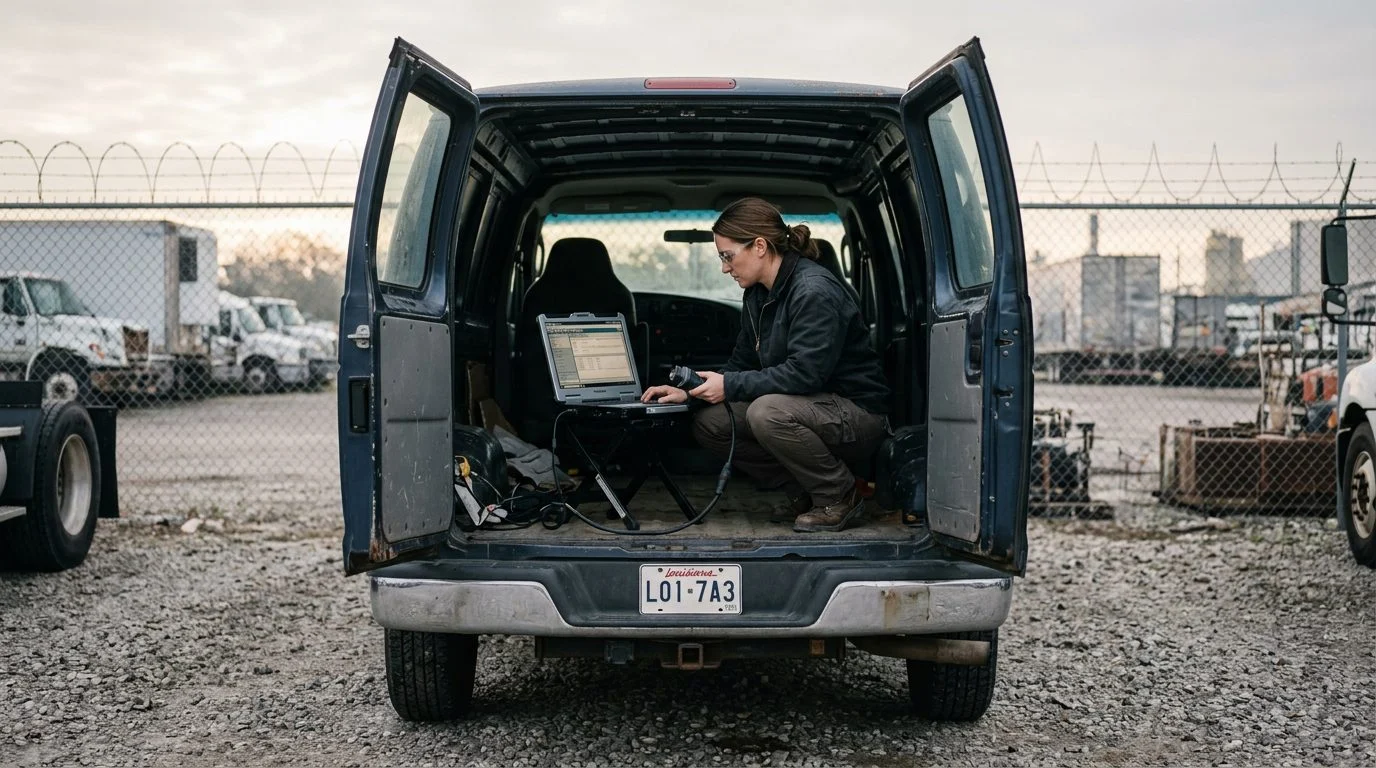
An electronic logging device, or ELD, records a truck’s duty status. Driver logs show how the driver spent each day. Together, these records can help build a timeline before a crash.
Federal rules limit changes to these records. A carrier must not alter or erase, or permit or require alteration or erasure of, the original hours-of-service information, the source data streams, or ELD information built from them (49 CFR 395.30). The driver or support personnel must annotate each change or addition to a record (49 CFR 395.30). No driver or carrier may make a false report about duty status (49 CFR 395.8).
When you write your request, name the vehicle, the driver if known, and a specific date range. Ask for native electronic files, not only printed summaries. Reading these records often takes outside technical review. What they show depends on the full set of records.
Maintenance, inspection, and driver qualification records
Maintenance and inspection records show how the truck was kept. Driver qualification files show what the carrier kept on the driver.
A carrier must systematically inspect, repair, and maintain every vehicle it controls. Parts must stay in safe operating condition (49 CFR 396.3). Drivers report defects in writing. The carrier must repair any defect or deficiency listed on the driver vehicle inspection report that would be likely to affect the safety of the vehicle before the truck runs again (49 CFR 396.11). Those reports are kept for three months, so ask for them early.
Ask for the complete file. Carriers may keep copies in place of originals if the copies are legible and accurately reflect the information required in the record (49 CFR 390.31). Shipping papers, such as the bill of lading, can help identify the right truck, trailer, and cargo. Keep copies of anything you already have.
Dashcam footage, photos, and the crash scene
Dashcam video, scene photos, and the police report can capture facts that no company file contains. Ask in writing for any onboard video. Name the camera, the date, and the time of the crash. Video may be stored for only a short time, so send the request early.
Louisiana law governs the official crash report. Crash reports are confidential. They go to the parties, their attorneys, and insurers. Upon request, they are made available within seven working days after the crash investigation is complete (La. R.S. 32:398). Police, sheriffs’ offices, and state police must provide copies of crash photos and video to any interested person on request, for a reasonable fee (La. R.S. 32:398).
Keep what you can from the scene and after it. That includes photos of the scene and vehicles, witness names and phone numbers, the police report number, and any damaged parts. Keep medical records, bills, and a simple written timeline of symptoms and missed work. These papers support the injury side of a claim.
What to do now while the records are still available
Start with a short list:
- Write down the date, time, and location of the crash.
- Save the police report number.
- Collect witness names and contact details.
- Photograph injuries and damage while you still can.
- Keep every letter from an insurer or the trucking company.
Be careful online. Posts about the crash, the injuries, or your activities can be seen by an insurer. Think before giving a recorded statement to the trucking company or its insurer. Getting advice first can help you decide what to say.
A preservation letter asks the carrier and its insurer to keep specific records. A lawyer can prepare one once the crash details are known.
Common questions
How long must a trucking company keep driver logs?
Federal rules require at least six months from the date of receipt for records of duty status and supporting documents.
How long do I have to file a claim in Louisiana?
Generally two years from the day of the injury under Louisiana Civil Code article 3493.1. Exceptions exist.
Can I get a copy of the crash report?
Under Louisiana law, crash reports go to the parties, their attorneys, and insurers. They are made available within seven working days after the investigation is complete.
Not sure what your next step is?
Talk it through with our team — the first consultation is free, confidential, and carries no obligation.

Talk with the New Orleans office about your truck crash
If you are gathering logs, maintenance files, and crash reports for a family member hurt or killed in a commercial truck crash, you may be doing it while still recovering or grieving. Przemek Lubecki is the responsible lawyer for this page. The New Orleans office can talk with you about your situation. The first consultation is free, confidential, and without obligation. Request a free case evaluation or call 855-LUBECKI.
American Trial Lawyer, LLC may associate or refer a truck crash case to other law firms.
Attorney advertising. Responsible lawyer: Przemek Lubecki. Office: New Orleans, Louisiana. Licensed to practice law in Louisiana. This page is general information, not legal advice.
Evidence That Matters in a Truck Crash Case
Driver Logs and Trip Records
Records of driving hours, dispatch communications and trip details can show how the driver and carrier operated before the crash.
Electronic Data from the Truck
Engine control and event data can record speed, braking and other information that may be overwritten if it is not preserved.
Scene and Vehicle Photos
Photos of the roadway, the vehicles, the cargo and any damage help document what happened while the scene is still visible.
Maintenance and Inspection Files
Repair, maintenance and inspection records can show the condition of the truck and trailer at the time of the collision.
Witness Information
Names and contact details of people who saw the crash can be harder to locate as time passes.
Do Not Wait to Preserve Your Case
Trucking companies often keep records for only limited periods, and electronic data can be overwritten. Speaking with a lawyer early helps make sure important evidence is requested and preserved. The firm may associate or refer a case to other law firms.
What to Do After a Truck Crash
Get Medical Care
Seek medical attention for any injury, even if it seems minor at first. Keep copies of every record and bill.
Document the Scene
If you are able, take photos of the vehicles, the road and any visible injuries. Note the time, weather and location.
Keep Your Records
Save the police report, insurance correspondence, receipts and a simple journal of how the injury affects your daily life.
Talk With a Lawyer
Przemek Lubecki can review your situation at no cost to you and explain the next steps for preserving evidence.
Talk With Przemek Lubecki About Your Truck Crash. The First Consultation Is Free, Confidential and Without Obligation.
Related practice areas
- What Happens If the Other Driver Has No Insurance in Louisiana
- Trucking Company Lawsuit Steps Louisiana | New Orleans