
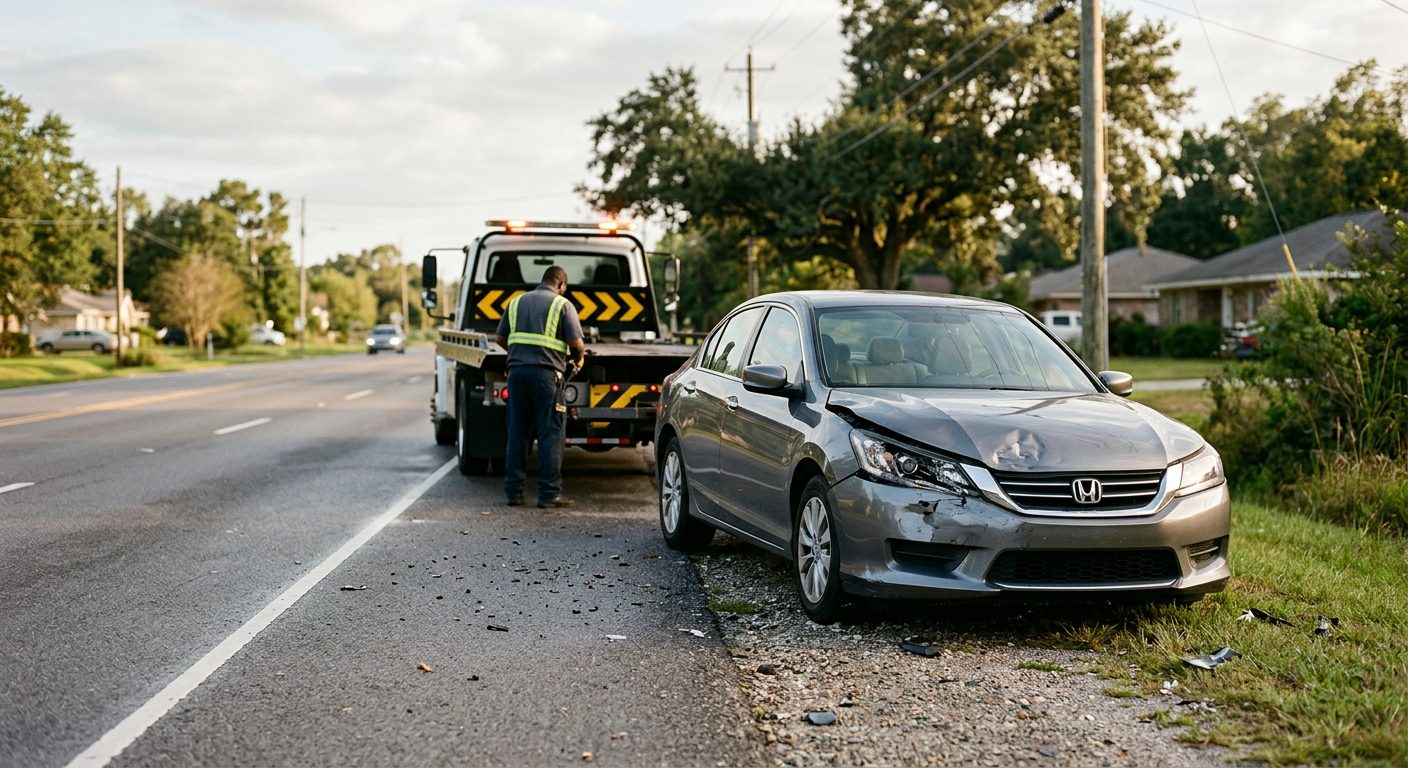
Truck Accidents | New Orleans, Louisiana
Hurt in a Truck Crash? Understand Your Options and Your Next Steps
Przemek Lubecki, trial lawyer with the New Orleans office of American Trial Lawyer, LLC, represents people seriously injured in truck and commercial vehicle crashes and their families across Louisiana. The firm may associate or refer a case to other law firms.
By Przemek Lubecki · Published October 17, 2026
Truck Accident Injury Claims in Louisiana: Your Rights and Next Steps
A truck accident injury claim asks the people responsible for a crash to pay for the harm it caused. In Louisiana, that usually means proving negligence, filing within a set deadline, and showing how fault is split among everyone involved. This guide explains those basics in plain language.
Truck accident injury claims Louisiana families bring often involve more parties than a typical car crash. A driver, a trucking company, an insurer, and sometimes a business that loaded or maintained the truck may all play a part. This page is general legal information, not advice about your case. Results vary, and no outcome is promised.
If you were hurt in a truck crash, or you're a family member facing a fatal one, and you're not sure who should be held responsible, we can talk it through. Talk it through with our team — the first consultation is free, confidential, and carries no obligation.
What a Truck Accident Injury Claim Involves in Louisiana
A truck accident injury claim is a demand for payment for harm caused by a crash with a commercial truck. Many claims start with the insurance companies. If they don’t resolve the matter, the claim can become a lawsuit.
An insurance claim is a request to an insurer to pay. A lawsuit is a case filed in court. The claim is usually the first step, and a lawsuit is the next step when it’s needed.
Commercial trucks create more parties than a car crash does. A car crash often involves two drivers. A truck crash can involve the driver, the company that employs or leases the driver, the truck’s owner, a cargo company, a repair shop, and several insurers. Louisiana law says a person whose fault causes damage must repair it. See Louisiana Civil Code art. 2315.
This page is for injured people, family members of someone killed, and anyone deciding whether a claim makes sense. It applies across Louisiana, including Orleans Parish and the New Orleans metro area. For local details, see our New Orleans truck accident page.
Who Can Bring a Claim After a Truck Crash
The injured person can bring a claim for the harm they suffered. If the crash causes a death, certain family members can bring a wrongful death claim instead.
The facts of each crash decide what losses are provable.
Louisiana law lists who may sue for a death. Under Louisiana Civil Code art. 2315.2, the surviving spouse and children may bring the claim, and parents can do so if there is no spouse or child. Brothers, sisters, and grandparents may bring it only in narrower situations. Read more in our wrongful death guidance.
A separate survival claim covers losses the injured person suffered before dying. Louisiana Civil Code art. 2315.1 lists the family members who may pursue those losses. Families often need both claims reviewed together.
Some injuries change a person’s life long after the crash. Head injuries are one example. Our brain injury page for truck crashes explains how these cases are often documented.
Louisiana Filing Deadlines and Fault Rules
Louisiana generally gives two years to file a personal injury suit, starting from the day the injury happened. The rule comes from Louisiana Civil Code art. 3493.1, which sets a two-year period for delictual actions (claims for harm caused by fault).
Wrongful death timing works differently. Louisiana law sets time limits for filing wrongful death claims, and missing a deadline can bar a family’s claim. A family member’s deadline may therefore differ from the injured person’s. The date of injury matters, and so do the facts. Timing questions should be checked against your specific dates as soon as possible.
Louisiana also uses comparative fault (shared fault). Under Louisiana Civil Code art. 2323, the fault of every person who contributed to the harm is determined. That includes people who aren’t parties to the case.
Your own share of fault matters. Under La. Civ. Code art. 2323, if the degree or percentage of negligence attributable to the person suffering injury, death, or loss is equal to or greater than fifty-one percent, that person is not entitled to recover damages. Under La. Civ. Code art. 2323, where the degree or percentage of negligence attributable to the person suffering the injury, death, or loss is less than fifty-one percent, the amount of damages recoverable is reduced in proportion to that degree or percentage of negligence. Crashes where more than one person is at fault need careful review. See our partly at fault truck accident page.
Who Can Be Liable in a Truck Crash
The driver, the trucking company, and sometimes other businesses can each be liable, depending on what caused the crash. Liability rests on the facts, not on the size of a company.
A driver can be liable for negligence. Under Louisiana Civil Code art. 2316, a person is responsible for harm caused by negligence, imprudence, or want of skill. Speeding, distracted driving, or ignoring rest rules can each fit that standard.
An employer can be liable for the driver’s work. Louisiana Civil Code art. 2320 makes masters and employers answerable for damage caused by their servants while doing the work they were hired to do. A company can also face its own claims for hiring, training, supervision, or maintenance decisions.
Federal rules place duties on the motor carrier, too. Under § 390.11 of the federal motor carrier safety regulations, whenever part 325 of subchapter A or that subchapter prescribes a duty for a driver or imposes a prohibition upon the driver, it shall be the duty of the motor carrier to require observance of such duty or prohibition, and if the motor carrier is a driver, the driver shall likewise be bound. Lease and owner-operator arrangements can make it harder to tell who is responsible. Paperwork often shows who really controlled the truck.
Other parties may be involved. A freight broker that selected an unsafe carrier may face a state-law claim. Under Louisiana Civil Code art. 2317.1, an owner or custodian of a defective thing is answerable only if it knew or should have known of the defect. Some claims against government bodies follow different rules. Those are fact-specific and are not covered here. See our pages on multiple parties at fault and suing a truck driver.
Common Causes of Truck Crashes and How Negligence Is Shown
Most truck crash claims turn on whether someone failed to use reasonable care. Fatigue, distraction, speeding, and unsafe lane changes are common causes. Jackknifing, cargo shifts, brake failure, and underride crashes also happen.
Fourth, the crash caused real damages.
Federal rules set standards for commercial drivers. These include an 11-hour driving limit, a 14-hour window, and weekly limits. The Insurance Institute for Highway Safety publishes research on large truck crash fatalities.
It does not decide a case by itself. Building a crash claim often involves gathering evidence that links what happened on the road to the injuries. Learn more about hours-of-service violations in truck crashes and merged-lane semi-truck crashes.
Not sure what your next step is?
Talk it through with our team — the first consultation is free, confidential, and carries no obligation.
Evidence That Often Matters in These Claims
Trucking evidence can disappear quickly, so early steps matter most. Federal rules do not keep certain records for long. Under federal motor carrier rules, a motor carrier must retain records of duty status and supporting documents for each of its drivers for a period of not less than 6 months from the date of receipt.
Electronic logging device data, engine control module (black box) data, and dashcam video can show speed, braking, and driving time. Dispatch messages, GPS records, driver qualification files, and maintenance logs can show what the company knew. Bills of lading can show what the truck carried and when.
A police crash report records what the officer saw and what people said. It helps, but it does not settle fault on its own. Photos of the scene, vehicle locations, and witness names are often lost first.
Medical records matter as much as crash records. They show the injury, the treatment, and how the injury connects to the crash. Gaps in treatment can be questioned, so keep appointments and notes. Our page on preserving truck logs and dashcam evidence explains what to ask for and when.
Damages You May Be Able to Recover
Injury claims can cover several kinds of losses. Economic damages are money losses, such as medical bills, medications, rehabilitation, lost wages, and lost earning ability. Property damage and out-of-pocket costs can also count.
Non-economic damages cover harms that have no price tag. These include physical pain, emotional distress, loss of enjoyment of life, and disfigurement. Juries and insurers weigh these in different ways.
Louisiana limits some future costs. Under Louisiana Civil Code art. 2315, damages do not include future medical costs unless they are directly related to a manifest physical or mental injury or disease. Families should know this limit early. It shapes how long-term care is documented.
Serious brain injuries can need long-term evaluation and care. Records from neurologists and therapists often carry much of the proof. Wrongful death families can seek losses the law allows for their own harm.
People often ask what a claim is worth. The answer depends on injury severity, proof of fault, insurance limits, and other facts. No amount can be predicted from a general page. See our guide to factors that affect a truck claim’s value.
Insurers, Delays, Direct Action, and Medical Bills
Insurers often act quickly after a truck crash. Early contact can shape the record, so it helps to understand what you’re agreeing to before you speak with them. Ask what a recorded statement is for before you give one.
Louisiana allows some direct claims against insurers. Under La. R.S. 22:1269, an injured person may bring an action against a liability insurer within the policy’s terms and limits when the injury happened in Louisiana. The statute includes conditions, such as the insured’s insolvency. It is a legal rule, not a substitute for advice on your case.
Delays are common when fault is disputed, several carriers are involved, or documents move slowly. Our page on insurer delays and denials covers those situations.
Medical bills and liens can affect what an injured person keeps. Health insurers, providers, and other payers may assert a right to be paid from a settlement. Read more on medical liens and who gets paid first.
Common Questions About Truck Crash Claims
How long do you have to file a Louisiana injury claim?
For most injury claims, Louisiana generally allows two years from the date of injury (La. Civ. Code art. 3493.1).
Can I sue the truck driver or only the company?
Fault can be determined for everyone who contributed to the harm. Who is named depends on the facts.
Are future medical costs recoverable?
Louisiana limits them unless they are directly tied to a manifest injury.
Does Louisiana let you sue an insurer directly?
Under La. R.S. 22:1269, a direct action may exist within policy terms and limits when the injury happened in Louisiana.
Do I have to give a recorded statement?
Ask what it is for before you agree. Understanding the request protects you.
What to Do in the First Weeks After a Truck Crash
In the first weeks, focus on your health, records, and evidence. Small steps taken early often matter later. Keep your focus on what you can control.
Get a medical evaluation and follow the treatment plan. Keep notes on symptoms, appointments, and missed work. Gaps in care can be used to argue that an injury was not serious.
Document the scene, the vehicles, and your injuries with photos. Write down the names of witnesses and the company on the truck. Keep a simple daily journal of limitations.
Save receipts, pay stubs, and bills. Track lost income and out-of-pocket costs from the start. Organized records make any later review faster.
Think before signing releases or statements. Read every document, and ask what it does. Protect evidence before it is overwritten or discarded.
Fees, Case Costs, and Case Referrals
Fee terms are set in writing before any work begins. Some injury firms use a contingency fee, which means the fee comes from a recovery. You may be responsible for case costs and expenses in addition to the fee, and the terms should be explained to you clearly.
We do not promise any settlement or verdict amount. Results vary from case to case. Past outcomes do not predict your result.
American Trial Lawyer, LLC may associate or refer a case to other law firms. If a referral is likely, we will tell you before you sign. Any referral will be disclosed in the fee agreement.
Read more about contingency fees and case costs before deciding anything.
Have questions about what happened?
Ask our team directly. The first conversation is free, confidential, and there is no obligation to continue.
Talk With Przemek Lubecki About Your Truck Crash
Przemek Lubecki is the responsible lawyer for this page. The office is in New Orleans, and we serve people across Orleans Parish, Jefferson Parish, St. Bernard Parish, Kenner, Metairie, Slidell, and elsewhere in Louisiana.
If you were hurt in a truck crash, or you’re a family member facing a fatal one, and you’re not sure who should be held responsible, we can talk it through. Request a free case evaluation at /contact/, or call 855-LUBECKI for a free consultation. You may be responsible for case costs and expenses in addition to any fee. Results vary, and no outcome is promised.
How we approach your truck crash case
Trial-ready from the start
Przemek Lubecki prepares every truck crash case as if it may be tried in court, from the first investigation through each stage of the claim.
Plain-language guidance
We explain medical, insurance and legal terms in everyday language so you can make informed decisions at every step.
Focused on serious injuries
Our work centers on people seriously hurt in truck, commercial vehicle and car crashes, and on families facing wrongful death.
Direct contact with your lawyer
Your questions go to Przemek Lubecki and our team, supported by office staff who keep your case organized.
Be careful with early insurance calls
Representatives for trucking companies and their insurers may contact you soon after a crash.
Steps to consider after a truck crash
Get medical care
See a doctor as soon as you can, even if your injuries seem minor. Some injuries, including brain injuries, may not show symptoms right away.
Document the scene
If it is safe, take photos of vehicles, road conditions, skid marks and visible injuries. Save any tickets or citations you receive.
Write down what you remember
Record the date, time, location, weather and what you saw and heard while the details are fresh.
Talk with a trial lawyer
Przemek Lubecki can review what happened and explain your options in a confidential first conversation.