
Crash Guide | New Orleans, Louisiana
Understanding the Police Report After a New Orleans Crash
A plain-language guide from American Trial Lawyer, led by Przemek Lubecki, to what a police report is, what it can and cannot tell you, and how to protect your claim after a car, truck or commercial vehicle crash.
By Przemek Lubecki · Published October 27, 2026
What is a police report?
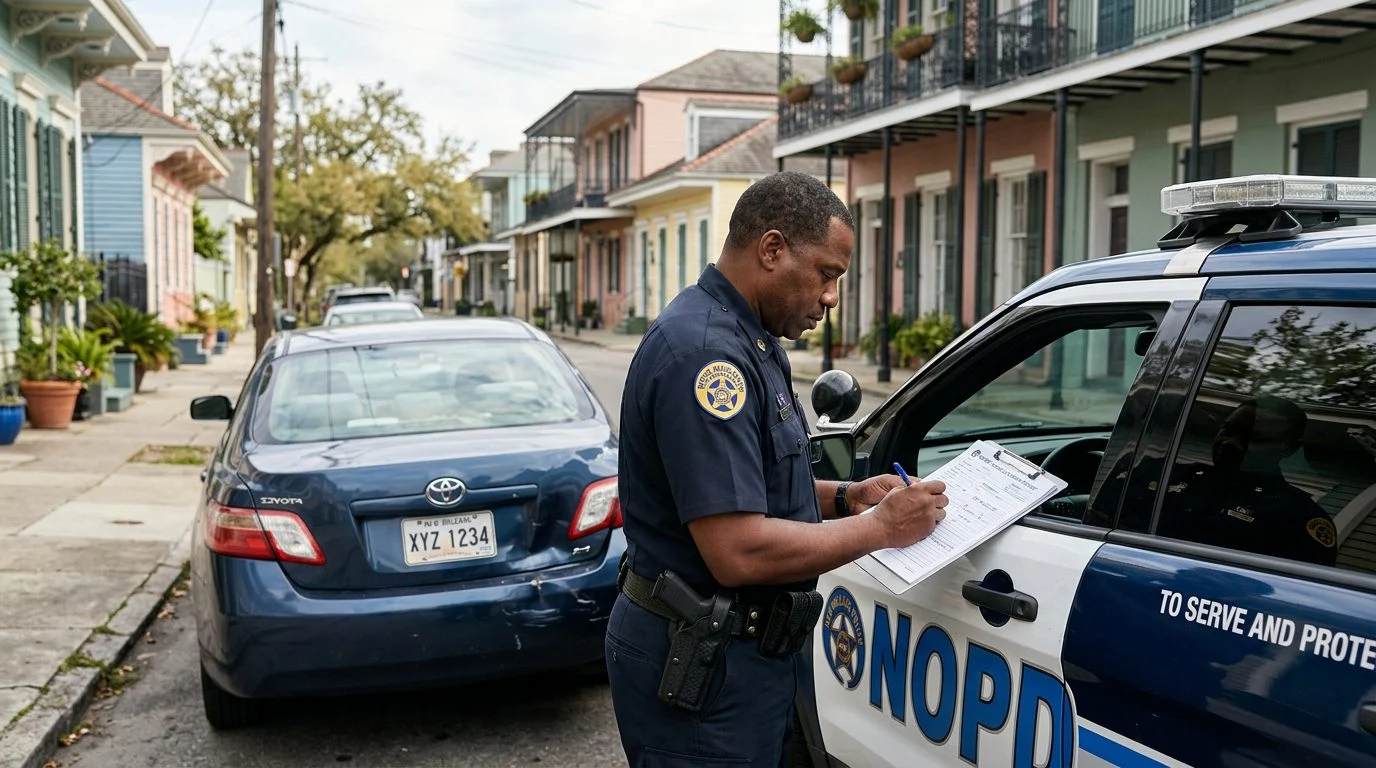
A police report is the official written record an officer creates after responding to an incident, most often a motor vehicle crash. It describes what the officer saw and learned at the scene.
In Louisiana, a report about a collision is called a crash report. La. R.S. 32:398 says the law enforcement agency that creates a report owns it, and the state owns all collective crash data.
The report is one record among several. Photos, witness statements, vehicle information and medical records can matter too. A report reflects what was known at the time. It is not a final ruling on who was at fault.
Think of it as a starting point, not the whole story. It sets out the basic facts so those facts can be followed up. For families dealing with a death, our guide to filing a wrongful death lawsuit in Orleans Parish lays out the broader steps.
Not sure what your next step is?
Talk it through with our team — the first consultation is free, confidential, and carries no obligation.
What does a police report document?
A typical report records the basic facts of the event and the people involved. Louisiana’s crash-report forms are designed to disclose the cause, the conditions then existing, and the persons and vehicles involved in a highway crash (La. R.S. 32:398).
Reports often include:
- The date, time and location, plus the agency and officer who responded
- Each driver’s name, contact details and vehicle description
- Insurance information, when it was collected at the scene
- Injuries noted, and whether medical help was called
- A narrative of the officer’s understanding of events, and any diagram
- Road, weather and traffic-control conditions
- Witness names and statements, plus any citations
Each entry is only as accurate as what was gathered on scene. That’s why it helps to compare the report with photos and your own notes.
Do police always file a report?
No, not every incident leads to a written report. Whether one is written depends on the circumstances. Louisiana’s crash-reporting statute provides that the driver of a vehicle involved in a crash resulting in injury to or death of any person, or property damage in excess of five hundred dollars, shall give his name, address, and the registration number of the vehicle he was driving, and, upon request and if available, exhibit his license or permit to drive to the persons specified in the statute (La. R.S. 32:398).
Under the same statute, crash reports are confidential. They go to listed people, including the parties to the crash, their attorneys, and insurers of a party. Upon request, they are available within seven working days after the crash investigation is complete.
If you received a report or incident number at the scene, write it down. It helps identify the record later. If you’re unsure whether a report was filed, you can raise that question during a consultation.
What is a police record called?
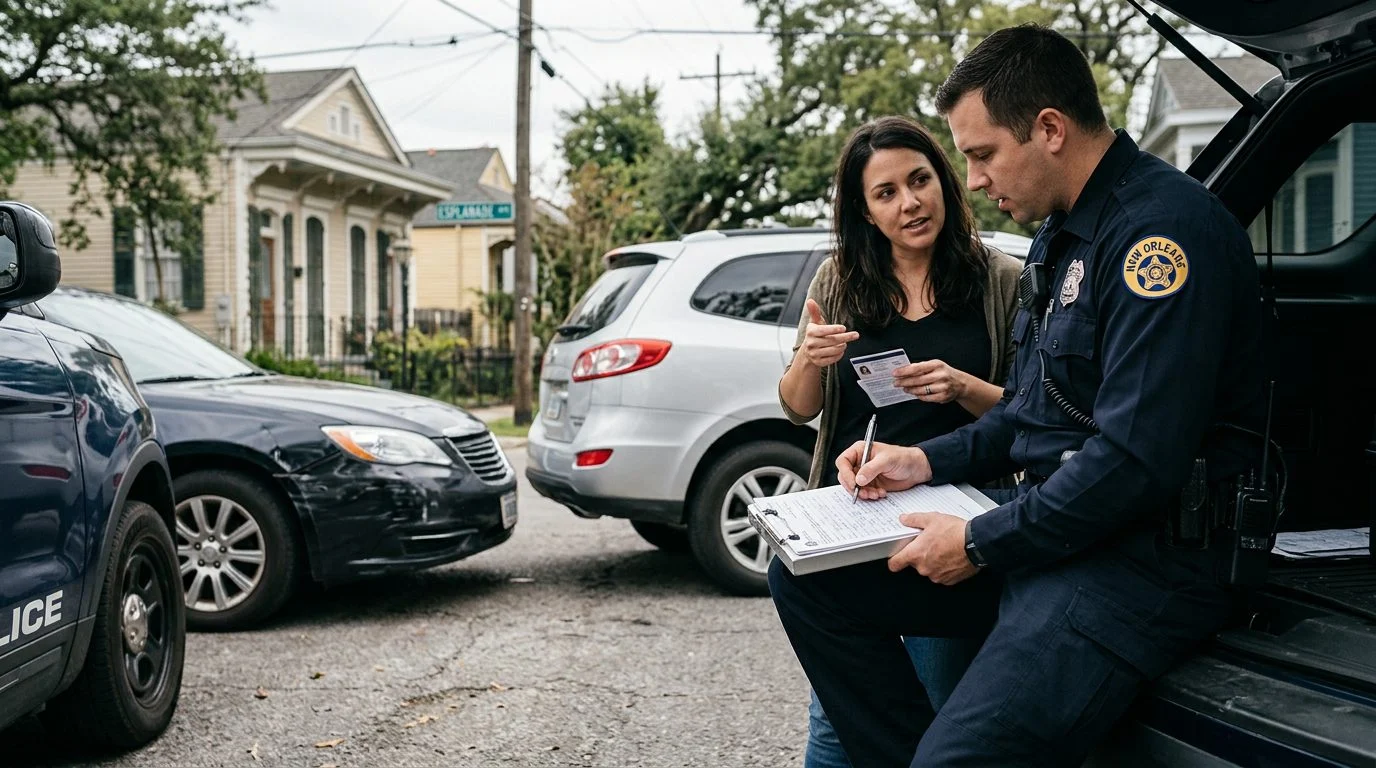
The same record goes by several names. People often say police report, crash report, traffic crash report, motor vehicle accident report, or incident report. Louisiana’s statute uses the term crash report.
A traffic crash report is designed to disclose the cause, the conditions then existing, and the persons and vehicles involved in a highway crash. An incident report may cover other events, such as an assault or a shooting. A family member who asks for “the police record” usually means the official report of the incident. Using the exact name when you call the agency can prevent confusion.
Other matters can produce different records. Negligent security and brain injury cases may involve incident reports and medical records.
Focus on the content more than the label: the date, the parties, and the scene details.
How a police report can fit into a claim
Attorneys often review a crash report early. It helps show the order of events, the parties involved, and what was gathered at the scene. It is still one piece of evidence. Photos, witness accounts, vehicle data and medical records may support it or raise questions about it.
Physical evidence matters too. The Louisiana State Police forensic services guide says physical evidence such as broken glass, paint and other trace materials should be recognized and preserved, because it offers objective evidence that stays available for analysis.
If you gave a written or recorded statement about the crash, La. R.S. 13:3732 says the person who took it must give you a true and complete copy within twenty days after written demand.
Louisiana uses comparative fault. Under La. Civ. Code art. 2323, if the degree or percentage of negligence attributable to the person suffering injury, death, or loss is equal to or greater than fifty-one percent, that person shall not be entitled to recover damages. Under La. Civ. Code art. 2323, if the degree or percentage of negligence attributable to the person suffering injury, death, or loss is less than fifty-one percent, the amount of damages recoverable shall be reduced in proportion to that degree or percentage of negligence, but a claim is not reduced when the other fault is that of an intentional tortfeasor.
Time limits also apply, and exceptions can apply. La. Civ. Code art. 3493.1 sets two years for delictual (tort) actions, which include many injury claims. La. Civ. Code art. 2315.2 sets the wrongful death period at one year from the death or two years from the injury, whichever is longer.
Reports can contain mistakes or leave things out. Write down anything that looks wrong, and bring it up during a consultation.
Talk with a New Orleans trial lawyer about your situation
A New Orleans trial lawyer can review a crash report with you and explain what its details may mean for your next steps.
You may be reading this after a crash you did not choose, or after losing someone you love. You may also be trying to sort through paperwork at the same time.
Quick answers
What is a police report?
It is an official written record an officer creates about an incident, often a crash, based on what is seen and gathered at the scene.
Do police always file a report?
No. Not every incident gets a written report, and reports are confidential under Louisiana law.
What is a police record called in Louisiana?
Louisiana’s statute uses the term crash report.
Who can get a crash report?
Under La. R.S. 32:398, listed people such as the parties to the crash and their attorneys can request one.
Przemek Lubecki is the responsible lawyer for this page. The firm’s office is in New Orleans. You can call 855-LUBECKI (office in New Orleans) to request a free case evaluation. The first consultation is free, confidential and without obligation. The firm may associate or refer a case to other law firms where applicable.
Przemek Lubecki is responsible for the content of this page. Office: New Orleans, Louisiana. Lawyers of American Trial Lawyer, LLC are licensed to practice law in Louisiana.
How We Can Help After a Crash
Focused on people hurt in crashes
We represent people seriously injured in truck, commercial vehicle and car crashes, and families in wrongful death cases.
Review of the crash record
We help you understand what the police report says, what it leaves out, and how it fits with the rest of the evidence.
Responsible lawyer: Przemek Lubecki
Przemek Lubecki is the responsible lawyer for this page. Our office is in New Orleans, serving Orleans Parish, the New Orleans metro area and Louisiana.
Confidential, no-obligation start
Your first consultation is free, confidential and without obligation to continue.
Check Your Report for Errors
A police report is written from what the officer saw and was told at the scene. Names, vehicle details, directions of travel and witness statements can be wrong or incomplete. If you spot a mistake, write it down and bring it to your lawyer's attention as soon as you can.
Steps to Take Now
Get the report number
Ask the responding agency how to request a copy of the crash report and keep the report number with your other records.
Write down what you remember
Note the time, location, weather, lane positions and what each driver said while the details are still fresh.
Keep photos and contact details
Save photos of vehicles, the roadway and any injuries, along with the names and phone numbers of witnesses.
Talk with a lawyer early
Before you give a recorded statement to an insurance company, consider speaking with a lawyer about your options. Our free consultation is confidential and carries no obligation.