
Wrongful Death · New Orleans, Louisiana
Losing someone in a crash? We can help you through the paperwork.
Plain-language guidance from New Orleans trial lawyer Przemek Lubecki on how families request a fatal crash report. Office in New Orleans.
By Przemek Lubecki · Published October 31, 2026
Families in New Orleans usually get a fatal crash report by requesting it from the New Orleans Police Department (NOPD). Louisiana law limits who can receive the report and caps some copy fees. This guide explains what the report is, how to ask for it, and what else to keep while you wait.
Losing someone in a crash is hard. Paperwork can feel like one more weight. You can take it one step at a time.
What the NOPD Crash Report Is
The NOPD crash report is the official record the responding officer creates after a crash in Orleans Parish. It lists the people and vehicles involved, the location and the conditions at the scene. Many reports also include a written narrative and a diagram.
Families sometimes hear about other records, such as notes or follow-up paperwork. The crash report is the document to ask for first, because it is the official record of the scene.
The report records what the officer saw and what people told the officer at the scene. That makes it one important source of information. It is not the complete story of how the crash happened. Photos, medical records and witness accounts can add to the picture.
If you lost someone in a New Orleans crash and are still gathering the report, our team can talk through what comes next, free, confidential and without obligation. Talk it through with our team — the first consultation is free, confidential, and carries no obligation.
Where a New Orleans Family Requests the Report
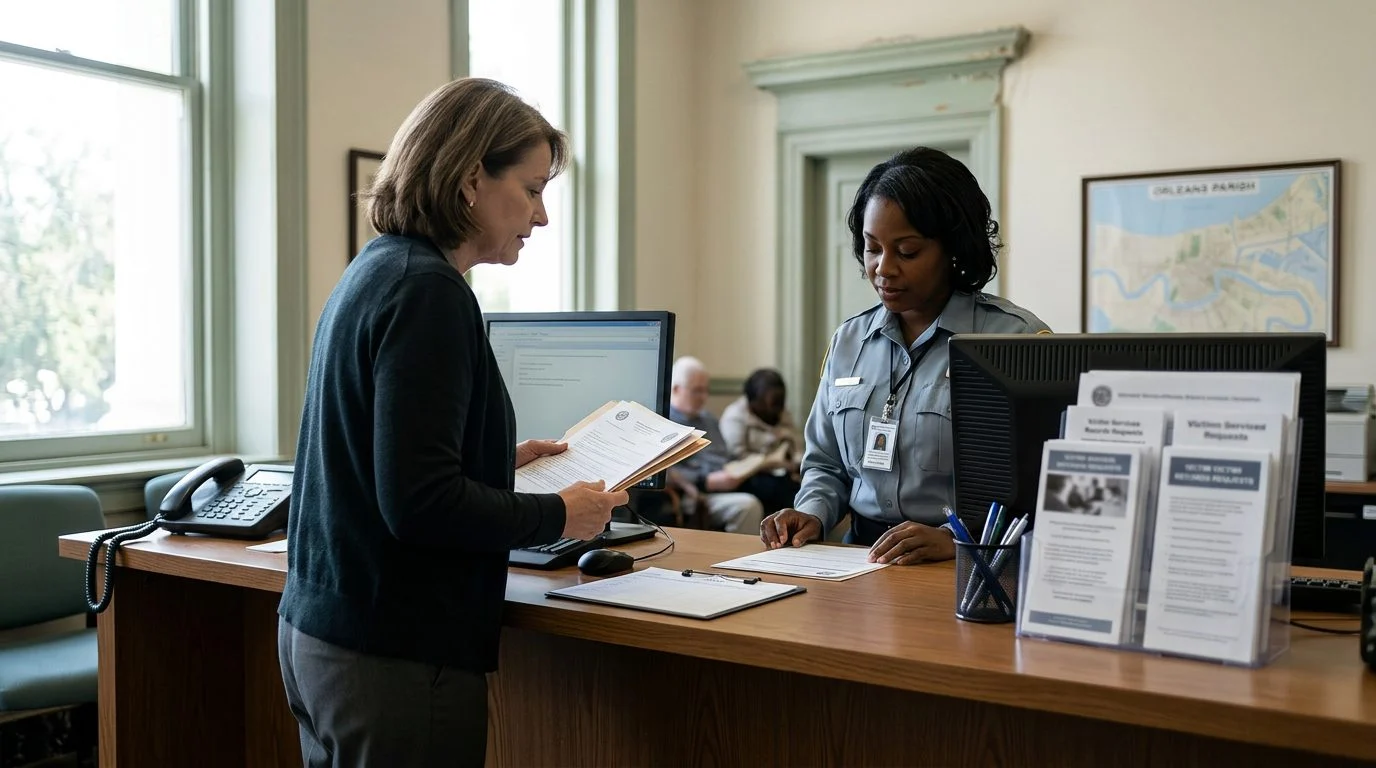
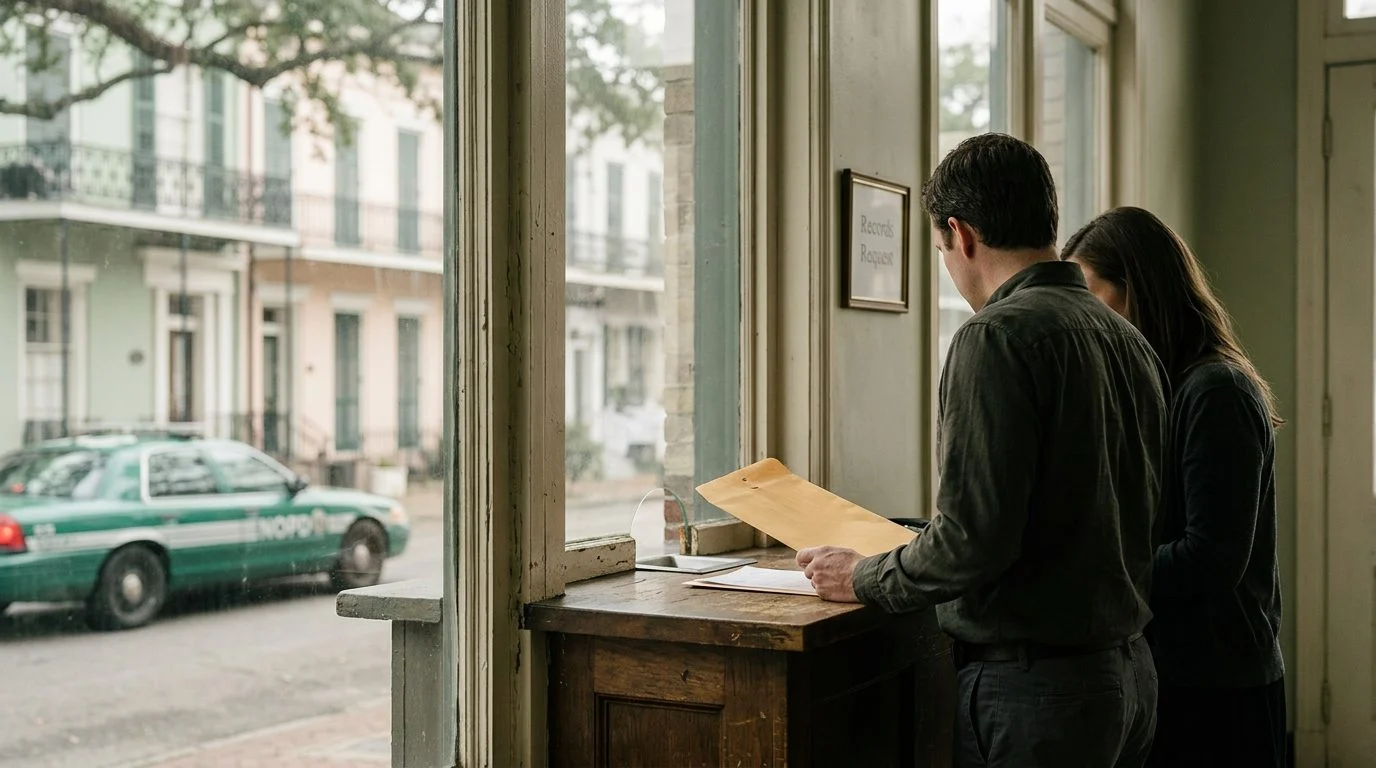
Families request the crash report from the New Orleans Police Department through its records process.
Louisiana law also makes crash reports confidential. The Louisiana crash report statute limits access to listed people. That list includes the parties to the crash, insurers of a party, and succession representatives of those parties. It also includes attorneys for those parties or representatives.
Once someone on that list asks, the report must be made available within seven working days after the crash investigation is complete.
The same statute caps copy fees. Photos and video are handled differently. The department may charge a reasonable fee for those copies.
What to Have Ready Before You Ask
Have these details ready before you call or submit a request. Exact details make it easier to find the right file.
- The date and time of the crash.
- The street address or intersection.
- The parish, which is Orleans Parish for crashes inside New Orleans.
- The names of the people involved.
- The report number, if the scene gave you one.
Your relationship to the person who died matters. The law lists succession representatives, not family members in general. A surviving spouse, parent or child may need to act through a succession representative. Confirm the current steps with the police department before you go.
Keep a simple log. Write down the date of each request, the confirmation number, the contact name and any reply. This record helps if you need to follow up.
What the Report Contains and How to Read It
Read the report slowly, with a pen in hand. Start with the basic facts. Check the parties, the vehicles, the date, the time, the location and the conditions. Then read the officer’s narrative and the diagram.
Compare each line with what you know. Note any statement that does not match what your family knows or saw. Write it down with the page or section number. Clear notes make it easier to raise questions later.
A report alone does not settle fault. Louisiana applies a comparative fault rule, or shared-fault rule. Under Louisiana’s comparative fault article, if the degree or percentage of negligence attributable to the person suffering injury, death, or loss is equal to or greater than fifty-one percent, that person is not entitled to recover damages. Under Louisiana’s comparative fault article, if the degree or percentage of negligence attributable to the person suffering injury, death, or loss is less than fifty-one percent, the amount of damages recoverable is reduced in proportion to that degree or percentage of negligence. The current text took effect January 1, 2026.
The parish matters too. The parish where a crash happened can matter for where a claim is filed. The New Orleans and Orleans Parish wrongful death page gives more background.
Amended Reports and Supplemental Records
If you receive more than one version of a report, or a follow-up record, compare them line by line. Use the most current copy when you review the facts. Don’t rely on one document alone.
Open criminal matters can affect timing and access to records. Our page on criminal cases and wrongful death claims explains how the two can connect.
Some families also ask about statements taken from an injured person. Under Louisiana’s injured person statement law, the person who took a written or recorded statement must furnish a true and complete copy. The copy is due within twenty days after written demand. The person who gave the statement, or that person’s personal representative, can make that demand.
Other Evidence to Keep Alongside the Report
Start a file now, while details are still fresh. Many families keep these items together:
- Photos and video of the scene and the vehicles.
- Names and phone numbers of witnesses.
- Repair estimates or total-loss paperwork for the vehicles.
- Medical bills and medical records.
- Work and pay records, where they relate to the loss.
Phones, texts and social media can change or be lost over time. Save messages, posts and call logs early. Our page on phone records and social media in fatal crash cases covers this in more detail.
Insurance adjusters may ask for a recorded statement. You can ask questions first. You can ask for time and take notes before you answer.
Not sure what your next step is?
Talk it through with our team — the first consultation is free, confidential, and carries no obligation.
Talking With a New Orleans Wrongful Death Lawyer
Families who lose someone in a crash can talk with a lawyer about a possible wrongful death claim while they are still requesting the report. Przemek Lubecki is the responsible lawyer for this page. The New Orleans office serves people in Orleans Parish and across Louisiana.
Under Louisiana’s wrongful death article, certain family members may bring suit when a person dies due to another’s fault. The article lists who may sue, starting with a surviving spouse and children. It also sets a time limit: one year from the death, or two years from the day the injury or damage was sustained, whichever is longer.
This firm may associate or refer a case to other law firms. Other lawyers who work on a case are not part of American Trial Lawyer, LLC.
How do I get a fatal crash report in New Orleans?
Request it from the New Orleans Police Department through its records process. Louisiana law limits who may receive the report.
Who can get a Louisiana crash report?
The law lists people such as the parties to the crash, their insurers, and succession representatives or attorneys for those parties. Confirm the current steps with NOPD.
What does a New Orleans crash report cost?
The police department may charge up to five dollars for a report of two pages or less. For longer reports, the cap is twenty dollars, including all service fees and other charges.
Does the police report decide who is at fault?
No single document decides fault. The report is one important source, and Louisiana’s comparative fault rule weighs the fault of everyone involved (La. Civ. Code art. 2323).
If you lost someone in a New Orleans crash and are still gathering the report, call 855-LUBECKI or request a free case evaluation. The first consultation is free, confidential and without obligation.
What to have ready when you ask for the report
The crash details
Note the date, time, and location of the crash, and the names of everyone involved if you know them.
Your relationship to the person who died
Be ready to explain how you are connected to the person who died and whether you act for their estate.
Identification and documents
Keep a photo ID and any paperwork showing your role, such as a death certificate or letters of authority.
Questions to bring to us
Write down what you want to understand about the crash so we can review it together during your free consultation.
How our team supports families
Compassionate first contact
We understand that you are grieving. We take the time to listen before discussing any next steps.
Help reading the report
We explain the parts of a crash report in plain language so you know what the information means.
Confidential conversations
Your first consultation is free, confidential and without obligation to continue.
Focused on wrongful death cases
Our work includes wrongful death cases arising from truck, commercial vehicle, car, motorcycle, and rideshare crashes.
Important: case referrals
Depending on the facts of your case, the firm may associate or refer a case to other law firms. If that is likely, we will tell you before you decide how to proceed.