
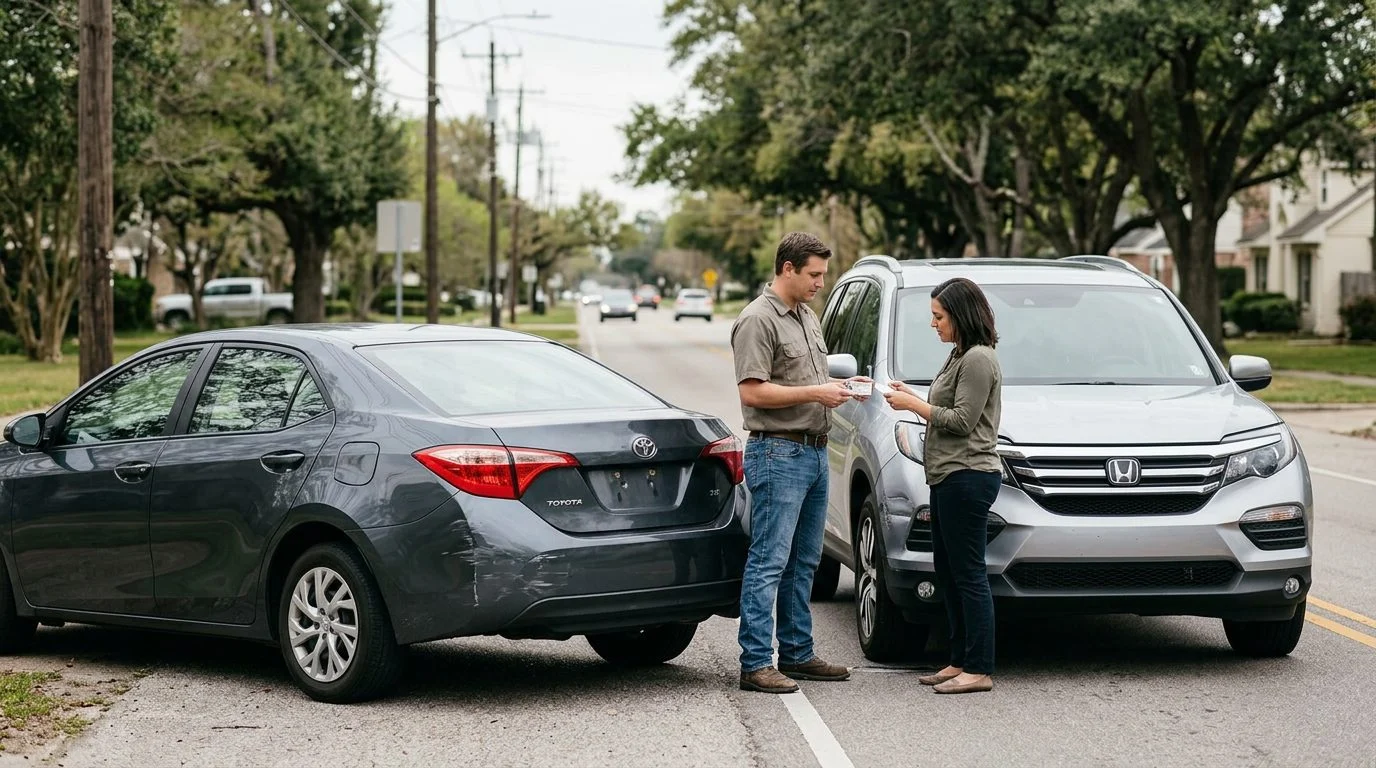
Louisiana auto insurance | New Orleans
Is Louisiana a No-Fault State for Auto Insurance?
Clear answers for people hurt in car, truck and motorcycle crashes. Przemek Lubecki, responsible lawyer at American Trial Lawyer, LLC in New Orleans, explains the basics of how auto insurance works in Louisiana.
By Przemek Lubecki · Published October 27, 2026
Short answer: Louisiana is a fault state, not a no-fault state
Is Louisiana a no-fault state for auto insurance? No. Louisiana is a fault state, so the driver who caused a crash is responsible for the harm they caused. That driver’s liability insurance is the main source of payment for an injured person’s claim.
Under Louisiana Civil Code art. 2316, every person is responsible for damage caused by their negligence, imprudence, or want of skill.
In a no-fault system, each person’s own insurance pays first, no matter who caused the crash. Louisiana doesn’t work that way.
Louisiana requires most registered vehicles to carry liability coverage. The Louisiana liability security law lists the required coverage and other accepted forms of security. The Office of Motor Vehicles insurance page explains how that requirement is enforced.
If a crash has left you or a loved one facing these insurance questions, you do not have to sort them out alone. Our team offers a free, confidential first consultation. Talk it through with our team — the first consultation is free, confidential, and carries no obligation.
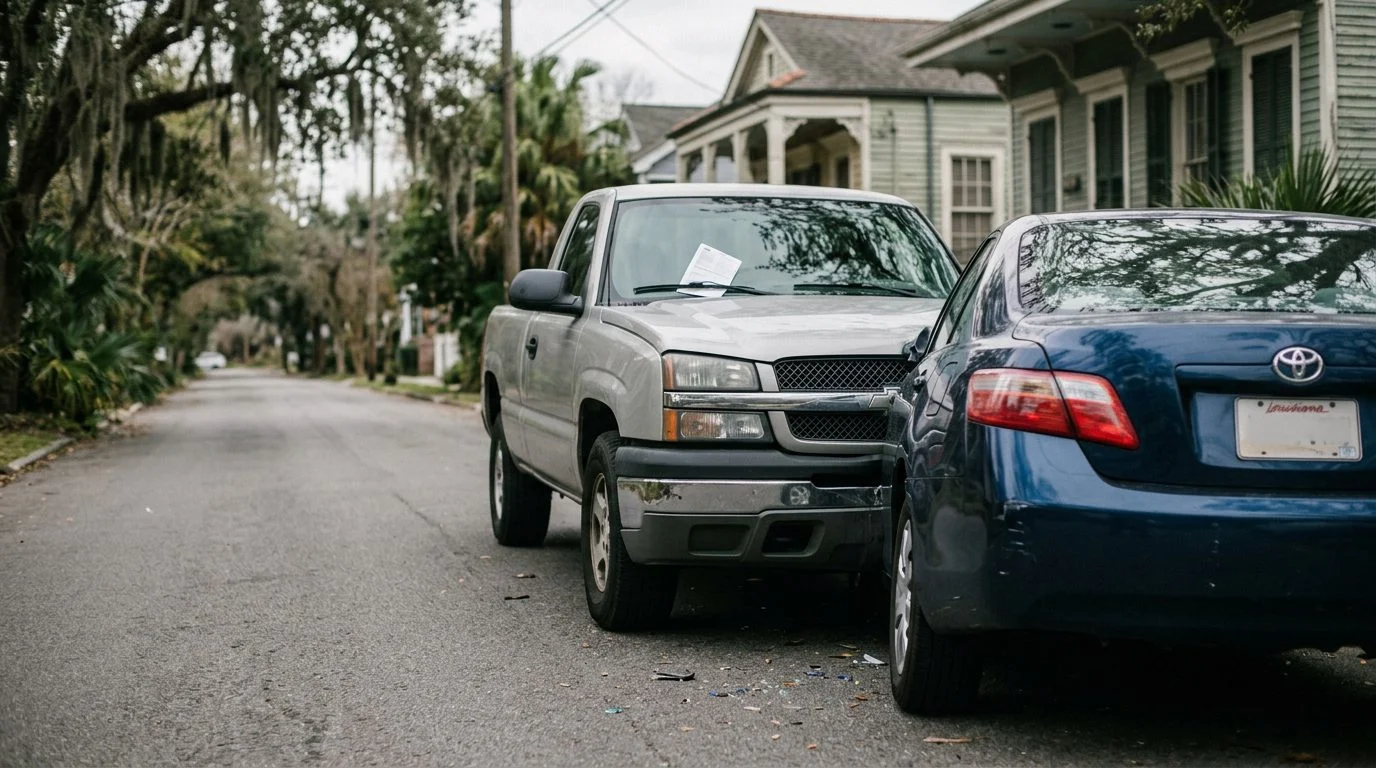
How fault is decided after a Louisiana car accident
Louisiana splits fault by percentage. Under Louisiana Civil Code art. 2323, if the degree or percentage of negligence attributable to the person suffering injury, death, or loss is equal to or greater than fifty-one percent, that person shall not be entitled to recover damages. If that share is less than fifty-one percent, the amount of damages recoverable shall be reduced in proportion to the degree or percentage of negligence attributable to the person suffering the injury, death, or loss, but the claim is not reduced when the harm was partly caused by the fault of an intentional tortfeasor. This version of the rule took effect January 1, 2026, so the date of the crash matters.
Fault is weighed across everyone who contributed to the harm. Article 2323 counts people who aren’t parties to the lawsuit, and it applies regardless of a person’s ability to pay. Under Louisiana Civil Code art. 2324, a joint tortfeasor (a person who shares blame for the same harm) generally isn’t liable for more than their own degree of fault.
A common question is whether a driver who hits a car that stopped suddenly is automatically at fault. Louisiana law says a driver shouldn’t follow another vehicle more closely than is reasonable and prudent, under the Louisiana following-distance rule. Whether that driver is at fault depends on the facts, such as following distance, attention, signals and road conditions.
Evidence shows the facts. Useful sources often include the police report, photographs, dashcam or traffic camera footage, witness statements, vehicle damage records and medical records. Crashes with several vehicles, lane changes or intersections can split fault among several drivers. Our car accident practice page covers these crash types in more detail.
No Pay, No Play, uninsured drivers and direct action
Under Louisiana law, an owner or operator who fails to keep compulsory motor vehicle liability insurance can be barred from recovering the first one hundred thousand dollars of bodily injury or property damage arising from a motor vehicle accident. Under La. R.S. 32:866, there shall be no recovery for the first one hundred thousand dollars of bodily injury or the first one hundred thousand dollars of property damage, based on any cause or right of action arising out of a motor vehicle accident, for such injury or damages occasioned by an owner or operator of a motor vehicle involved in that accident who fails to own or maintain compulsory motor vehicle liability security. That limit does not apply if the driver of the other vehicle is cited for a violation of R.S. 14:98 as a result of the accident and is later convicted of or pleads nolo contendere to that offense; intentionally causes the accident; flees from the scene of the accident; or, at the time of the accident, is in furtherance of the commission of a felony offense under the law. It also does not apply if, at the time of the accident, the other vehicle is not being operated and is not in violation of the provisions of Chapter 1 of this Title. A passenger may still assert a claim for injury, death, or loss he occasioned, in whole or in part, by the negligence of another person arising out of the operation or use of a motor vehicle, unless the passenger is also the owner of the uninsured motor vehicle involved in the accident.
Under Louisiana’s Direct Action Statute (R.S. 22:1269), as amended effective August 1, 2024, a person hurt in a crash usually must bring the claim against the at-fault party rather than that party’s liability insurance company. Under La. R.S. 22:1269(B)(1), an injured person, or certain survivors if that person has died, may bring a direct action against the insurer only in listed situations, such as when the insured has filed for bankruptcy or is insolvent, or when the insurer is an uninsured motorist carrier. Under La. R.S. 22:1269, direct action is allowed only in listed situations. Under La. R.S. 22:1269, examples include when service of citation or other process on the insured defendant has been attempted without success, or when the insured defendant refuses to answer or otherwise defend the action within one hundred eighty days of service.
Your own policy may matter too. Under La. R.S. 22:1295, auto liability policies must include uninsured motorist coverage unless the named insured rejects it, selects lower limits, or selects economic-only coverage. Reviewing your own policy after a crash shows which coverage you chose.
Whether it makes sense to pursue an uninsured driver depends on that driver’s assets and available coverage. This page makes no prediction about any particular case.
Time limits and families of people who died in a crash
Louisiana’s general deadline for injury claims is two years. Under Louisiana Civil Code art. 3493.1, delictual (tort) actions generally must be filed within two years from the day injury or damage is sustained. Deadlines can start before a family understands what happened, so don’t wait to learn the rules.
When a death is caused by another person’s fault, Louisiana Civil Code art. 2315.2 allows suit within one year from the death or two years from the injury, whichever is longer. The law lists who may sue: a surviving spouse and children first, then parents, then siblings, then grandparents, depending on who survived. A related survival claim follows a similar time rule under Louisiana Civil Code art. 2315.1.
Our wrongful death guide for Orleans Parish covers these claims. Families dealing with a parent killed in a crash can also read about a parent killed in a car crash. Insurance questions also arise when a pedestrian killed by a car case is involved.
What is the 51% rule in Louisiana?
For crashes on or after January 1, 2026, if the degree or percentage of negligence attributable to an injured person is equal to or greater than fifty-one percent, that person shall not be entitled to recover damages under art. 2323, unless the injury resulted partly from the fault of an intentional tortfeasor, in which case the claim for recovery of damages shall not be reduced.
Can I sue the other driver’s insurer directly?
Only in the listed situations under La. R.S. 22:1269. Each situation has its own conditions.
Talk with a Louisiana car accident lawyer about your situation
If you’re paying medical bills, dealing with a damaged vehicle or grieving a loss, you didn’t choose this situation. Insurance questions can feel urgent while you’re still recovering. If a crash has left you or your family facing these questions, you don’t have to work through them alone. To request a free case evaluation, call 855-LUBECKI (Office in New Orleans). The first consultation is free and confidential, with no obligation to continue.
Przemek Lubecki is the responsible lawyer for this page. The office is in New Orleans. Przemek Lubecki is licensed to practice law in Louisiana.
American Trial Lawyer, LLC may associate or refer a case to other law firms. Co-counsel and referring lawyers are not part of American Trial Lawyer, LLC.
This page is general information, not legal advice. It does not promise any result.
Questions to bring to a free consultation
How was the crash handled?
Details such as who was involved, where the crash happened and what each insurer has said can shape the next steps.
What paperwork do you have?
Police reports, medical records, insurance letters and photos help show what happened.
How are your injuries progressing?
Serious injuries, including brain injuries, often need ongoing medical care and careful documentation.
Was anyone else affected?
Families facing a wrongful death claim have different questions, and a lawyer can explain the options that apply to them.
A note on referrals
American Trial Lawyer, LLC may associate or refer a case to other law firms. Any referral will be disclosed to you. Discussing your situation with us is free, confidential and comes with no obligation to continue.
Common auto crash situations we discuss
Car accidents
Collisions on New Orleans streets, in Jefferson Parish and across Louisiana, including crashes with uninsured or underinsured drivers.
Truck and commercial vehicle crashes
Large vehicle collisions often involve multiple insurers, company records and federal and state rules.
Motorcycle accidents
Riders face unique injury risks, and insurance questions can be complicated after a crash.
Wrongful death
When a loved one dies in a crash, families often need guidance on insurance claims and the legal process.