
Wrongful Death | New Orleans, Louisiana
After a Fatal Crash, the Criminal Case Is Only One Part of the Story
When a driver is charged after someone dies, the criminal case and a family's wrongful death claim are separate matters. Przemek Lubecki, responsible lawyer, explains how they fit together under Louisiana law. Office in New Orleans.
By Przemek Lubecki · Published October 22, 2026
When a driver is charged after a deadly crash, the criminal case and a wrongful death claim are two separate matters. The state decides whether to prosecute the driver. The family decides, with its own lawyer, whether to bring a civil claim for its losses. This page explains how a criminal case after a fatal crash in New Orleans relates to a wrongful death claim under Louisiana law. It is general information, not advice about your own case.
When the Driver Is Charged After Someone Dies in a Crash
After a fatal crash, prosecutors may file criminal charges against the driver. Families often learn about this from police, the news, or a court notice.
Losing someone in a crash is painful. Many families then face a criminal process they never expected. Learning that the driver has been charged can feel like a second shock. It often arrives while funeral plans, work calls and paperwork are still piling up.
The criminal case is brought by the state, not by the victim’s family. The state decides what charges to file and how the case moves forward. The family does not run that case, and it does not control the pace.
You may have many questions and little time to ask them. That’s normal. No one can know how either track will end at this stage. So this page explains how each one works, so you can see where your questions fit.
Not sure what your next step is?
Talk it through with our team — the first consultation is free, confidential, and carries no obligation.
A Criminal Case and a Wrongful Death Claim Are Separate
A criminal case asks whether the state can prove a crime. A wrongful death claim asks whether the family can recover damages under Louisiana civil law.
The two can run at the same time, at different speeds, and before different decision-makers. The criminal case is handled by the state in criminal court. A civil claim is brought by the family, and its own rules of proof apply.
A criminal charge, a plea or a conviction is not the same as a civil finding. Each proceeding follows its own rules. A result in one does not decide the other on its own.
Families should not assume the criminal case will settle the civil side. Each track needs its own attention, and each one has its own timing. Keeping the two apart helps you ask the right questions about each.
Who May Bring a Wrongful Death Claim in Louisiana
Under Louisiana law, certain surviving relatives may sue when another person’s fault causes a death. The statute, La. Civ. Code art. 2315.2, sets an order for who may sue.
The surviving spouse and children come first. If there is no surviving spouse or child, the surviving father and mother, or either of them, may sue, but a father or mother who has abandoned the deceased during his minority is deemed not to have survived him. If the person left no spouse, child or parent, surviving brothers and sisters may sue. If none of those survive, surviving grandparents may sue.
Adoptive relatives count under the same statute. The family relationship and the facts of the crash do.
Other parties may also be part of a claim, depending on the facts. See La. Civ. Code art. 2320.
Evidence That Matters in Both Tracks
Several kinds of evidence can matter in both the criminal case and a civil claim. Start with the crash report, because it sets out what officers recorded at the scene.
Under La. R.S. 32:398, crash reports are confidential, but they must be made available to the parties to the crash, their succession representatives, and the attorneys for those parties or representatives, among others. Upon request, they must be made available within seven working days after the investigation is complete. Copy fees are limited by statute.
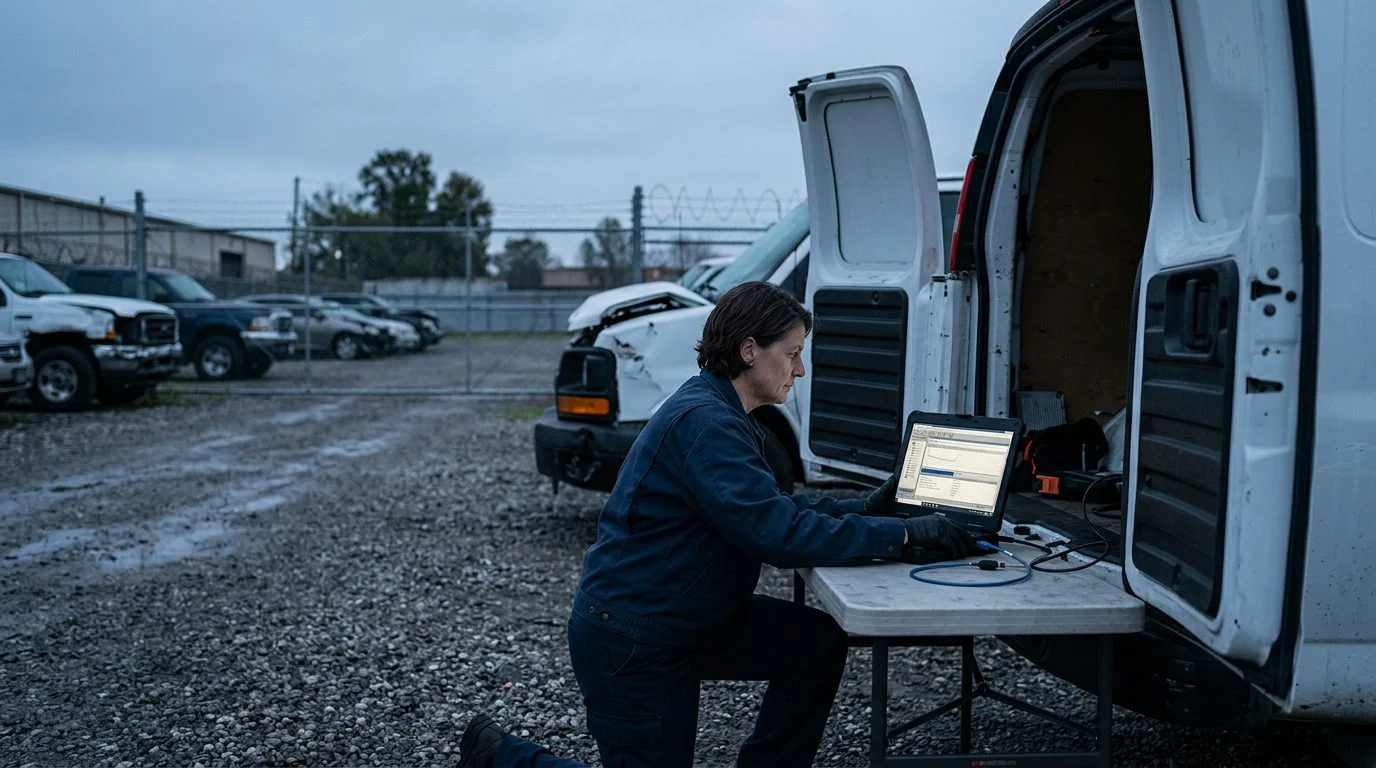
The drug test has a 32-hour window. See 49 CFR 382.303.
Under 49 CFR 395.8, a motor carrier must keep drivers’ records of duty status and supporting documents for at least six months from receipt. That short window is why early requests matter.
Other useful evidence includes witness statements, photos, traffic camera or dashcam video, vehicle data, and the medical examiner’s findings. Evidence can be lost or changed over time. Ask early what has been kept, and in what form.

Timing: Criminal Court Moves at Its Own Pace
The civil filing deadline runs on its own clock, whether or not the criminal case has ended. Under La. Civ. Code art. 2315.2, a wrongful death right of action prescribes one year from the death or two years from the injury, whichever is longer; for medical malpractice actions, it prescribes one year from the death.
Criminal cases can take months or longer. Hearings, plea talks and trial dates are set by the court and the parties, not by the family. Waiting for the criminal case to end before looking at the civil side can leave less time than families expect.
The exact date depends on the facts of the death and the crash. Write down every key date from any notice you receive. Keep letters, court dates and police contact numbers in one place.
What a Wrongful Death Claim May Address
A wrongful death claim may seek damages a surviving family member suffered because of the death. Those losses can be emotional, financial, or tied to costs of the death. Each claim turns on its own facts.
Under La. Civ. Code art. 2315.1, the right to recover damages the deceased suffered from the injury survives for the same family members, with the same time limits. If no family class exists, the succession representative may pursue those damages.
Louisiana law also allows exemplary damages in some cases. Under La. Civ. Code art. 2315.4, they may be awarded upon proof of wanton or reckless disregard by a driver whose intoxication while operating a vehicle was a cause of the injuries.
Fault also matters. Under La. Civ. Code art. 2323, if the degree or percentage of negligence attributable to the person suffering injury, death, or loss is equal to or greater than fifty-one percent, that person is not entitled to recover damages. Under La. Civ. Code art. 2323, if the degree or percentage of negligence attributable to the person suffering injury, death, or loss is less than fifty-one percent, the amount of damages recoverable is reduced in proportion to that degree or percentage.
No one can predict an amount from a list of categories. Families often find their losses hard to put into numbers, which is one reason to talk them through early.
Have questions about what happened?
Ask our team directly. The first conversation is free, confidential, and there is no obligation to continue.
Talk With American Trial Lawyer About Your Family’s Situation
If a driver has been charged after a crash that killed your loved one, you can talk with us about how both tracks may apply to your facts. Our team is here to listen and answer questions about your next steps.
Quick answers
The two can proceed separately.
How long does a family have to file? Louisiana law generally allows one year from the death or two years from the injury, whichever is longer.
Przemek Lubecki is the responsible lawyer for this page. The firm’s office is in New Orleans, Louisiana. To request a free case evaluation, call 855-LUBECKI. You may also read our guide to filing a wrongful death lawsuit.
Our first consultation is free, confidential and without obligation. You may be responsible for case costs and expenses in addition to the fee. The firm may associate or refer a case to other law firms.
How the Firm Approaches a Fatal Crash Case
Reviewing the Records
Police reports, the criminal file and crash evidence can shape what a family needs to understand early on. We review them with the family in plain language.
Focusing on the Family
A wrongful death matter affects everyone who loved the person who died. We keep the family informed at every stage and answer their questions directly.
Keeping Two Matters Distinct
The state's prosecution of a driver and a family's civil claim follow different paths. We help families understand how each one may affect the other.
Clear Communication
Families facing a loss often have many questions at once. Our team responds promptly and explains each step without legal jargon.
Free First Consultation
Your first consultation is free, confidential and comes with no obligation to continue. You may be responsible for case costs and expenses in addition to the fee. The firm may associate or refer a case to other law firms.
Questions Families Often Ask
Does a criminal charge decide the civil claim?
Not automatically.
Can the family act before the criminal case ends?
Families often have questions about timing while a prosecution is pending. Discussing your situation early with a lawyer can help you understand your options and how the two matters may interact.
Who handles the wrongful death claim?
Przemek Lubecki is the responsible lawyer for this page. The firm may associate or refer a case to other law firms, and any such arrangement will be explained to you before you decide.
What does a first meeting involve?
We listen to the facts, explain the process in plain language and answer your questions. There is no obligation to continue after the free, confidential consultation.
If Your Family Has Lost Someone in a Crash, You Do Not Have to Face the Questions Alone
Related practice areas
- How to File a Wrongful Death Lawsuit in Orleans Parish: A Family’s Step-by-Step Guide
- Wrongful Death in Orleans Parish
- Insurance Early Offer After Fatal Crash in Louisiana