
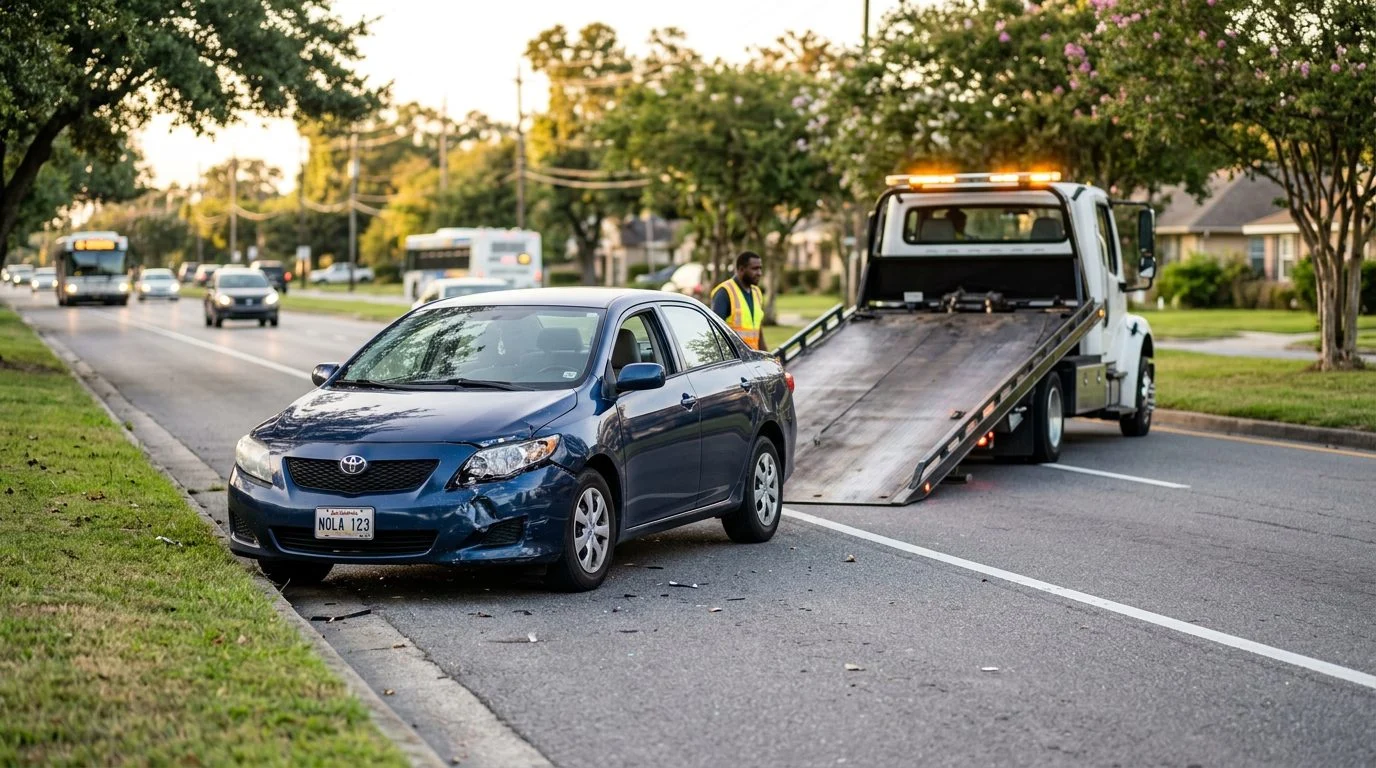
Car Accidents · New Orleans
Hurt in a Car Accident in New Orleans? Start With These Steps.
Przemek Lubecki, trial lawyer with American Trial Lawyer, LLC, Office in New Orleans, helps people hurt in car crashes across Orleans Parish, the New Orleans metro and Louisiana understand what to do after a crash.
By Przemek Lubecki · Published October 16, 2026
After a car accident in New Orleans, your first steps are safety, medical care, and recording what happened. Those steps protect your health and help any later claim. This guide explains what to do next, how Louisiana fault and filing rules work, and when to talk with a lawyer. It is general information, not legal advice about your specific crash.
What Should You Do First After a Car Accident in New Orleans?
Your first priority is safety, then medical care, then the records of what happened. Move out of traffic if you can, and turn on your hazard lights. Call 911 so police and medical help can respond. Check everyone in each vehicle for injuries. If you’re hurt, don’t wait to be checked.
Get the police report number and the name of the responding agency. You’ll need that number later to request the report. Photograph vehicle positions, damage, traffic signals, skid marks, road conditions, and any visible injuries from several angles.
Exchange names, addresses, license numbers, and insurance details. Stick to facts at the scene. Don’t argue about fault, and don’t guess about what happened.
See a doctor the same day, even if you feel fine. Some symptoms, such as stiffness or headaches, can show up later. A same-day record gives your care a clear starting point.
If a New Orleans crash has left you with pain or insurance letters you can't answer, we can talk through your options with you.

What Makes Car Crashes on New Orleans Roads Different?
Crashes in New Orleans can happen on residential streets, major city roads, and fast interstate ramps. Each setting carries its own risks.
Interstate 10 and its on-ramps bring quick merges and sudden lane changes. Narrow residential streets bring parked cars, driveways, and drivers backing out. Busy intersections bring left turns across oncoming traffic.
Common crash types include intersection collisions, lane-change impacts, rear-end crashes in stop-and-go traffic, and crashes where a driver turns across traffic. Weather, drainage problems, and nighttime visibility can change how a crash happens and what evidence remains.
If a large commercial truck is involved, federal hours-of-service rules limit how long property-carrying drivers can drive and require rest breaks. Those records can matter, so mention the truck to your lawyer early.
This page does not publish live crash feeds, maps, or breaking news. Its goal is to help you after a crash.
Why Do Some Injuries Appear Days or Weeks Later?
Some injuries start with mild pain and grow worse over days or weeks. A delay in symptoms does not mean you weren’t hurt.
Symptoms after a crash can include neck pain, back pain, headaches, dizziness, and trouble concentrating. Tell your doctor about every symptom, even small ones.
Get medical care right away if you notice confusion, a headache that keeps getting worse, numbness or weakness, vomiting, trouble walking, or pain that keeps growing. Decisions about treatment belong to you and your doctor.
Keep a written symptom log. Note the date, each symptom, how it affects sleep and work, every appointment, each prescription, and any missed work. Save every bill and receipt.
Caring for an injured relative? The same log helps. Louisiana law says damages may include loss of consortium, service, and society. Those may be recoverable by the same categories of people who could bring a wrongful death claim (La. Civ. Code art. 2315).
How Do Louisiana Fault and Filing Deadlines Work?
Louisiana divides fault among everyone who contributed to a crash, and a filing deadline applies to injury claims. Both rules affect what you may recover.
Louisiana law makes a person responsible for damage caused by negligence, imprudence, or want of skill (La. Civ. Code art. 2316).
If the degree or percentage of negligence attributable to the person suffering injury, death, or loss is equal to or greater than fifty-one percent, that person is not entitled to recover damages (La. Civ. Code art. 2323). If the degree or percentage of negligence attributable to the person suffering injury, death, or loss is less than fifty-one percent, the amount of damages recoverable is reduced in proportion to that degree or percentage (La. Civ. Code art. 2323). Fault is decided for everyone who contributed, even people who are not parties to the lawsuit.
Louisiana generally gives two years to file an injury claim based on fault, which is called a delictual action. Delictual actions are subject to a liberative prescription of two years, which commences to run from the day that injury or damage is sustained (La. Civ. Code art. 3493.1). The law has exceptions, so don’t assume one timeline fits every case.
Should You Give a Recorded Statement to an Insurance Adjuster?
Review every statement and document before you sign anything. Adjusters may ask for a recorded statement or offer a quick payment. An early offer may not cover care you still need. A signed release can close off future claims, so read it carefully.
Louisiana has a rule for statements from injured people. If someone takes a written or recorded statement about your injury, you can ask for a true and complete copy. That person must provide it within twenty days after your written demand (La. R.S. 13:3732).
The Louisiana crash report is confidential. Parties to the crash and their attorneys can obtain it. Upon request, it must be made available within seven working days after the investigation is complete (La. R.S. 32:398). New Orleans police reports are requested through the city, and released reports may be redacted (City of New Orleans police reports).
Medical bills can work differently than you expect. When a health insurer paid a contracted provider, Louisiana law generally limits recovery to the amount actually paid plus your cost-sharing amounts, not the amount billed (La. R.S. 9:2800.27).
Build one folder with the police report, photos, medical bills, pay stubs, repair estimates, and every letter from insurers.
Talk With Przemek Lubecki About Your New Orleans Car Accident
Przemek Lubecki, a trial lawyer, is the responsible lawyer for this page. The firm’s office is in New Orleans. Our support staff helps with scheduling and paperwork.
If you’re living with pain, a bill you can’t read, or an insurance letter after your New Orleans crash, call 855-LUBECKI for a free consultation or request a free case evaluation. The first consultation is confidential and carries no obligation to continue. You may be responsible for case costs and expenses in addition to the fee. The firm may associate or refer a case to other law firms.
Frequently Asked Questions
What should I do first after a car accident in New Orleans?
Get to safety, call 911, and check for injuries. Then get medical care the same day and note the police report number.
How long do I have to file a Louisiana car accident claim?
Louisiana generally gives two years from the date of injury to file a fault-based injury claim (La. Civ. Code art. 3493.1). Exceptions exist, so get the timing checked early.
Is the first consultation really free?
The first consultation is free, confidential, and carries no obligation to continue. You may be responsible for case costs and expenses in addition to the fee.
Attorney advertising. This page is general information, not legal advice. No outcome is promised, and each case depends on its own facts. Responsible lawyer: Przemek Lubecki. Office: New Orleans, Louisiana.
What to Do Right After a Crash
Get to safety
If you can, move your vehicle out of traffic and turn on your hazard lights. If you are badly hurt, stay where you are until help arrives.
Call 911
Ask for police and medical help even if the crash seems minor. A police report creates an official record of the scene.
Document the scene
Photograph vehicle damage, road conditions, traffic signals and visible injuries. Write down the other driver's contact and insurance details, and any witnesses' names.
See a doctor the same day
Some injuries, including brain injuries, do not show symptoms right away. A prompt medical evaluation protects your health and creates a record of your injuries.
How Our Firm Approaches Your Case
Plain answers, early
We explain your situation in clear language so you know what to expect from the start.
Careful record-keeping
We help gather crash reports, medical records and other evidence that supports your account.
Protection from insurers
Insurance adjusters may contact you quickly. We can handle communications so you can focus on recovering.
Families included
We keep you informed at every step, including family members who are affected by a serious crash.
Think Before You Give a Recorded Statement
Insurance representatives may ask for a recorded statement soon after a crash. Speaking with a lawyer first can help you understand what to say and what to hold back while you are still recovering.
Questions People Often Ask
Who can I talk to about my crash?
You can speak with Przemek Lubecki at our New Orleans office about your car accident, including crashes involving trucks, commercial vehicles and rideshare vehicles.
Do I have to pay for a consultation?
The first consultation is free, confidential and carries no obligation to continue. You may be responsible for case costs and expenses in addition to the fee if your case proceeds.
Will my case be handled by this firm?
American Trial Lawyer, LLC may associate with or refer a car accident case to other law firms. We will tell you about any such arrangement before you make a decision.