
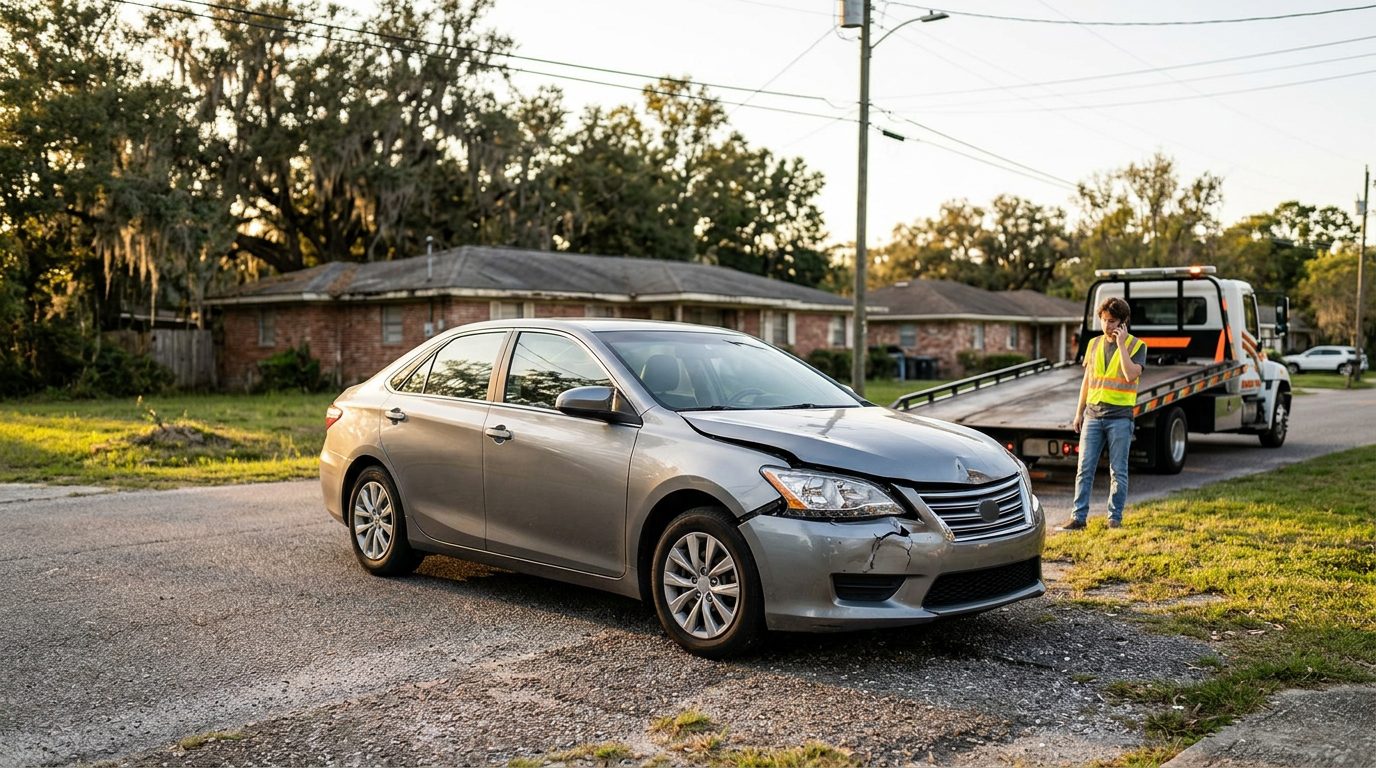
Car Accidents | New Orleans, Louisiana
Hurt in a Crash With a Teen Driver? You Don't Have to Sort It Out Alone
Insurers, families and the other driver's side all move quickly after a collision. Here is how to protect your position while you focus on recovery.
By Przemek Lubecki · Published November 12, 2026
A crash with a teenage driver raises questions that a typical fender-bender doesn’t. Who gets contacted, what paperwork follows and which insurance responds can all feel unclear, fast.
An injured person in Louisiana can pursue a car accident claim when the at-fault driver is a teen. The claim usually goes to that driver and to any insurance that may cover them, often a family policy.
What Changes When the At-Fault Driver Is a Teenager in Louisiana
A teen at fault doesn’t end an injured person’s claim. It often changes who gets contacted and what paperwork follows.
Louisiana law says a person whose negligence, imprudence or want of skill causes damage can be responsible for it. Civil Code article 2316 states that rule. Under it, the central question is what the driver did in the crash.
In practice, the claim usually goes to the at-fault driver and to any insurance that may cover that driver. For many teens, that insurance is a policy held by a parent or guardian. A minor’s involvement can change who is contacted, how statements are taken and who has to sign papers.
Each person hurt in the crash has their own medical care and losses. A teen crash can involve several injured people, and each claim rests on its own facts. Early questions often come from several directions at once, including insurers and the family.
For a general guide, see car accident claims in Orleans Parish.
If a teen's driving left you or someone in your family hurt, you don't have to sort out the insurance calls alone. We can talk through your options in a free first consultation. Talk it through with our team — the first consultation is free, confidential, and carries no obligation.
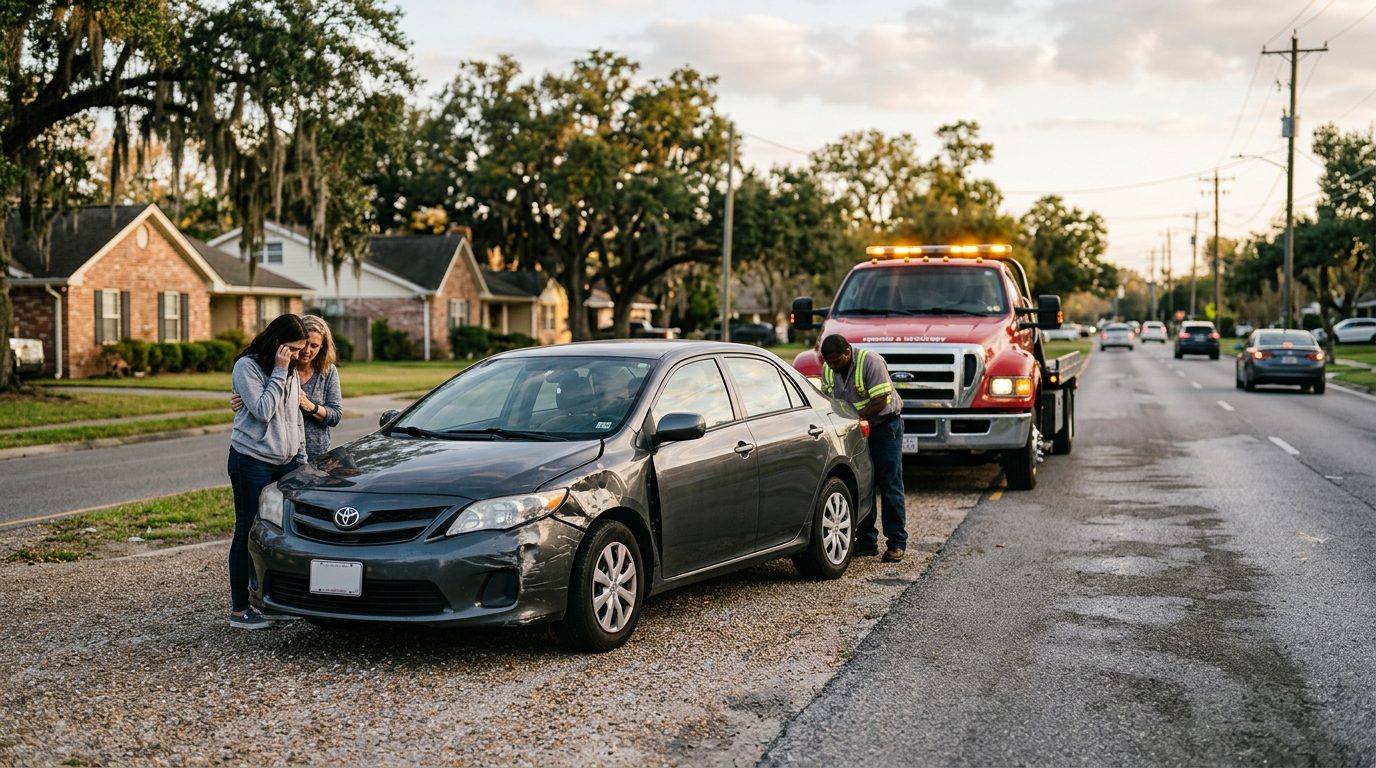
Why Parents or Guardians May Be Asked for Information
Parents and guardians are often asked for details about the teen driver, the vehicle and the household policy.
Louisiana requires a driver in a crash with injury, death or property damage over five hundred dollars to give their name, address and vehicle registration number. The driver must also show a license or permit on request, if one is available, to any person injured in the crash or to the driver or occupant of or person attending any vehicle or other property damaged in the crash, and upon request to any police officer at the scene of the crash or who is investigating the crash. La. R.S. 32:398 sets out these duties.
Insurers often ask for the driver’s license information, the vehicle’s registration and ownership, and the policy declarations page. They may also ask who had permission to use the car, where the teen was going and whether an adult was supervising.
These questions can arrive before a family understands the claim. Keep a folder. Note each letter, claim number, adjuster’s name and phone number, and the date each request arrived.
If a written or recorded statement is taken from an injured person, La. R.S. 13:3732 says the person who took it must provide a true and complete copy. That copy is due within twenty days after written demand.
Insurance Coverage Questions That Come Up With a Teen Driver
A teen’s driving is often covered by a household auto policy. That policy’s wording decides which coverage responds.
Named-driver lists, resident relative rules and permission-to-drive terms can all affect coverage. Some policies exclude a driver who was not listed. Others limit coverage for that driver. The declarations page and any endorsements show what the policy says.
Coverage can come from more than one source. These may include the at-fault driver’s liability coverage, the injured person’s own uninsured or underinsured motorist coverage, and any other vehicle’s policy.
Under La. R.S. 22:1295(1)(a)(i), auto liability policies delivered or issued in Louisiana must include uninsured motorist coverage for motor vehicles registered in this state. The exceptions are when the insured rejects it, selects lower limits or selects economic-only coverage. La. R.S. 22:1295 sets out those terms.
Ask for a copy of the full policy, not only the summary. Review your own uninsured and underinsured terms now, before you need them.
Can a Parent or Guardian Be Held Responsible for a Teen’s Crash?
Whether a parent or guardian can be held responsible depends on the household facts and the circumstances of the crash.
A claim review treats two questions separately. The first is the teen’s own fault. The second is any adult’s role. Each question turns on its own facts, such as who lives in the home and how the car was being used.
Parents who receive a claim letter should not assume the answer in either direction. Getting the facts reviewed early helps.
When more than one person is at fault, liability is not always shared as a whole. Civil Code article 2324 says a person who is not solidarily liable answers only for their own degree of fault. Louisiana calls this a joint and divisible obligation.
Keep these questions separate when you talk with insurers. Avoid guessing at answers you don’t know.
How Louisiana Comparative Fault Applies to a Teen Driver Crash
For crashes on or after January 1, 2026, Louisiana bars recovery if the injured person is 51% or more at fault.
Under Civil Code article 2323, if the injured person’s share of fault is less than 51%, recoverable damages are reduced in proportion to that share, except that the claim is not reduced when the injury results partly from the person’s own negligence and partly from the fault of an intentional tortfeasor.
Fault is assigned to everyone who caused or contributed to the injury. That includes people who are not parties to the case. The law applies this regardless of insolvency or ability to pay.
Following too closely is one issue the law addresses directly. La. R.S. 32:81 says a driver must not follow another vehicle more closely than is reasonable and prudent. Crash reports, witness accounts and physical evidence help show how the crash happened.
What to Gather and When to Act
Gather the crash report, photos, witness details and medical bills early. Check the filing deadline before offers arrive.
Louisiana crash reports are confidential. They are available only to the parties to the crash, to parents or guardians of a minor party, to insurers or insurance support organizations under contract to provide claims and underwriting, to any healthcare provider or their agent that rendered healthcare services to a party, to the succession representatives of the parties or their attorneys, and to a news-gathering organization that requests documents related to a specific crash. Upon request, they are made available within seven working days after the investigation is completed. La. R.S. 32:398 requires a driver involved in a crash resulting in injury to or death of any person or property damage in excess of five hundred dollars to give information to police at the scene or investigating the crash. When a crash involves injury, death, or property damage over five hundred dollars and the investigating officer has reason to believe a medical condition may be cause for license revocation or suspension under R.S. 32:414(E), La. R.S. 32:398(J) requires notice to the medical/conviction unit of the Department of Public Safety and Corrections, but only after the officer consults with a superior officer and the superior officer concurs with the issuing officer’s belief.
Police may also provide crash photographs and video on request. They may charge a reasonable fee for copies.
Keep every medical record, bill, receipt and note about missed work. Track symptoms that appear days or weeks later. Save texts, call logs and social media posts about the crash.
Louisiana generally gives two years from the day of injury to file a delictual (tort) claim. Civil Code article 3493.1 sets that rule. A two-year window can pass quickly while medical care continues.
Not sure what your next step is?
Talk it through with our team — the first consultation is free, confidential, and carries no obligation.
Talk With the New Orleans Office About a Teen Driver Crash
A free first talk can help you sort out which insurance questions to answer now. It can also help you decide which ones to take up with counsel.
American Trial Lawyer’s New Orleans office is led by Przemek Lubecki, the responsible lawyer for this page. The firm handles car accident claims across Orleans Parish, the New Orleans metro and Louisiana.
The firm may associate or refer a case to other law firms. Any other lawyer working on a case is not part of American Trial Lawyer, LLC.
The first consultation is free, confidential and without obligation.
If a teen’s driving left you or a family member hurt, and a family policy or insurer is already asking for paperwork, you can request a free case evaluation. You can also call 855-LUBECKI (Office in New Orleans).
Common Questions
Can I bring a claim after a car accident caused by a teen driver in Louisiana?
Louisiana generally requires a person whose fault causes damage to repair it. Claims generally must be filed within two years of the injury (La. Civ. Code art. 3493.1).
Can I get a copy of my recorded statement?
If you give a recorded statement, Louisiana law lets you request a copy. The person who took it must provide one within twenty days after written demand.
How do I get a copy of a Louisiana crash report?
Parents or guardians of a minor party can request the crash report. It is made available within seven working days after the investigation is completed.
How the firm approaches a teen driver car accident claim
Careful review of the crash
We look at the police report, photographs, medical records and witness information to build a clear picture of what happened.
Attention to families
Teen driver cases often involve parents, guardians and several insurance policies. We explain who is involved and what each party's role may be.
Plain-language communication
You will hear from us in straightforward terms about your options, the steps ahead and what we need from you.
Focus on your recovery
We handle calls with insurers and paperwork so you can concentrate on getting better.
Be careful before giving a recorded statement
An insurance adjuster may ask for a recorded statement soon after a crash. Speak with a lawyer before you give one, especially if you are still hurt or taking medication.
Questions people ask after a teen driver crash
Who may be responsible
A crash can involve the teen driver, a parent or owner of the vehicle, and other drivers. Each situation is different, and we review the facts with you.
Dealing with insurance
Several insurance companies may be involved. Do not sign releases or accept early offers until you understand what they cover.
Injuries that need time
Some injuries, including brain injuries, may take weeks or months to show their full effects. Keep records of your treatment and missed work.
Working with other firms
The firm may associate or refer a case to other law firms when that serves the client. We will tell you about any such arrangement.