
Car Accidents | New Orleans, Louisiana
Hurt in a Crash on the Huey P. Long Bridge? Start With These Steps
A collision on a high, busy span over the Mississippi takes a lot to sort out. Przemek Lubecki and our New Orleans office help people and families work through what comes next.
By Przemek Lubecki · Published November 16, 2026
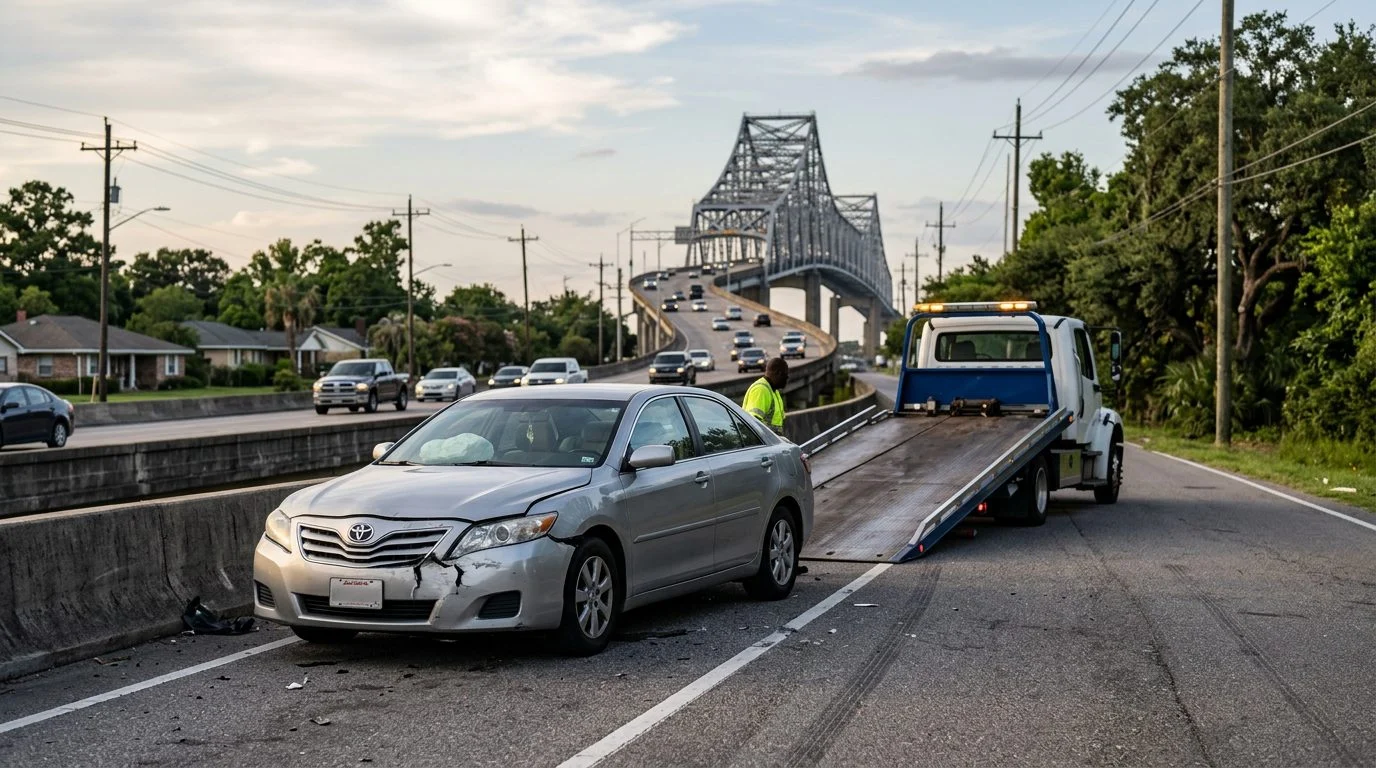
A car accident on the Huey P. Long Bridge can leave you hurt, stopped in traffic, and unsure what to do next. The first steps are to get safe, call 911, get medical care even if you feel fine, and record the scene before it changes.
Here is the short version, then the detail behind each step. The steps protect your health and the facts you may need later. This guide covers general information, and the facts of your crash will shape which steps matter most.
What to Do First After a Car Accident on the Huey P. Long Bridge
Safety comes first, and paperwork comes second. Move your vehicle out of the travel lane only if you can do it safely. If you can’t, stay buckled in, turn on your hazard lights, and wait for help.
Bridge crashes can leave cars stopped in a travel lane, with little room to pull over. Never step into traffic to check on another vehicle. Let responders handle the lanes.
Check your passengers next, and ask everyone whether they’re hurt. A quick “I’m fine” at the roadside doesn’t settle the question, because adrenaline can mask pain for a while. Keep your phone charged and nearby, since you’ll need it to call for help and take photos.
Once you’re safe, move to the next step. Doing things in order keeps you from missing the basics while you’re shaken. Each crash is different, and who was driving, what the weather was like, and how many vehicles were involved will shape which steps matter most for you.
If you were hurt on the Huey P. Long Bridge and are unsure what comes next, our team can talk with you about your crash in a free, confidential consultation. Talk it through with our team — the first consultation is free, confidential, and carries no obligation.
Call 911 and Ask for Help on the Bridge
Call 911 right away, even if the crash looks minor. Tell the dispatcher that you are on the Huey P. Long Bridge, which direction you were traveling, and whether anyone is hurt.
Give the nearest landmark you can see, such as a mile marker, a light pole number, or a sign. Responders need that detail to find you quickly. If you can’t speak, ask someone nearby to make the call for you.
Ask for medical units even when injuries seem small. A record made at the scene helps connect any later symptoms to the crash. Stay on the line until the dispatcher says you can hang up.
Louisiana’s La. R.S. 32:398 crash reporting rules apply to crashes that cause injury, death, or property damage over five hundred dollars. Any driver involved should know those duties.
Check Injuries and Get Medical Care, Even If You Feel Fine
Get checked by a medical provider soon after the crash, even if you feel fine. Tell the provider exactly where you hurt, when the pain started, and anything you noticed after the impact.
Mention neck pain, back pain, headaches, dizziness, or confusion, even if they seem minor. Tell providers if you hit your head, even briefly. Those details belong in your medical record, not just in your memory.
Keep every visit note, bill, prescription receipt, and therapy schedule. Write down missed work and rides to appointments as you go.
If you have Medicare, its rules can affect how accident-related bills get paid. Under Medicare Secondary Payer guidance, liability or no-fault insurance pays first for accident-related care, and Medicare pays second. When an insurer doesn’t pay promptly, Medicare may make a conditional payment. That payment must be repaid when a settlement, judgment, award, or other payment is made, so keep records of every bill.
Why the Bridge Location Matters for Crash Records
Under Louisiana law, the crash location decides which agency investigates. State police or the sheriff’s office handles crashes outside city limits, and city police handle crashes inside them, under La. R.S. 32:398.
The Huey P. Long Bridge crosses the Mississippi River. The exact lane, direction, and nearest landmark help show which agency responded to your crash.
Write down the nearest landmark, your direction of travel, and the time of the crash. Those details fade fast, and they’re hard to rebuild from memory later.
The same statute says crash reports are meant to show the cause, the conditions at the time, and the persons and vehicles involved. Crash reports are confidential. Upon request, reports must be made available to the parties to the crash and the other persons the statute lists within seven working days after the investigation is completed.
Ask the investigating agency for them.
Photos and Notes to Keep From the Scene
Take photos soon after the crash, while the scene still shows what happened. Photos capture details that fade quickly, such as lane positions and weather.
Shoot the lanes and traffic pattern, the road surface and weather, and the final positions of every vehicle, from several angles. Wide shots help show where cars came to rest. Close shots show damage.
Photograph visible damage, skid marks, debris, signs, and lane markings near the crash. If you can’t take photos yourself, ask a passenger to do it.
Write down names, phone numbers, insurance details, license plate numbers, witnesses, and the responding officer’s name and badge number. Save any texts, emails, or messages about the crash. Keep these items together in one folder, photos included, so nothing gets lost.
Finally, write a short note about what you remember while it’s fresh. Include the time, the speeds you noticed, what you saw and heard, and what the other driver said. Keep it factual, and don’t add guesses.
Notify Your Insurance Company and What to Say
Tell your own auto insurer about the crash promptly, and stick to the basic facts. Auto policies generally ask drivers to report a crash in a timely way.
Keep your account short and factual. Describe where you were, what happened, and what you saw. Avoid guesses about speed, fault, or injuries before a medical evaluation is complete.
Other insurers may ask for a recorded statement. Louisiana law gives you a right to a copy. Under La. R.S. 13:3732, a person who takes a recorded statement from an injured person must provide a true and complete copy within twenty days after written demand.
Ask for a copy in writing, and note the date you asked. It’s also reasonable to ask questions before you answer, or to ask for time to review the facts. If a call feels rushed, take their name and number and call back when you have your facts in order.
Not sure what your next step is?
Talk it through with our team — the first consultation is free, confidential, and carries no obligation.
How Insurance Works When the Crash Was Not Your Fault
Louisiana ties recovery to fault. Even if another driver caused the crash, your own share of fault can reduce what you recover.
For accidents and injuries on or after January 1, 2026, La. Civ. Code art. 2323 provides that an injured person found 51% or more at fault recovers nothing, but under paragraph C of that article, a claim for injury partly caused by the person’s own negligence and partly by the fault of an intentional tortfeasor is not lowered. An injured person found less than 51% at fault recovers damages reduced in proportion to that share. Under La. Civ. Code art. 2323, the fault of every person involved is determined, even people who aren’t parties to the case.
Time limits matter too. Under La. Civ. Code art. 3493.1, Louisiana’s general rule for delictual (tort) actions is two years. That period starts the day the injury or damage is sustained. The statute has exceptions, so the details of your case matter. Starting early helps you keep track of the deadline.
Frequently Asked Questions About a Bridge Car Accident
How long do semi truck accident claims take to settle?
Timing varies with the injuries, the records, and how the claim develops. No timeline can be promised.
What should I do in the first week after a car accident?
Keep up with medical follow-up, request the crash report and photos, log missed work and expenses, and write down what you remember while it’s fresh.
Can a car accident case be referred to another firm?
The firm may associate or refer a case to other law firms. Ask about this during your free consultation.
Can I get a copy of the crash report?
Parties to the crash, their insurers, and their attorneys can request it. Under La. R.S. 32:398, upon request, crash reports shall be made available only to the parties to the crash, parents or guardians of a minor party, insurers or an insurance support organization under contract to provide claims and underwriting of any party that is the subject of the report, healthcare providers or their agents that rendered healthcare services to a party that is the subject of the report, succession representatives, attorneys, and news-gathering organizations that request documents related to a specific crash, within seven working days following the completion of the crash investigation.
Talk With Przemek Lubecki About Your Bridge Crash
If you were hurt on the Huey P. Long Bridge and are weighing your next steps, you don’t have to sort out the crash report, medical bills, and insurance calls alone. Our team can listen to what happened, explain how the crash report and medical records fit together, and answer your questions.
Przemek Lubecki is the responsible lawyer for this page, and the firm’s office is in New Orleans. The initial consultation is free, confidential, and carries no obligation to continue. The firm may associate or refer a case to other law firms.
Request a free case evaluation or call 855-LUBECKI to talk about your crash.
Details Worth Writing Down
Where and when
Note the lane, the direction of travel, the time, and any landmarks or mile markers you can see.
Vehicles involved
Record makes, models, plate numbers, and whether any vehicle was a commercial truck, bus, or rideshare car.
People present
Get names and phone numbers of drivers, passengers, and anyone who saw the crash.
Your own account
Write what you remember while it is fresh, including what you saw, heard, and felt.
Be Careful What You Say
Avoid guessing about fault, posting about the crash on social media, or signing papers from another driver's insurer before you have had medical care and advice about your situation.
Why Reach Out Early
Evidence can change
Skid marks, debris, camera footage, and witness memories fade quickly after a crash on a busy roadway.
Injuries can be delayed
Some serious injuries, including brain injuries, may not show symptoms until days later.
Records matter
Medical notes, crash reports, and wage records help show what happened and how it affected your life.
You do not have to sort it out alone
A free, confidential first consultation can help you understand your options with no obligation to continue.