
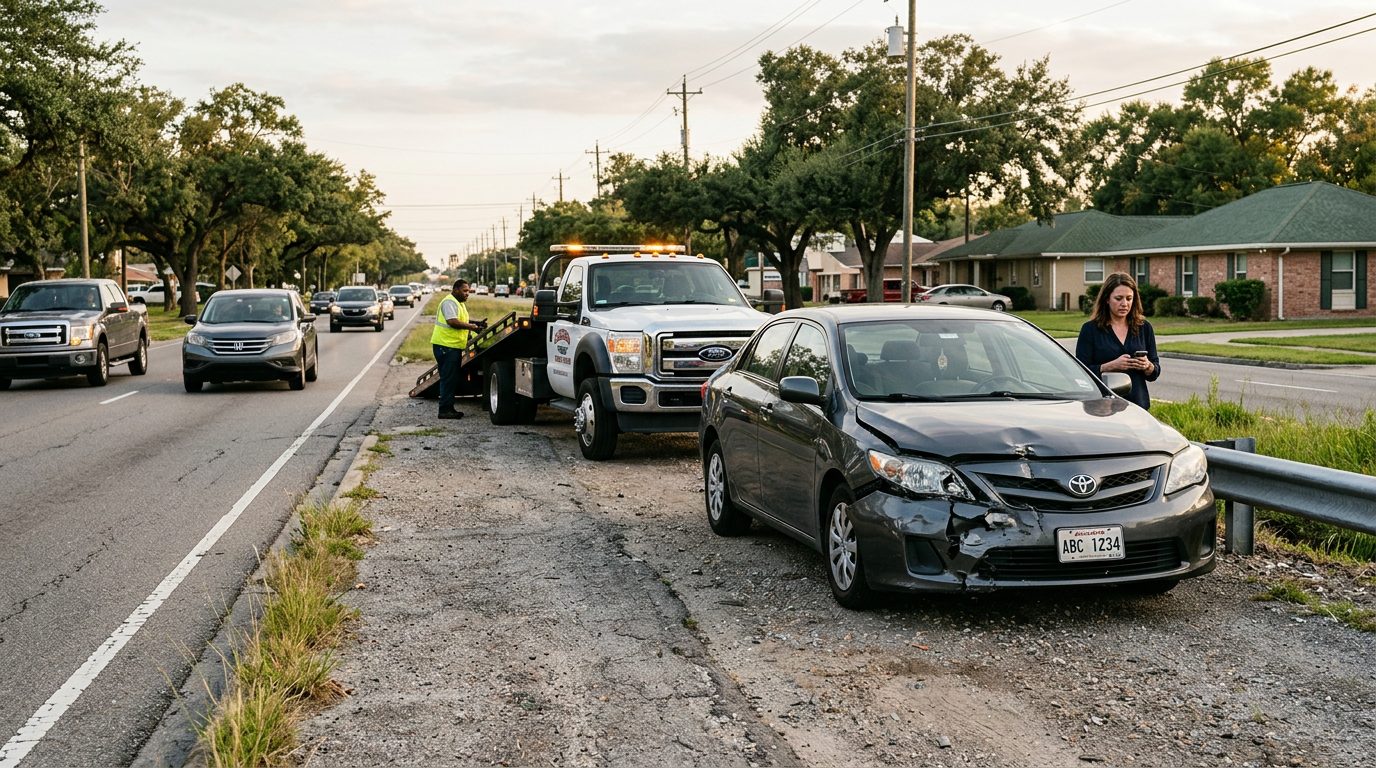
Car Accidents | New Orleans, Louisiana
When a Crash Pushes Your Insurance Rates Up
A collision can leave you with higher premiums and unanswered questions. Knowing which steps protect you now can make the months ahead easier to manage.
By Przemek Lubecki · Published November 14, 2026
After a crash, many drivers worry about the next insurance bill. Can a car accident increase insurance rates in Louisiana? It can, but the result depends on your insurer and on who was at fault. This page walks through how those two pieces work, and what to ask your insurer.
The Short Answer: Insurer and Fault Matter Most
A car accident claim can change your rates, but no single rule sets the new price for every driver.
Each insurer uses its own rating rules. Two drivers in the same crash can see different renewal results with two different companies. Your policy wording and your full driving record also count.
Fault matters most. Insurers generally look at who caused the crash when they decide whether a claim counts against a driver. An injured passenger or a driver who was hit by someone else usually sees a different result than the driver found at fault.
Fault also controls the injury claim itself. Under La. Civ. Code art. 2323, for accidents and injuries on or after January 1, 2026, a person found 51% or more at fault cannot recover damages. A person found less than 51% at fault recovers an amount reduced by their share of fault.
If a crash left you hurt and worried about your next premium, we can talk through what fault and your policy mean for you. Talk it through with our team — the first consultation is free, confidential, and carries no obligation.
How Fault Shapes What Happens to Your Premium
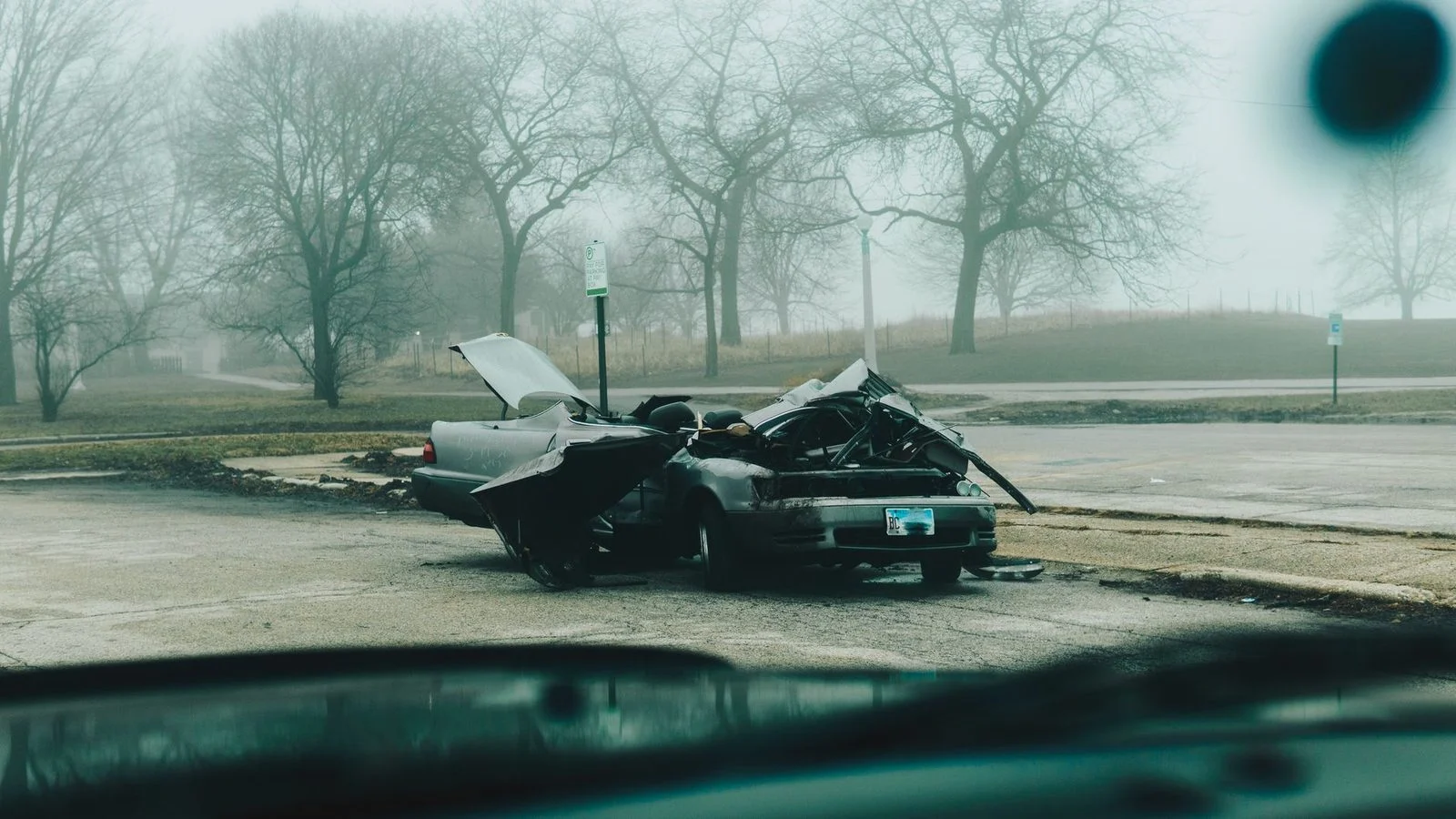
An at-fault accident is more likely than a non-fault accident to lead to a surcharge or a higher renewal premium.
An at-fault claim is tied to the driver whose actions caused the crash. For example, a driver who ran a red light and hit another car is the driver whose record an insurer will usually review first. Insurers look at that record when they set the next price. The size of any increase depends on the insurer and on the rest of the driver’s record.
A non-fault claim usually goes against the at-fault driver’s liability coverage. That is why the injured non-fault driver often does not see the same increase. Louisiana requires most registered vehicles to carry liability security. La. R.S. 32:861 generally requires a self-propelled motor vehicle registered in Louisiana to be covered by an automobile liability policy with limits as defined by R.S. 32:900(B)(2) or 900(M), a motor vehicle liability bond, a certificate of the state treasurer showing that cash or securities have been deposited, or a certificate of self-insurance.
Passengers and Drivers Who Were Not at Fault
A passenger who was hurt is usually not the driver whose record is rated, so the claim does not normally raise that passenger’s own premium.
Fault can still be disputed. Police reports, witness statements and each driver’s account may not match. Under La. R.S. 32:398, the driver of a vehicle involved in a crash that results in injury to or death of any person, or in property damage in excess of five hundred dollars, must give his name, address and the registration number of the vehicle he was driving to any person injured in the crash or to the driver or occupant of, or person attending, any vehicle or other property damaged in the crash; if the crash occurs in a geographical area under an order of evacuation by a competent authority or under a declared state of emergency, this must be done within seventy-two hours after the occurrence of the crash. The investigating officer must also tell each driver to report the liability carrier and the agent’s contact details to everyone hurt or damaged, under La. R.S. 32:398.
A serious injury can bring medical bills, lost wages and a long recovery. The insurance renewal is one part of that larger picture. The time limit for an injury claim runs on its own schedule. Under the current text of La. Civ. Code art. 3493.1, claims based on delictual (fault-based) actions are subject to a two-year prescription, which runs from the day the injury is sustained; it does not run against minors or interdicts in actions involving permanent disability brought under the Louisiana Products Liability Act or state law governing product liability actions in effect at the time of the injury or damage.
How Claims History Follows You at Renewal
A rate change after a claim is not automatic, because the insurer looks at the whole record and the renewal date.
Insurers review claims history when they set or renew a premium. How long a claim stays on your record depends on the insurer’s own rating rules. Your driving history, your coverage choices and your renewal date can all shape the new price. Keep your own notes of the dates, the crash details and what each party said.
Market conditions matter too. Published reporting on Louisiana auto insurance rates has described both increases and decreases over time. A higher bill is not always tied to one claim.
Read the declarations page and the renewal notice line by line. The declarations page lists your coverages and limits. Check whether you carry uninsured motorist coverage. Under La. R.S. 22:1295, uninsured motorist coverage is not required when an insured named in the policy rejects coverage, selects lower limits, or selects economic-only coverage in the manner provided in the statute; such coverage need not be provided in a renewal, reinstatement, or substitute policy when the named insured rejected it or selected lower limits on a policy previously issued by the same insurer or its affiliates.
Questions to Ask Your Insurer After a Crash
Ask your insurer whether the claim will be recorded as at-fault or not at fault, and when it could affect your renewal.
- Will this claim count as at-fault or not at-fault on my record?
- Will it change my renewal premium, and when?
- Is a surcharge applied, and how long does it last?
- Is the claim handled under my collision or medical payments coverage, or under the other driver’s liability coverage?
- Can you give the reason for any rate change in writing, and how do I dispute a fault finding?
Clear answers now can prevent confusion at renewal. Keep copies of the crash report, the claim number and every letter from the insurer. Under La. R.S. 32:398, the state police, any local police department, or any sheriff’s office may charge up to $5 for a crash report of two pages or less, and up to $20, inclusive of all service fees and other charges, for a longer one. A property damage settlement under a liability policy is not an admission of liability on other claims from the same accident, under La. R.S. 22:1290.
Frequently Asked Questions
Will my insurance go up if the other driver caused the accident?
Usually not. A non-fault claim is typically handled against the at-fault driver’s liability coverage, though your insurer’s own rules still apply.
Does an at-fault accident raise rates in Louisiana?
It can. The size of any increase depends on the insurer and on the rest of your record.
Copy fees are capped at $5 for reports of two pages or less.
Keeping Coverage in Force and Why a Lapse Matters
Letting your policy lapse after a crash can create legal and financial problems on top of the claim itself. Before you cancel, change or let a policy end, ask your insurer what that means for your coverage and any open claim.
Louisiana requires most registered vehicles to carry liability security. The Office of Motor Vehicles publishes official information on the state’s compulsory insurance rules.
Rideshare drivers face extra rules. Under La. R.S. 45:201.6, automobile insurance during a prearranged ride must be in an amount of not less than one million dollars for death, bodily injury and property damage, and a transportation network company may satisfy its obligations through a policy obtained by its driver under subparagraph (1)(a) or (1)(c) only if the company verifies that the policy is maintained by the driver and is specifically written to cover the driver’s use of a vehicle related to the company’s digital network. Under La. R.S. 45:201.7, a personal auto insurer may exclude coverage while the driver is logged on to a transportation network company’s digital network. Rideshare drivers should review their personal policy for that exclusion.
For a broader overview, read our guide on car accident claims in Orleans Parish. If the crash also raises questions about criminal charges, see criminal charges and a civil claim.
American Trial Lawyer, LLC may associate or refer a case to other law firms where a car accident matter requires it.
Not sure what your next step is?
Talk it through with our team — the first consultation is free, confidential, and carries no obligation.

Talk With Przemek Lubecki About Your Crash and Your Premium
Przemek Lubecki is the responsible lawyer for this page. Our Office in New Orleans serves people hurt in car, truck, commercial vehicle and rideshare crashes across Louisiana, including Orleans Parish, Jefferson Parish, Metairie, Kenner, St. Bernard Parish and Slidell.
The initial consultation is free, confidential and without obligation to continue. We can talk through the facts of your crash, the coverage on the policies involved and what the injury side of your claim may involve.
If you were hurt and now face a renewal notice or hard questions from your insurer, you do not have to sort out the fault and the premium alone. Request a free case evaluation or call 855-LUBECKI.
How we can help after a crash
Plain-language answers
We explain how a crash can affect your insurance, your claim and your options in terms you can follow.
Focus on your side
We work to protect your interests when dealing with insurance companies, so you are not left to handle every call and letter alone.
A free first consultation
The first consultation is free, confidential and comes with no obligation to continue.
Before you accept an insurer's offer
Do not sign a settlement or release until you understand what it covers. Once you sign, the decision is often final, so review the paperwork carefully and ask questions first.
Steps to take now
Document the crash
Keep the police report, photos, repair estimates and records of any medical care.
Keep a record of your insurer contact
Save copies of letters, emails and notes from every phone call with your insurance company.
Review your policy
Read your declarations page and understand your coverage limits and what they include.
Get advice before you settle
Talk with a lawyer before you accept a settlement or sign a release for your claim.