
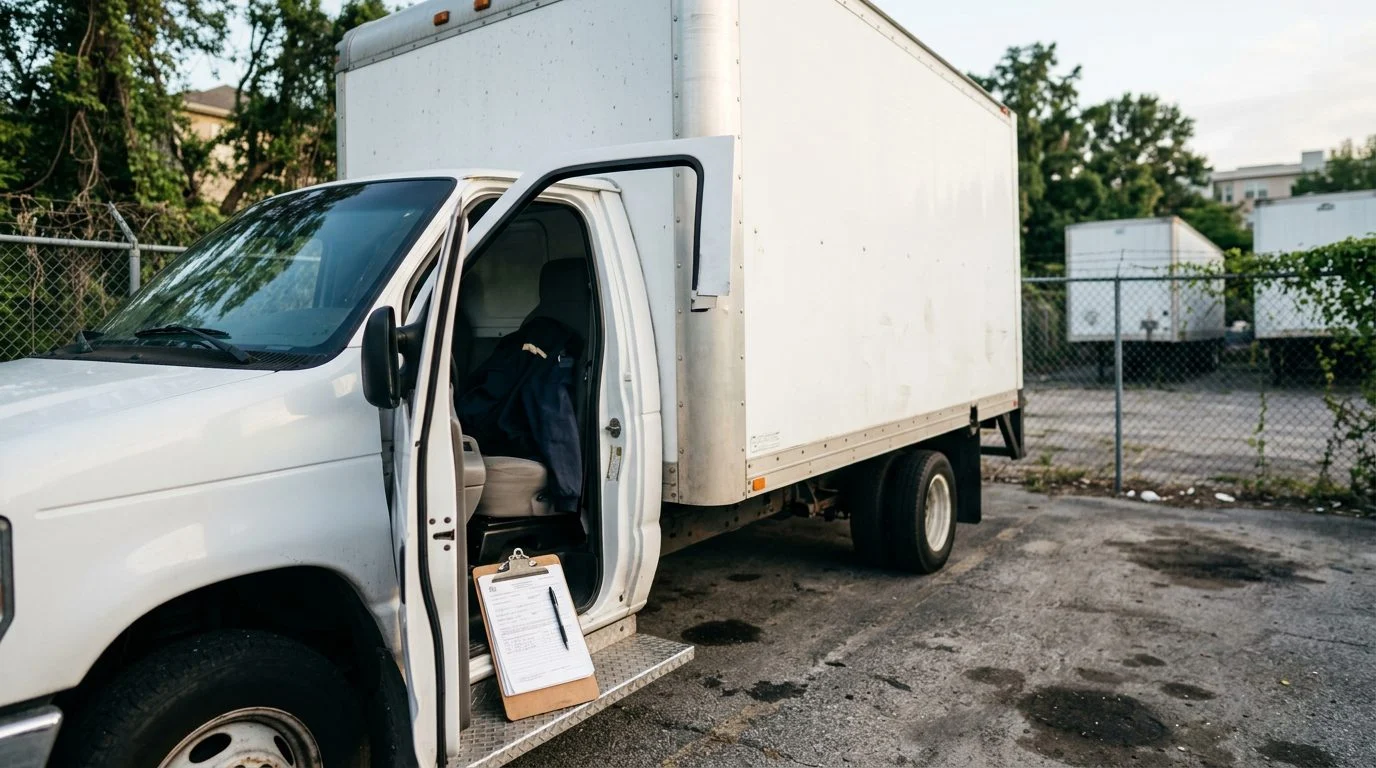
Commercial Vehicle Accidents | New Orleans, Louisiana
The Records Behind a Commercial Vehicle Crash Can Tell a Clear Story
Driver logs, engine data and maintenance files can be as important as anything at the scene. Przemek Lubecki and our team in New Orleans help families and injured people understand what evidence exists and how it is preserved. Your first consultation is free, confidential and without obligation.
By Przemek Lubecki · Published October 27, 2026
After a crash with a commercial truck, the most important evidence is often the trucking company’s own records. These include driver logs, electronic logging device data, engine data, and maintenance files. Together with scene evidence, these records help show what happened on the road. This page explains the main records in commercial vehicle accident evidence cases in New Orleans and across Louisiana.
What trucking evidence, such as driver logs, electronic data recorders, and maintenance records, is used to build a commercial vehicle case?
The core evidence is usually the driver’s and carrier’s records. These include hours-of-service logs, electronic logging device data, engine data, and maintenance and inspection files.
Federal rules limit how long a driver may drive. The driver may drive 11 hours in that window. Logs show whether the driver stayed inside those limits (49 C.F.R. § 395.3).
An electronic logging device (ELD) automatically records the date, time, location, engine hours, and miles. It also records driver and vehicle identity (49 C.F.R. § 395.26). Investigators can compare that data with fuel receipts, dispatch messages, and GPS records to test the timeline. Many trucks also store engine data, which can help show how the truck was moving before impact.
Maintenance files matter too. Drivers must write an inspection report at the end of each day’s work. It covers items such as brakes, steering, and lights (49 C.F.R. § 396.11). These records can show whether known problems were fixed before the truck went back on the road. Carriers must also keep a driver qualification file for each driver. That file includes records such as the driver’s employment application, driving records, road test certificate, and medical examiner’s certificate (49 C.F.R. § 391.51).
If you're sorting through trucking records after a crash that hurt you or someone you love, you don't have to face it alone. We're glad to talk through what you're dealing with. Talk it through with our team — the first consultation is free, confidential, and carries no obligation.

What other evidence helps show what happened on the road?
Police reports, photos, witness names, dispatch records, and medical records all add to the picture. Each item fills in a different part of the timeline. Together, they support a commercial vehicle accident evidence review.
Crash reports are a starting point. Ask for the police report number so the report can be requested.
Photos and video matter. Take images of the vehicles, skid marks, debris, and road conditions. Save any dashcam footage. Dispatch messages, bills of lading, and delivery schedules can show time pressure or the planned route. Cell phone records may show what the driver was doing near the crash time.
Medical records tie the injuries to the crash. Some injuries, including head injuries, may not show their full symptoms right away. Keep records from every visit.
If you gave a recorded or written statement, you can ask for a copy. The person who took a written, recorded, or transcribed statement from an injured person must give that person a true and complete copy within twenty days after written demand (La. R.S. 13:3732).
Why does commercial vehicle crash evidence disappear so quickly?
Some records have short deadlines, and trucks often return to service after repairs. Electronic data can also be lost if no one preserves it. Federal retention periods differ by record type.
A driver must submit a duty status record to the carrier within 13 days of the day it covers (49 C.F.R. § 395.8). A periodic inspection report must be kept for fourteen months (49 C.F.R. § 396.21).
Carriers may not alter or erase original hours-of-service information (49 C.F.R. § 395.30). Records can be kept using any technology that accurately keeps the information and lets it be reproduced later (49 C.F.R. § 379.7).
Post-accident testing has time limits too. Employers must record why an alcohol test was not given within two hours. They must stop trying after eight hours. For drug tests, the limit is 32 hours (49 C.F.R. § 382.303).
A preservation letter asks a carrier and others to keep records and the vehicle. Sending one early helps protect what exists now. When relevant evidence is lost, that loss can become an issue in the case itself.
What steps help preserve evidence after a commercial vehicle accident?
Get medical care first, and keep every record and bill. Then gather what you can while your memory is fresh.
Write down the weather, lighting, lane positions, and the names of anyone who was present. Take photos of the scene and your injuries. Keep the police report number and insurance information. Save every letter or call from the trucking company or its insurer.
Read any document an insurer sends before you sign it. Be careful with recorded statements to an insurer. Sharing what you have early helps records get requested and preservation steps get considered.
Who else may be responsible besides the driver?
Other companies can hold relevant records, depending on the facts. These may include the motor carrier that employs the driver, dispatchers, maintenance providers, and cargo loaders. Loading records, maintenance files, and schedules can point to different parties.
Claims against an employer can go beyond the driver.
Whether any party is responsible depends on the facts of the crash. The records a lawyer reviews depend on those facts too. When a traumatic brain injury is involved, medical records and crash records are often reviewed together. Our brain injury after a crash page covers that topic for New Orleans readers.
How can you talk with a lawyer about commercial vehicle evidence?
You may be recovering from a serious injury. You may also be gathering records for a family member after a loss. That is a lot to carry.
You can talk through your situation with Przemek Lubecki, the responsible lawyer for this page. The first consultation is free, confidential, and without obligation. The firm’s office is in New Orleans, and it serves Orleans Parish, the New Orleans metro area, and Louisiana. The firm may associate or refer a case to other law firms.
Quick answers
Can I get a copy of my recorded statement? Yes. Louisiana law requires the person who took it to give you a copy within twenty days after written demand.
Periodic inspection reports must be kept for fourteen months.
If you’re sorting through trucking records after a crash that hurt you or someone you love, request a free case evaluation or call 855-LUBECKI (Office in New Orleans).
How We Approach Commercial Vehicle Evidence
Early preservation
Trucking records can be overwritten or lost in the ordinary course of business, so we focus on identifying and requesting key evidence early.
Careful review
We look at logs, electronic data and maintenance history together, so the evidence is read in context rather than one record at a time.
Families included
In wrongful death cases, we work with surviving family members to understand the records and the questions they raise.
Rooted in New Orleans
Our office is in New Orleans, and we serve people across Orleans Parish, the New Orleans metro area and Louisiana.
Do not assume the records will be kept
Trucking companies and their insurers control much of the evidence in a commercial vehicle crash. Do not rely on the company to keep or share its records for you. The firm may associate or refer a case to other law firms when that is appropriate for the client.
Common Types of Commercial Vehicle Evidence
Driver logs and ELD data
Electronic logging device records and hours-of-service logs can show when a driver was on duty, driving and resting before a crash.
Engine and event data
Engine control module and event data recorder information may capture speed, braking and other driving details around the time of a collision.
Maintenance and inspection files
Repair histories, inspection reports and brake or tire records can help show the condition of the vehicle before the crash.
Scene and dispatch information
Photographs, witness information, dispatch communications and company policies can add context to the records.